
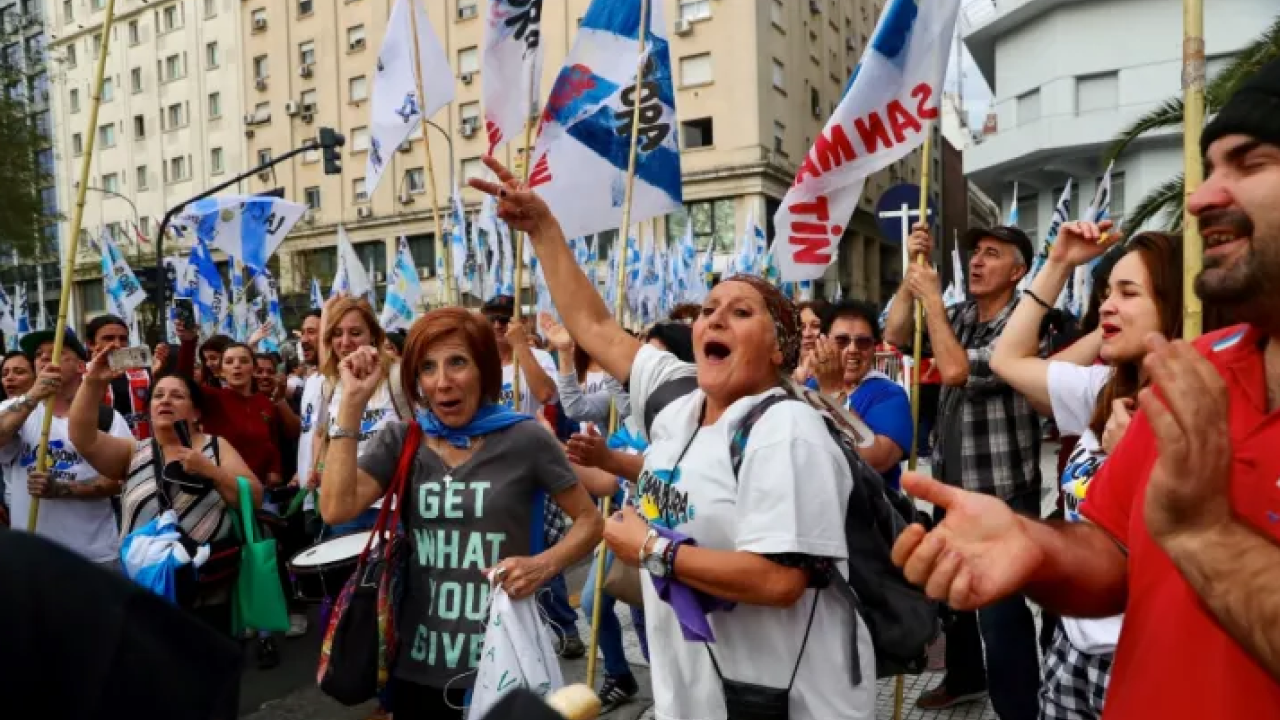
Argentina labour reforms triggered violent clashes in Buenos Aires on Wednesday as thousands of union-backed protesters gathered outside Congress while lawmakers inside approved President Javier Milei’s sweeping overhaul of the country’s labour laws. The Senate passed the bill in a 42-30 vote, advancing a central pillar of Milei’s economic agenda aimed at reshaping Argentina into a freer-market economy. The legislation will now move to the lower house for further debate.
The unrest underscores deep divisions in Argentina, where Milei’s aggressive reform drive has drawn sharp resistance from trade unions and opposition groups who argue the measures threaten long-standing worker protections.
Also read: Brazil Faces Backlash Over Speech Laws After Transgender Dissent Case Sparks Debate
Clashes Erupt Outside Congress
As senators debated the bill, tensions flared outside the Congress building. Protesters hurled stones, water bottles and Molotov cocktails at police officers in riot gear. Security forces responded with rubber bullets, tear gas and water cannons in an effort to disperse the crowds.
The demonstrations were organised by major labour unions, including the General Confederation of Labour (CGT), which has been at the forefront of opposition to the reforms.
Why Unions Oppose the Labour Overhaul
Trade unions argue that the proposed changes represent an attempt to weaken organised labour and erode workers’ rights.
Under the reforms, the right to strike would be restricted, employment benefits could be rolled back, and companies would gain greater flexibility to dismiss employees while reducing severance pay obligations. The bill would also limit labour unions’ role in collective bargaining negotiations.
“It’s not modernisation. It’s austerity for the workers,” the General Confederation of Labour said in a statement criticising the legislation.
The reforms have also drawn opposition from the left-wing Peronist movement. Buenos Aires Province Governor Axel Kicillof warned that rolling back protections such as severance pay, overtime compensation and vacation time would not improve economic conditions.
“If severance pay, overtime and vacation time in other words, all the protections workers have gained over time are up for grabs, it won’t make things better for anyone,” Kicillof said.
Milei Defends Free-Market Shift
President Milei has defended the labour reforms as essential to revitalising Argentina’s struggling economy. He argues that excessive regulation, high severance costs and heavy taxation discourage businesses from hiring formally and stifle productivity.
“With the modernization of the labor system, more people will have access to formal, legal employment,” Milei’s La Libertad Avanza party said in a statement as the Senate debate began.
“We are rebuilding Argentina from the ground up, starting with employment,” the party added.
Supporters of the president contend that the current system makes it difficult and costly to dismiss workers, creating barriers to job creation and discouraging investment.
Key Changes Approved and Removed
While the Senate approved the core elements of the labour overhaul, some provisions were removed during the legislative process.
Lawmakers scrapped an article that would have lowered employers’ income taxes, as the reduction would have significantly affected provincial revenues.
Another removed provision would have allowed workers to receive their salaries directly into virtual wallets such as MercadoLibre’s Mercado Pago. The exclusion of this measure marked a setback for MercadoLibre Executive Chairman Marcos Galperin, a vocal supporter of Milei.
With Senate approval secured, the bill now heads to the lower house, where debate is expected to continue amid ongoing public opposition and political tension.