
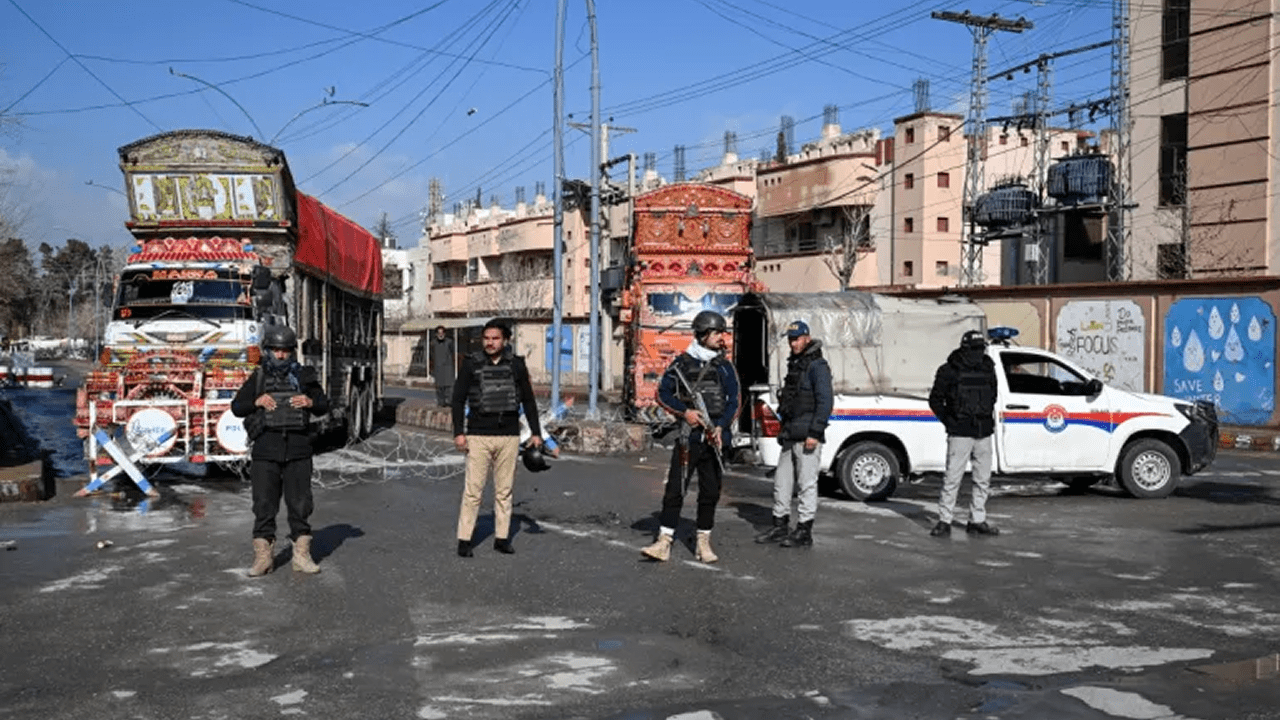
Balochistan attacks have plunged Pakistan’s largest and poorest province into fresh turmoil after a coordinated wave of militant violence left more than 190 people dead within two days, prompting an intense security crackdown and sharp diplomatic exchanges with India. Pakistani forces are continuing large-scale search operations across the restive region, while New Delhi has categorically rejected Islamabad’s allegations of Indian involvement, calling them an attempt to deflect from internal failures.
Deadly attacks trigger massive security operation
Pakistani security forces have been combing wide swathes of Balochistan following coordinated assaults on banks, jails, police stations and military installations. According to provincial authorities, at least 31 civilians and 17 security personnel were killed in the attacks.
Balochistan Chief Minister Sarfraz Bugti said that at least 145 attackers were also killed during counter-operations, including more than 40 militants neutralised on Friday alone. He added that all affected districts had been cleared by Sunday, but security operations were ongoing.
“We are chasing them, we will not let them go so easily. Our blood is not that cheap,” Bugti said at a press conference in Quetta. “We will chase them until their hideouts.”
Also read: Balochistan attacks leave over 120 dead as Pakistan military kills 92 militants
Life disrupted as fear grips Quetta
The violence has brought daily life to a standstill across much of the province. Mobile internet services remained suspended for two consecutive days, while road traffic was disrupted and train services were halted.
Quetta, the provincial capital, was largely deserted following a series of explosions, with major roads empty and businesses shuttered as residents stayed indoors.
“Anyone who leaves home has no certainty of returning safe and sound. There is constant fear,” said Hamdullah, a 39-year-old shopkeeper in Quetta.
Baloch Liberation Army claims responsibility
The Baloch Liberation Army (BLA), the most active separatist group in the region, claimed responsibility for the attacks. The group, designated a terrorist organization by the United States, said it targeted military installations along with police and civil administration officials using gun attacks and suicide bombings.
The BLA and other Baloch separatist groups have waged an insurgency for decades, alleging political marginalisation and economic exploitation by Pakistan’s central government. They argue that Baloch culture, language and identity are sidelined in a Punjabi-dominated state.
Longstanding grievances fuel insurgency
Balochistan, despite being rich in natural gas and mineral resources and bordering Afghanistan and Iran, remains Pakistan’s least developed province. It ranks poorly on indicators such as education, employment and economic growth.
Separatist groups accuse Islamabad of exploiting the province’s resources without fairly benefiting the local population. In recent years, militants have intensified attacks on non-local Pakistanis, security forces and foreign energy firms operating in the region.
Last year, Baloch separatists carried out a major attack on a passenger train carrying 450 people, leading to a deadly two-day siege.
Pakistan accuses India, New Delhi rejects claims
Pakistan’s Interior Minister Mohsin Naqvi and Defence Minister Khawaja Asif alleged that the attackers were supported by India, though no evidence was presented. Naqvi travelled to Quetta on Saturday to attend funerals of those killed.
India swiftly dismissed the accusations. In a statement, the Ministry of External Affairs said, “We categorically reject the baseless allegations made by Pakistan, which are nothing but its usual tactics to deflect attention from its own internal failings.”
The statement added that Pakistan should focus on addressing long-standing regional grievances, noting its “record of suppression, brutality and violation of human rights” in Balochistan.