
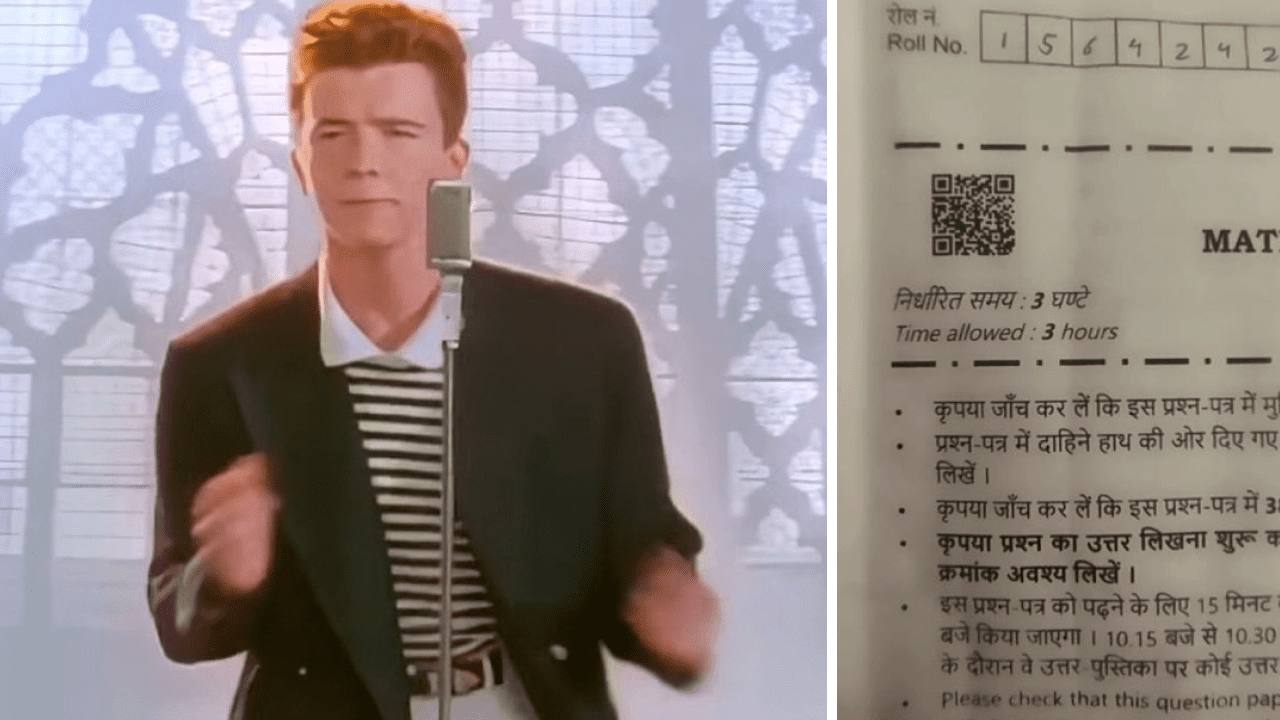
The CBSE Class 12 maths exam QR code unexpectedly became the centre of a viral social media storm after students claimed that scanning the code on their question paper redirected them to the music video of “Never Gonna Give You Up,” the 1987 hit by Rick Astley. The incident, widely described online as a classic internet prank known as “rickrolling,” occurred during the Central Board of Secondary Education’s Class 12 mathematics examination conducted on March 9, 2026.
Images and videos of the question paper began circulating across platforms such as X, Instagram, and Reddit shortly after the exam concluded. In several clips shared by students, the QR code printed on the paper appears to open a YouTube link leading to the iconic music video fueling memes, jokes, and questions about the integrity of the exam’s security features.
The Central Board of Secondary Education, which oversees millions of students across India and abroad, later issued a clarification confirming that the mathematics question papers were authentic and that the security of the examination had not been compromised.
Viral Moment During Board Exams
The unexpected link quickly turned the exam into a trending online topic. Students shared screenshots and videos showing the QR code being scanned with smartphones, after which the video for “Never Gonna Give You Up” appeared.
The phenomenon resembles “rickrolling,” a long-running internet prank in which unsuspecting users are directed to the song’s music video instead of the content they expected. The meme has remained popular for years and is widely recognised across online communities.
As the posts spread, reactions ranged from amusement to confusion. Some users joked that the exam paper had been designed by someone with a sense of humour, while others questioned how a security feature intended for authentication could link to unrelated online content.
In one widely circulated post, a student humorously suggested that the “paper setter might be a part-time meme page administrator,” while others demanded clarification from the exam authorities and tagged officials on social media.
The viral claims also triggered speculation about a possible exam paper leak, prompting calls from students and parents for the board to investigate the issue.
CBSE Clarifies the Situation
Responding to the online controversy, the Central Board of Secondary Education stated that the mathematics examination was conducted as scheduled on March 9 and that the question papers distributed during the exam were genuine.
According to the board’s statement, a QR code printed on certain question paper sets may appear to redirect to a YouTube video when scanned with a regular smartphone application. However, CBSE emphasized that the integrity and confidentiality of the exam papers were not affected.
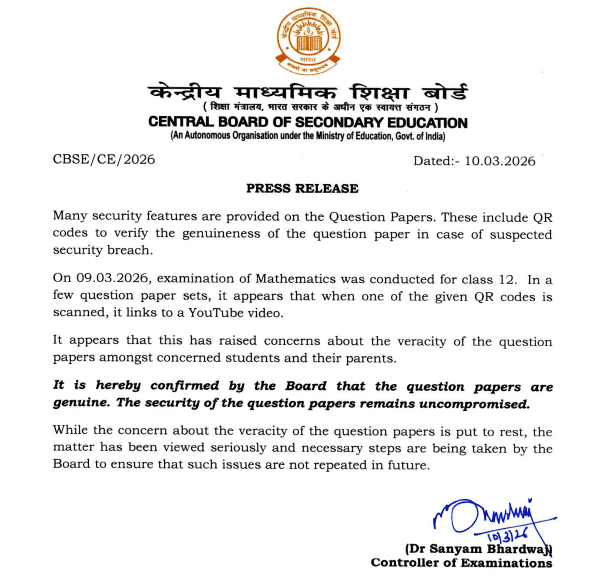
The board noted that the issue had raised concerns among students and parents but assured them that the security of the examination process remains intact. Officials said the matter is being examined and will be addressed appropriately.
Why CBSE Uses QR Codes on Question Papers
QR codes on board examination papers were introduced as part of a broader security overhaul following the 2018 CBSE question paper leak controversy, when the Class 12 economics and Class 10 mathematics papers were leaked online. The incident forced authorities to re-conduct the economics examination and led to criticism of the exam security system.
Since 2019, QR codes have been printed on question papers to strengthen authentication and traceability. Each code contains embedded information linked to CBSE’s internal database, including details such as:
- Subject and exam date
- Question paper set and series
- Printing batch and distribution chain
The system allows exam officials to verify whether a paper is legitimate and trace the source in case of a leak. Typically, when scanned with ordinary mobile applications, the QR codes display encrypted strings or identification codes that can only be interpreted through authorised systems.
Teachers familiar with the exam process note that the codes are meant solely for administrative use and do not serve any purpose for students during the exam.
Why This Matters
Although the incident appears to be more humorous than harmful, it has drawn attention to the sensitivity of exam security systems in India. Board examinations conducted by the Central Board of Secondary Education involve millions of students annually, and even minor irregularities can trigger widespread anxiety among candidates and parents.
The unexpected QR code behaviour led some students to worry that the paper might have been tampered with or leaked before the exam. Such concerns can quickly escalate online, particularly during high-stakes board examinations where rumours can spread rapidly across social media platforms.
Education experts say the episode underscores the importance of rigorous testing and verification of security features before exam papers are printed and distributed.
What Happens Next
CBSE has indicated that the issue is being taken seriously and will be examined to determine why the QR code behaved unexpectedly when scanned by standard devices.
Education officials may review the encoding process used for QR codes and ensure that future exam papers display only the intended authentication data when scanned outside authorised systems.
Meanwhile, the board has reiterated that the mathematics exam proceeded normally and that there is no evidence of a paper leak or compromise in the examination process.
For many students, however, the unusual moment has already become one of the most memorable anecdotes of the 2026 board exam season turning a serious test day into an unexpected internet meme.