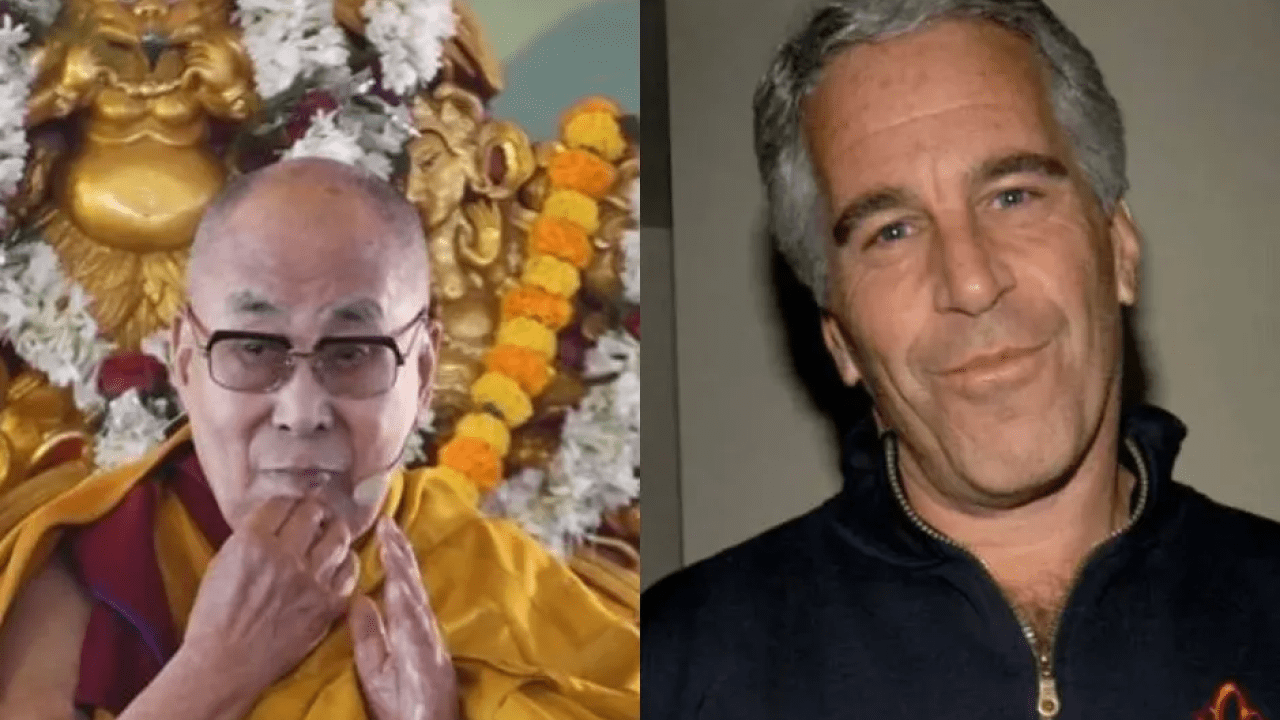
Dalai Lama Jeffrey Epstein allegations circulating online have been firmly denied by the Tibetan spiritual leader’s office, which said there is no connection whatsoever between His Holiness and the late American financier and convicted sex offender. The clarification comes amid renewed scrutiny following the release and discussion of documents commonly referred to as the “Epstein files,” which have triggered widespread speculation involving numerous public figures.
In a press statement issued from Dharamsala in Himachal Pradesh, the Dalai Lama’s office said reports and social media posts were falsely attempting to associate the 14th Dalai Lama with Jeffrey Epstein. The statement categorically rejected the claims, stressing that no meeting or interaction ever took place.
Also read: Jeffrey Epstein Missing Tattoo Claims Resurface After DOJ File Release
Official Statement From the Dalai Lama’s Office
“We can unequivocally confirm that His Holiness has never met Jeffrey Epstein or authorised any meeting or interaction with him by anyone on His Holiness’s behalf,” the statement said. It added that some recent media reports and online commentary were misrepresenting references found in the Epstein-related documents.
The office noted that such claims lacked factual basis and were being amplified without proper context.
Context of the ‘Epstein Files’ Mentions
Several media outlets, including some linked to the Chinese government, claimed that the Dalai Lama’s name appeared “169 times” in materials connected to Epstein. However, legal experts and activists have stressed that mentions in emails, messages, or documents do not in themselves imply wrongdoing.
The files, released by the US Department of Justice following a court order, consist of thousands of emails, schedules, contact lists, and third-party correspondence. Epstein, who died by suicide in a New York jail in 2019, had been convicted of sex-abuse offences and was alleged to have sought associations with influential figures worldwide.
Tibetan Groups Emphasise Lack of Evidence
Tibetan activists and advocacy organisations have underscored that being mentioned in the Epstein files does not amount to evidence of misconduct. The Tibet Rights Collective, a Delhi-based advocacy and policy research group, said none of the released material indicates any illegal behaviour by the Dalai Lama.
According to the group, the references primarily relate to public events, academic initiatives, or third-party discussions, often initiated by Epstein or intermediaries attempting to gain prestige or access. There is no indication of financial exchange, personal interaction, or awareness of Epstein’s criminal activities.
“It is critical to distinguish between being mentioned in someone else’s emails and actively participating in or endorsing that person’s actions,” the group said, noting that hundreds of prominent figures appear in the documents without any accusations of wrongdoing.
Timing of Claims and Political Undercurrents
The Tibet Rights Collective also pointed to the timing and tone of the renewed scrutiny, suggesting it coincides with increased global attention on the Dalai Lama. This includes his recent Grammy Award win, which prompted a strong protest from China’s foreign ministry, accusing the award organisers of engaging in “anti-China political maneuvering.”
Observers note that Chinese state-linked outlets have long challenged the Dalai Lama’s legitimacy due to his advocacy for Tibetan autonomy.
Background on the Dalai Lama
Tenzin Gyatso, the 14th Dalai Lama, served as the head of the Tibetan government-in-exile until his retirement from political life in 2011. He fled Tibet in 1959 following a failed uprising against Chinese Communist forces, which had entered the region in 1950.
After crossing the Himalayas into India, he was granted asylum and established the Central Tibetan Administration in Dharamsala. From there, he has continued efforts to preserve Tibetan culture and advocate for autonomy while remaining a prominent global spiritual leader.