India-US trade deal negotiations have reached their final stages, Commerce and Industry Minister Piyush Goyal said on Tuesday, offering strong praise for the agreement while withholding specific details that have sparked political controversy and policy uncertainty. The remarks came amid mounting questions over US President Donald Trump’s sweeping claims on tariffs, energy purchases, and agricultural access, even as the Indian government maintains that sensitive domestic interests remain protected.
Goyal said the agreement is still being finalised by negotiating teams from both countries and will be formally signed once technical processes are completed. A joint statement outlining the details is expected soon, with government sources indicating it could be released later this week.
Also read: India-EU Trade Deal Signed: Why It’s the ‘Mother of All’ Agreements That Has Drawn US Attention
Goyal hails deal, promises details after formal signing
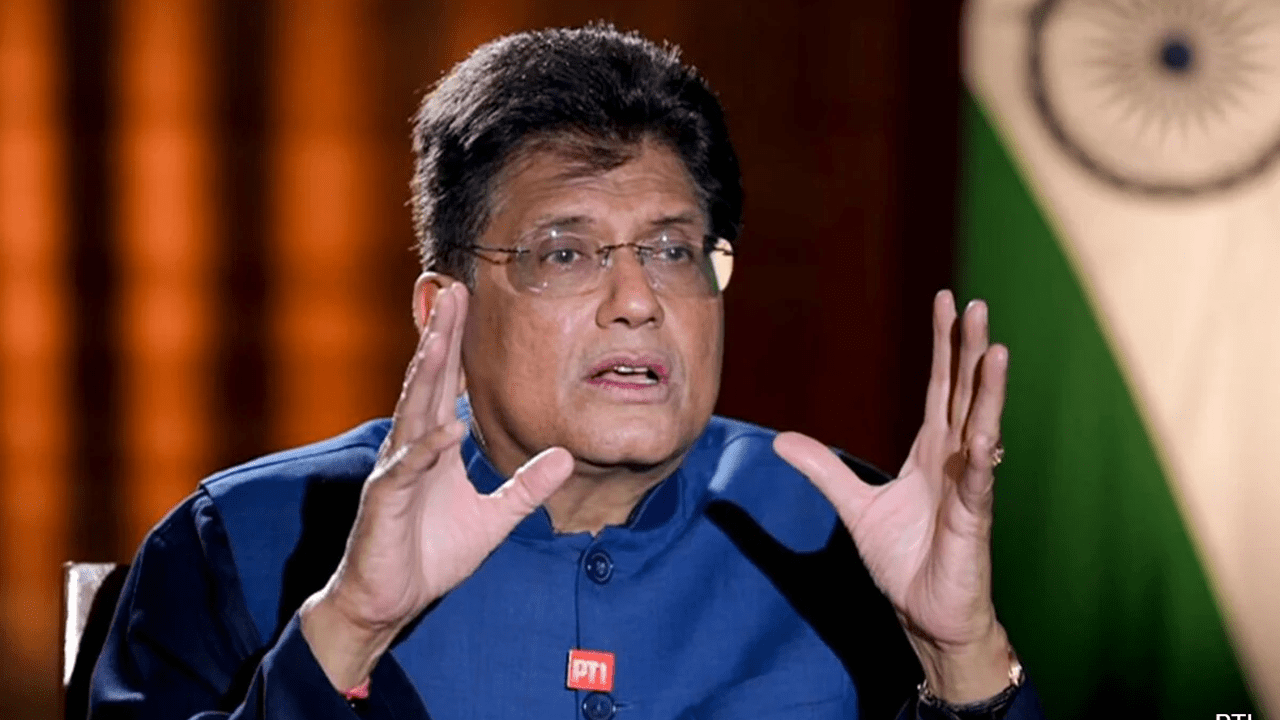
Addressing the media in a televised statement, Goyal said the trade agreement would make “every Indian proud” and open significant opportunities across multiple sectors.
“Today, 140 crore Indians are celebrating a trade deal which is under final stages of detailing between the negotiating teams of both countries,” he said, adding that the full text would be shared once the deal is inked and the joint statement is finalised.
The minister said the agreement would protect India’s sensitive sectors, including agriculture and dairy, while boosting labour-intensive and export-oriented industries such as textiles, apparel, leather, footwear, gems and jewellery, organic chemicals, machinery, aircraft components, plastics, rubber goods, and home décor.
However, Goyal did not provide a clear timeline for the signing or disclose the precise tariff structures and commitments involved.
Opposition criticism and Parliament disruption claims
A significant portion of Goyal’s address focused on criticism of the Congress-led Opposition, particularly Leader of Opposition Rahul Gandhi. Goyal said he was unable to present details of the deal in Parliament due to disruptions.
“I wanted to speak in Parliament about the deal, but could not do so because of ugly scenes created by the Congress, led by Rahul Gandhi,” he said, strongly condemning the Opposition’s conduct.
BJP-led NDA leaders have described Prime Minister Narendra Modi as a “generational leader” who has “made history” with the agreement, while the Opposition has accused the government of compromising national interests. Rahul Gandhi has alleged that the Prime Minister has “sold the country,” a charge the government has dismissed.
Goyal also addressed criticism over the US announcing tariff changes first, saying the reductions were initiated by Washington and therefore announced by President Trump.
What is known so far about tariffs
Despite the lack of an official joint statement, some elements of the India-US trade deal are now public. The United States has reduced reciprocal tariffs on Indian goods from 25% to 18% with immediate effect. In addition, a separate 25% penalty imposed earlier over India’s purchase of Russian oil has been withdrawn, effectively rolling back a combined 50% tariff rate that had been in place since August 2025.
Economic analysts note that while the 18% tariff is higher than pre-Trump levels, it remains more favourable than the rates faced by regional peers such as Indonesia and Bangladesh, which currently face tariffs of 19% and 20%, respectively. Goyal highlighted this comparison, calling the agreement “the best in the region.”
Also read: India-EU Trade Pact Boosts Opportunities for Youth and Self-Reliant India, Says PM Modi
Trump’s claims raise unanswered questions
Controversy has intensified following President Trump’s statements that India would move towards “zero” tariffs and non-tariff barriers on US goods and commit to purchasing more than $500 billion worth of American products under a “Buy American” initiative.
Trump has also claimed that Prime Minister Modi agreed to stop buying Russian oil and instead increase energy imports from the US and US-influenced Venezuela. The Indian government has not officially confirmed these assertions. Russia has stated that it has received no communication indicating India will halt oil purchases.
Congress MP Shashi Tharoor questioned the feasibility of the $500 billion purchase claim, noting that India’s total annual global imports are roughly $700 billion. Opposition leaders have also raised concerns about whether the deal creates an uneven playing field, with India facing tariffs while US exports enjoy zero-duty access.
Agriculture remains the most sensitive issue
Agriculture continues to be the most politically and economically sensitive component of the India-US trade deal, supporting nearly half of India’s population and contributing about 18% to GDP. Goyal said Prime Minister Modi had ensured the “safety” of the farm sector within the agreement, though specifics were not disclosed.
For years, the Indian government has described agriculture as a “red line” in trade negotiations. However, US Agriculture Secretary Brooke Rollins has characterised the deal as a major win for American farmers, suggesting increased access to the Indian market.
Congress MP Jairam Ramesh has demanded that the full text of the agreement be tabled and debated in Parliament. As of Tuesday, the government had not released the deal’s provisions, and Goyal did not take questions during his address.