
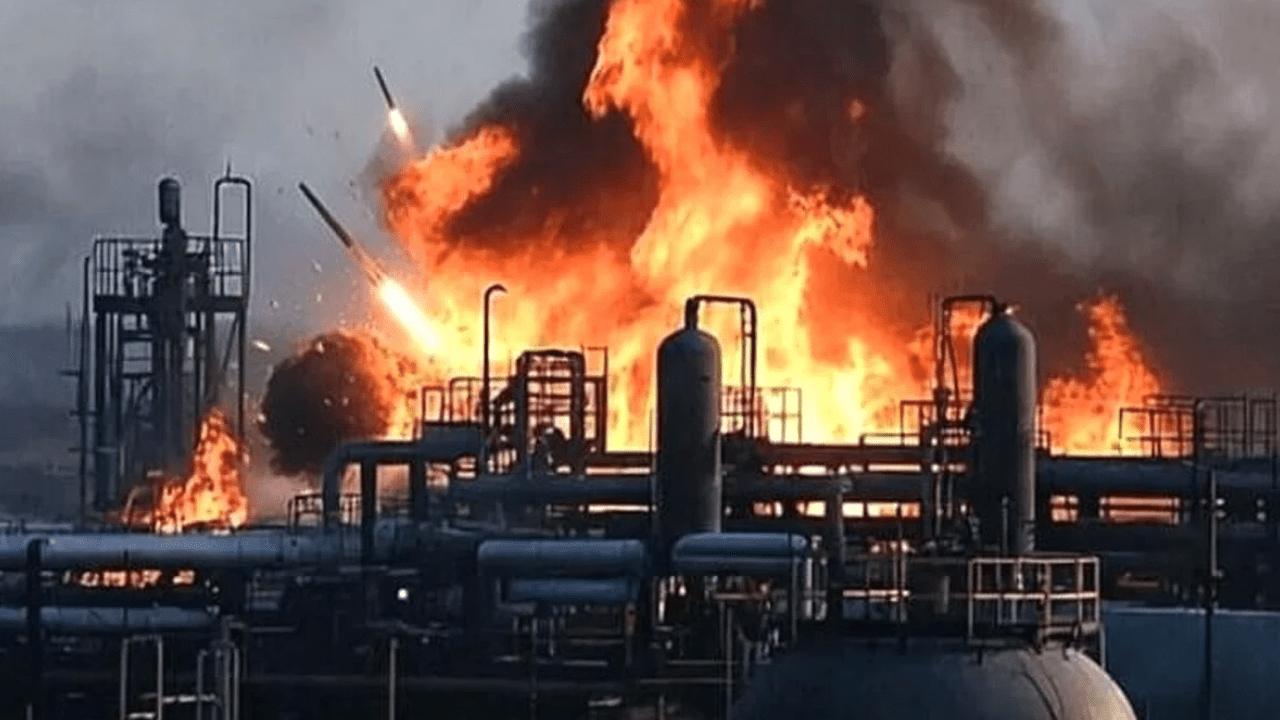
The Iran vs US–Israel war entered a volatile new phase on March 19 after Iranian missiles struck Qatar’s Ras Laffan Industrial City the world’s largest liquefied natural gas (LNG) hub sending shockwaves through global energy markets and intensifying geopolitical tensions across the Gulf. The attack, confirmed by QatarEnergy and Qatari officials, came in retaliation for Israeli strikes on Iran’s South Pars gas field, marking a significant escalation as the conflict shifts toward targeting critical economic infrastructure.
The strikes caused fires and extensive damage across multiple LNG facilities and the Pearl Gas-to-Liquids (GTL) plant within Ras Laffan, though authorities reported no casualties. Emergency response teams managed to contain the fires, preventing what experts warn could have been a catastrophic explosion at one of the world’s most sensitive energy installations.
Qatar condemned the attack as a violation of its sovereignty and international law, warning that such actions threaten not only regional stability but also global energy security. The country has since taken diplomatic measures, including expelling Iranian military-linked personnel.
Also read: Fire at Fujairah Oil Storage in UAE Amid Rising Tensions in Middle East
Escalation Rooted in Energy Warfare
The attack on Ras Laffan follows Israeli strikes earlier this week on Iran’s South Pars gas field one of the most critical components of Iran’s energy infrastructure. South Pars, which Iran shares with Qatar (where it is known as the North Field), accounts for a substantial portion of Iran’s gas production and is central to global energy supply.
Iran had issued prior warnings that it would target oil and gas infrastructure across the Gulf in response to attacks on its own facilities. Those threats materialised swiftly, with Ras Laffan becoming the most high-profile target so far.
This tit-for-tat exchange signals a strategic shift. Rather than focusing solely on military assets, both sides are increasingly targeting economic lifelines particularly energy hubs raising the stakes far beyond traditional battlefield engagement.
US Response Signals Caution and Threat
In the aftermath, US President Donald Trump distanced Washington from Israel’s initial strike on South Pars, stating that the United States had no prior knowledge of the operation. He described Iran’s retaliation against Qatar as “unjustified,” suggesting it was based on a misunderstanding of Qatar’s involvement.
At the same time, Trump issued a stark warning to Tehran, stating that any further attacks on Qatar’s energy infrastructure would provoke an overwhelming US response. He also indicated that Israel would refrain from additional strikes on South Pars unless Iran escalates further.
The messaging reflects a delicate balancing act attempting to de-escalate tensions while maintaining a credible deterrent in defense of a key US ally in the Gulf.
Also read: Allies Balk as Trump Pushes Strait of Hormuz Mission Amid Escalating Iran War
Industry / Market Impact
The attack has rattled global energy markets, with analysts warning of potential disruptions to LNG supply chains. Qatar is one of the world’s largest exporters of liquefied natural gas, supplying key markets across Europe, Asia, and beyond. Ras Laffan alone represents a critical node in global energy distribution.
Even limited operational disruptions can trigger price volatility, and early indicators suggest increased fluctuations in both gas and oil markets following the incident. Traders are also closely monitoring the Strait of Hormuz, a vital shipping route that could become a flashpoint if tensions escalate further.
Energy experts warn that repeated strikes on infrastructure could lead to prolonged supply shortages, particularly at a time when global demand remains high. The risk of cascading effects across industries from power generation to manufacturing is significant.
Why This Matters
This incident marks a turning point in the broader conflict. By targeting energy infrastructure, the war has expanded beyond military confrontation into economic warfare with global consequences.
Facilities like Ras Laffan are not only critical to national economies but also to international energy stability. Any sustained disruption could impact electricity generation, industrial output, and fuel prices worldwide.
Moreover, the shared nature of the South Pars/North Field gas reserve underscores the fragility of regional interdependence. Attacks on one side of this shared resource risk unintended consequences for multiple countries, amplifying the danger of escalation.
The strike also highlights the vulnerability of even heavily defended infrastructure. Despite advanced air defence systems, missiles were able to inflict damage, raising concerns about the security of similar facilities across the Gulf.
What Happens Next
The immediate priority for Qatar is restoring operational stability at Ras Laffan while reinforcing security around its energy assets. Regional governments have already heightened alert levels and increased defensive measures around key installations.
Diplomatic efforts are also likely to intensify, with calls for restraint growing louder from Gulf nations and international stakeholders concerned about the risk of a broader conflict.
However, the trajectory remains uncertain. If further strikes occur particularly on energy infrastructure the conflict could spiral into a wider regional crisis with profound economic repercussions.
For now, the world is watching closely as one of its most vital energy corridors stands at the center of an increasingly dangerous geopolitical confrontation.