
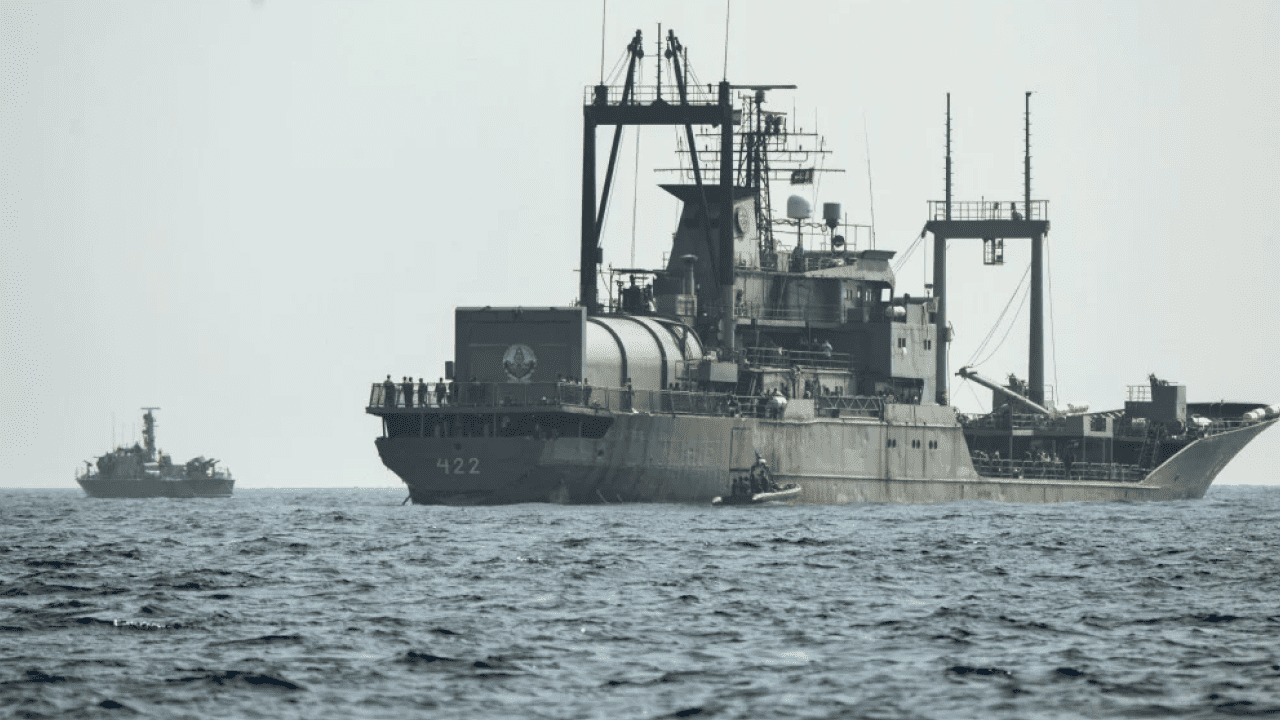
Sri Lanka says it will treat Iranian sailors rescued from the torpedoed frigate IRIS Dena under international humanitarian law, after a U.S. submarine attack near the island nation’s southern waters triggered a regional diplomatic and military ripple effect.
Sri Lankan authorities confirmed they are currently caring for 32 surviving crew members from the Iranian warship, which was sunk on March 4 by a U.S. submarine in waters just south of Sri Lanka. The incident resulted in the deaths of 84 Iranian sailors, whose bodies were recovered during a rescue operation led by the Sri Lankan Navy.
Speaking at a conference in New Delhi, Foreign Minister Vijitha Herath said Colombo was following its international obligations when dealing with the rescued sailors.
“We have taken all the steps according to international laws,” Herath said, declining to directly address reports that the United States had urged Sri Lanka not to repatriate the Iranian personnel.
The incident has drawn attention across South Asia, as Sri Lanka and India both found themselves managing the presence of Iranian naval vessels and crews following the escalation of conflict in West Asia.
Sri Lankan officials said the sailors rescued from the sunken IRIS Dena are being treated according to humanitarian standards and international treaties governing neutral states during armed conflicts.
Neutrality and International Law
Sri Lanka’s government says its approach is guided by international conventions governing the treatment of military personnel from belligerent nations entering neutral territory.
President Anura Kumara Dissanayake stated earlier this week that the country would adhere to the principles of the Hague Convention. Under these rules, neutral states are generally required to detain or restrict combatants of warring nations within their territory until hostilities end, preventing them from returning immediately to the battlefield.
Sri Lankan officials have also begun coordinating with the International Committee of the Red Cross to manage the humanitarian aspects of the rescue. According to a senior government official, wounded sailors may be repatriated if they request it, while the broader handling of the survivors will follow established international legal frameworks.
Meanwhile, Iranian diplomats stationed in Colombo have requested the return of the bodies of the 84 sailors who died in the attack so they can be transported back to Iran.
Regional Naval Movements After the Attack
The sinking of the Iranian frigate has created logistical challenges for other vessels that were operating in the region at the time.
Sri Lanka also granted safe harbor to another Iranian warship, the IRIS Bushehr, after it reported mechanical problems a day after the attack on the Dena. The ship was escorted to the northeastern port city of Trincomalee, where its 219 crew members were evacuated as a precaution.
At the same time, India allowed a third Iranian vessel, the IRIS Lavan, to dock at the southwestern port of Kochi.
India’s External Affairs Minister Subrahmanyam Jaishankar said the decision was made on humanitarian grounds.
“I think it was the humane thing to do and we were guided by that principle,” Jaishankar said, adding that many of those on board were young naval cadets who have since been accommodated in nearby facilities after disembarking.
All three Iranian vessels had been participating in a multinational fleet review hosted by India shortly before the conflict in West Asia intensified in late February.
Why This Matters
The episode highlights how neutral states can become involved in the humanitarian consequences of international conflicts even when they are not participants in the fighting.
Sri Lanka’s location along key Indian Ocean shipping lanes makes it a critical maritime hub, and any military incident near its territorial waters carries geopolitical sensitivity. By emphasizing adherence to international law, Colombo is attempting to maintain neutrality while avoiding escalation with major powers.
The situation also underscores the complexity of maritime warfare in crowded strategic waters. The presence of multiple international naval vessels for a ceremonial fleet review just days before the outbreak of hostilities meant that regional ports suddenly had to deal with emergency requests for docking, evacuation, and medical assistance.
For Sri Lanka, balancing humanitarian obligations with diplomatic pressures from global powers will likely remain a delicate task as the broader conflict unfolds.
What Happens Next
Several developments are expected in the coming days.
Sri Lankan authorities will continue coordinating with international humanitarian organizations regarding the status of the rescued sailors. The government must also determine whether the survivors will remain in Sri Lanka for the duration of the conflict, as suggested by Hague Convention guidelines, or be repatriated under special humanitarian provisions.
Diplomatic discussions are also expected between Sri Lanka and Iran regarding the return of the sailors’ remains, while regional governments continue monitoring naval activity linked to the escalating conflict in West Asia.
The incident has already prompted closer scrutiny of naval movements in the Indian Ocean, with analysts warning that the strategic waterway could become increasingly significant as geopolitical tensions expand beyond the immediate conflict zone.