
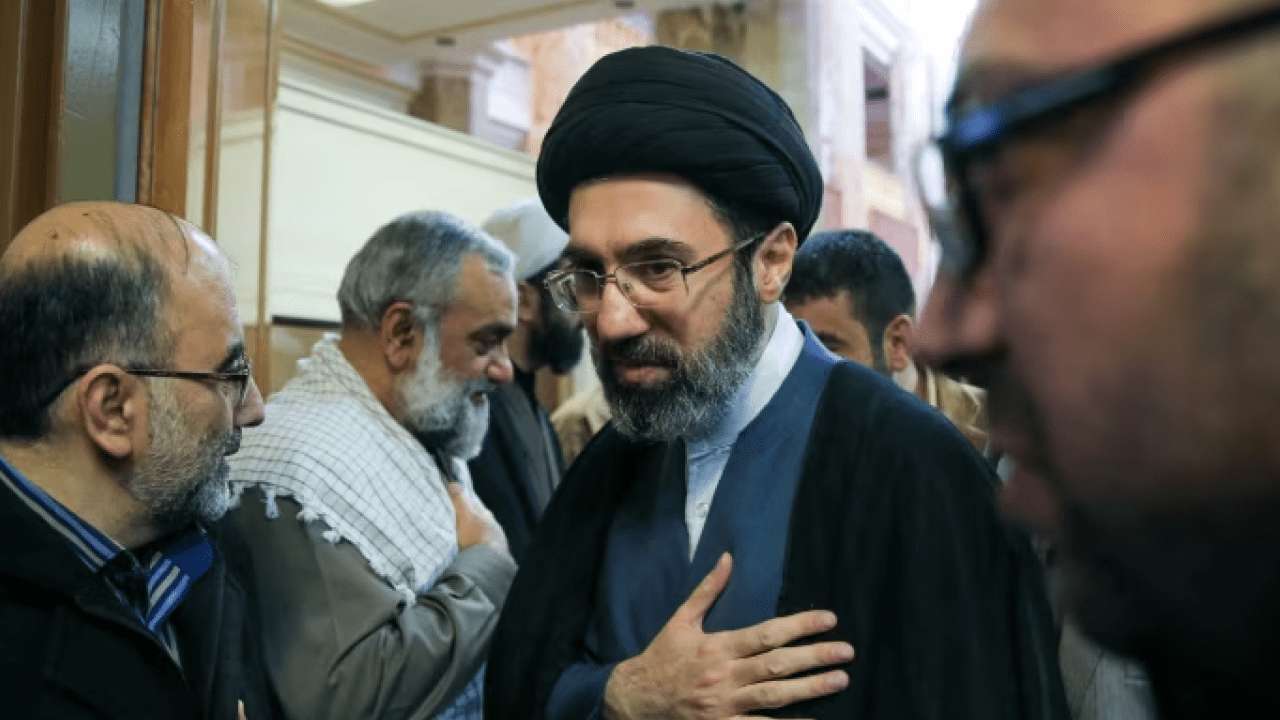
Mojtaba Khamenei, Iran’s newly elevated supreme leader, narrowly escaped death during a coordinated US-Israeli missile strike on a Tehran compound that killed his father, Ayatollah Ali Khamenei, along with several senior officials and family members. The dramatic details of the February 28 attack now emerging through a purportedly leaked internal audio recording have intensified scrutiny over Iran’s leadership transition and raised urgent questions about regional stability.
According to multiple reports citing the leaked recording, Mojtaba Khamenei had been inside the heavily secured compound moments before the attack but stepped out into the yard just seconds before missiles struck. The strike, described as part of Israel’s “Operation Epic Fury,” appears to have been a highly targeted attempt to decapitate Iran’s political and military leadership in one coordinated assault.
The attack reportedly occurred at approximately 9:32 a.m. local time and involved multiple ballistic missiles that hit different sections of the compound almost simultaneously. One missile struck the area where Ayatollah Ali Khamenei was located, killing him instantly, while others targeted residences linked to key family members and senior officials.
Also read: US Tests Minuteman III ‘Doomsday Missile’ Amid Rising Global Tensions, Including War with Iran
A Narrow Escape Amid Devastation
Details from the leaked audio attributed to Mazaher Hosseini, a senior official in the late leader’s office paint a chilling picture of the events. Mojtaba Khamenei had briefly stepped outside for an unspecified reason and was returning to the building when the missiles hit.
He reportedly suffered only a minor leg injury, a fact that contrasts sharply with the scale of destruction inside the compound. His wife, identified as Zahra Haddad-Adel, was among those killed in the strike. Other family members, including his brother Mostafa Khamenei and his wife, were said to have survived unharmed.
The recording suggests at least three missiles were used in the operation. In addition to the main residential building, another strike hit the residence of Mojtaba’s brother-in-law, Misbah al-Huda Bagheri Kani, resulting in catastrophic casualties.
Senior Iranian military figures were also among the dead. Mohammad Shirazi, identified as a top military commander, was reportedly killed in the blast, with descriptions indicating extreme levels of destruction that made identification difficult.
Conflicting Claims Over Mojtaba’s Condition
Despite reports that Mojtaba Khamenei escaped with minor injuries, his absence from public view since the attack has fueled widespread speculation. Some unverified claims suggest he may have suffered far more serious physical harm, while others question whether he is alive at all.
Adding to the uncertainty, U.S. President Donald Trump stated that American officials do not have clear intelligence on Mojtaba’s condition. Public remarks indicated conflicting reports ranging from severe injury to possible death, underscoring the Information gap surrounding Iran’s new leadership.
The only known communication attributed to Mojtaba since the attack has been a televised message broadcast on Iranian state media, in which he vowed retaliation for those killed. However, the lack of live appearances has continued to raise doubts.
Background Context
The strike marks one of the most significant escalations in tensions between Iran, Israel, and the United States in recent years. The targeting of Iran’s supreme leader and top officials represents an unprecedented attempt to dismantle the country’s command structure in a single operation.
Ayatollah Ali Khamenei had led Iran for decades, serving as the central figure in its political and religious hierarchy. His death creates a major power vacuum at a time of heightened regional conflict.
Mojtaba Khamenei, long considered a potential successor, assumed leadership under extraordinary circumstances. His rise, however, is already overshadowed by the violent circumstances of the transition and lingering uncertainty about his health and control.
What Happens Next
The aftermath of the strike is likely to shape the geopolitical landscape of the Middle East in the coming months. Iran has signaled a strong intent to retaliate, raising fears of a broader regional conflict that could involve multiple state and non-state actors.
At the same time, questions about Mojtaba Khamenei’s ability to consolidate power remain unresolved. If his condition is more serious than officially acknowledged, it could trigger internal power struggles within Iran’s political and military establishment.
International observers are closely monitoring Tehran for signs of instability, as well as potential military responses that could escalate tensions further.
Key Figures and Data
- Date of Strike: February 28
- Location: Tehran compound of Iran’s supreme leader
- Casualties: Ayatollah Ali Khamenei, senior military officials, multiple family members
- Survivors: Mojtaba Khamenei (minor reported injury), Mostafa Khamenei and spouse
- Weapons Used: Multiple ballistic missiles
- Operation Name: Reportedly “Operation Epic Fury”
The incident stands as one of the most consequential targeted strikes in modern Middle Eastern history, with ramifications that extend far beyond Iran’s borders.