
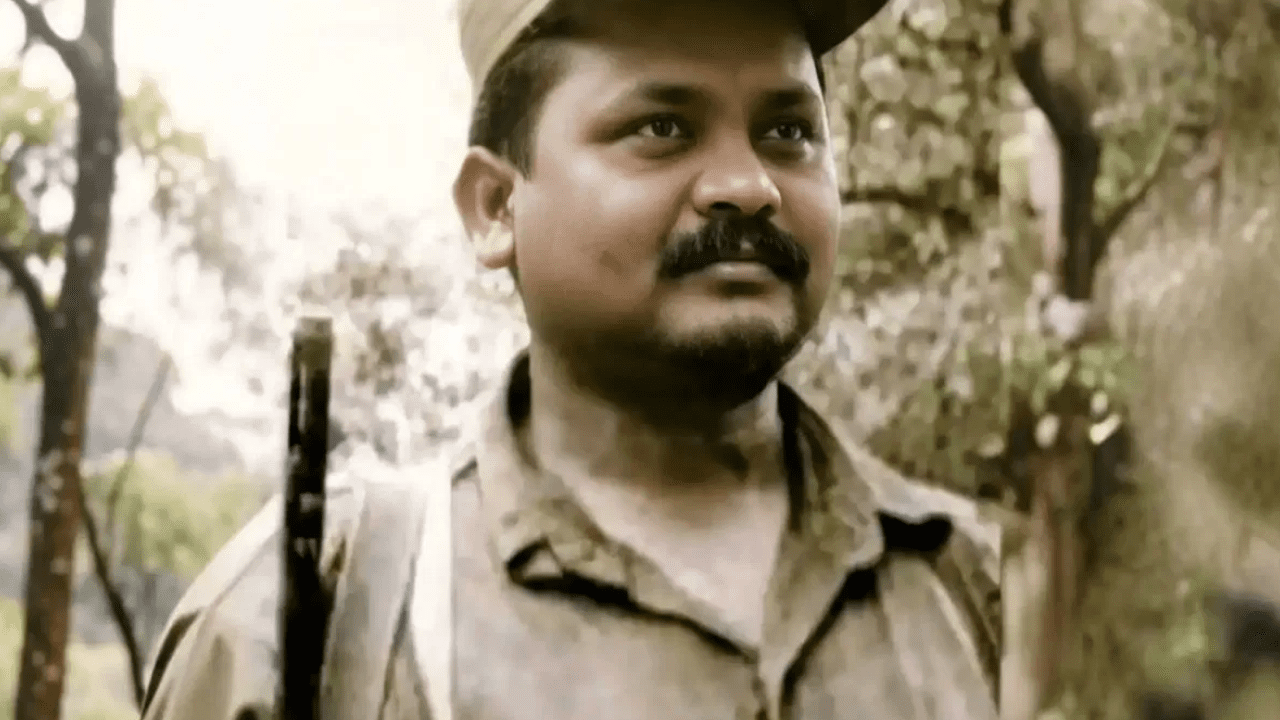
The surrender of senior Maoist commander Paparao in Bastar marks a decisive moment in India’s decades-long battle against Left-Wing Extremism, with officials describing it as a symbolic and operational turning point in a region once considered the insurgency’s strongest bastion. Paparao, a key leader of the Communist Party of India (Maoist), is set to lay down arms in Jagdalpur along with more than 20 cadres, just days before a government-imposed deadline to eliminate Maoist activity by the end of March.
Carrying a bounty of ₹25 lakh and known by multiple aliases including Mangu and Chandranna, Paparao has for over two decades operated deep within the dense forests of the Indravati–Abujhmad region. His surrender comes amid a broader collapse of Maoist leadership in Bastar, following recent setbacks including the killing of top Maoist leader Nambala Kesava Rao and the reported retreat of other senior figures from the region.
Authorities view this development not as an isolated event, but as part of a sustained and measurable decline in the Maoist insurgency across Chhattisgarh and beyond.
Also read: Delhi Assembly Bomb Threat Email Triggers Security Sweep, Top Leaders Named in Alarming Message
A Shrinking Insurgency
The numbers underline the scale of the transformation. In Chhattisgarh alone, the number of active Maoist cadres has plummeted dramatically from around 1,600 in 2025 to roughly 100 by early 2026. Nationally, the figure has fallen from just over 2,000 to barely 200 within the same period.
This decline has been driven in large part by a steady increase in surrenders. Over the past decade, thousands of Maoist cadres have abandoned the movement, with particularly sharp spikes in recent years. The year 2025 marked a record, with over 1,500 surrenders in Chhattisgarh alone the highest ever recorded in a single year.
Paparao’s decision to surrender alongside his associates reflects both the erosion of the group’s operational capacity and a broader loss of morale among remaining cadres. Officials say many lower-rung members have already blended back into civilian life, abandoning weapons and returning to farming or village livelihoods.
Security Strategy and Ground-Level Shifts
The weakening of Maoist influence in Bastar is the result of a coordinated, multi-layered strategy combining security operations with development initiatives and rehabilitation policies.
Security forces have significantly expanded their footprint in remote forest areas that were once inaccessible. The establishment of forward operating bases, improved intelligence networks, and sustained operations by central and state forces have steadily dismantled insurgent infrastructure.
Simultaneously, the government has invested in improving living conditions in tribal regions long neglected by state systems. Infrastructure programmes have expanded road connectivity, access to drinking water, and mobile networks, helping integrate isolated villages into the broader economy.
Rehabilitation efforts have also played a critical role. Under surrender policies, former Maoists are offered financial assistance, vocational training, and reintegration support creating incentives for those still in the forest to return to mainstream society.
High-profile surrenders in recent years including senior leaders responsible for intelligence and regional operations have further accelerated the collapse of the insurgency’s leadership structure.
Background Context
Bastar’s association with Maoist insurgency stretches back decades, but its origins are complex. Unlike other regions where ideological movements took root organically, Bastar became a strategic refuge for Maoist groups after setbacks elsewhere in India.
In the 1990s and early 2000s, a combination of state missteps, local grievances, and heavy-handed counterinsurgency measures contributed to the expansion of Maoist influence. Campaigns that were intended to counter the insurgency often alienated tribal communities, inadvertently strengthening rebel support.
Over time, however, this dynamic began to shift. Tribal communities who bore the brunt of violence from both sides grew increasingly disillusioned with prolonged conflict. Local leadership gradually turned toward peace, eroding the Maoists’ social base and weakening their legitimacy.
Recent developments, including leadership losses and mass surrenders, suggest that the insurgency has entered its final phase in Bastar.
Why This Matters
The significance of Paparao’s surrender extends beyond military success. For decades, Maoist insurgency was regarded as India’s most serious internal security challenge, with Bastar at its core.
The apparent collapse of armed leadership in the region signals a potential end to large-scale violence but it also raises critical questions about what comes next.
Bastar’s tribal population has endured years of displacement, mistrust, and socio-economic disruption. As the conflict recedes, the focus is shifting toward rebuilding trust, ensuring justice for victims, and creating sustainable development pathways that respect local livelihoods and cultural autonomy.
Experts caution that while the insurgency may be nearing its end, unresolved grievances could resurface if governance failures persist or development is perceived as exploitative.
What Happens Next
The immediate priority for authorities is to facilitate the orderly surrender and rehabilitation of remaining Maoist cadres. Officials are also expected to intensify monitoring efforts to prevent any regrouping or splinter activity.
Beyond security concerns, the long-term challenge lies in transitioning Bastar from a conflict zone to a model of inclusive development.
Policy discussions are likely to focus on strengthening local economies, particularly by ensuring fair returns for forest produce and supporting sustainable agriculture issues that have historically shaped tribal livelihoods in the region.
There is also growing debate over the direction of development, with concerns that aggressive industrial or mining projects could reignite tensions if they disregard local rights and environmental considerations.
For now, Paparao’s surrender stands as a powerful symbol of change in Bastar a region long defined by insurgency, now on the cusp of redefining its future.