
At the Mobile World Congress (MWC) 2026 in Barcelona, Qualcomm Technologies introduced its Wi-Fi 8 portfolio, marking a significant leap toward AI-driven connectivity for mobile devices, home networks, and enterprise infrastructure. This new generation of Wi-Fi technology is poised to address the growing demands of artificial intelligence (AI) applications that require more reliable and efficient network performance, from mobile phones to broadband gateways.
What’s New with Wi-Fi 8?
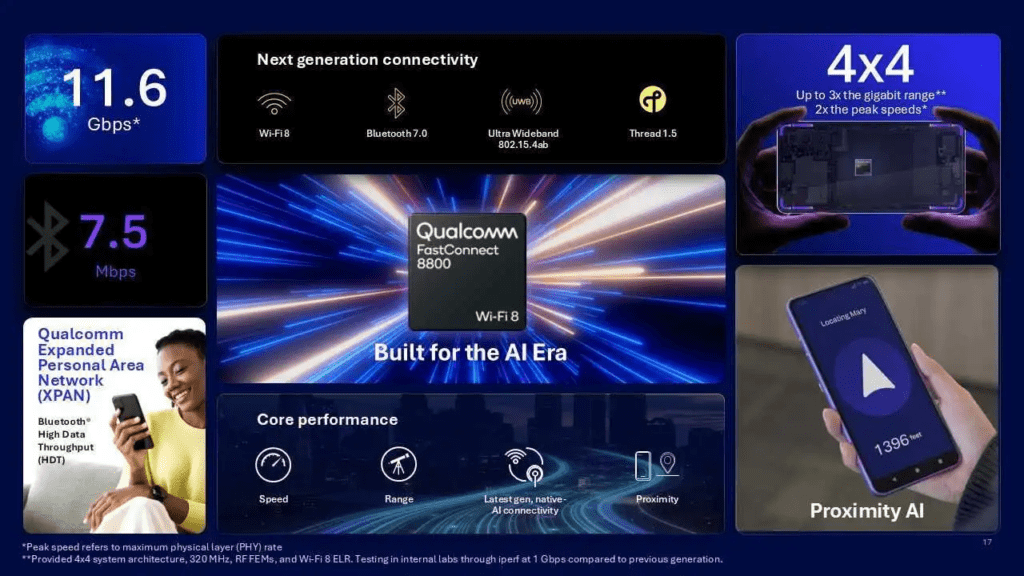
Wi-Fi 8 is a game-changer for both consumer and enterprise networking needs. Qualcomm’s newly unveiled FastConnect 8800 chip aims to elevate Wi-Fi performance to new heights. Featuring a 4×4 radio configuration, the chip supports peak speeds of up to 11.6 Gbps marking a significant improvement over previous generations. But Qualcomm is focusing more on real-world performance, with up to three times the gigabit wireless range compared to earlier systems, making Wi-Fi 8 a robust solution for maintaining high-speed connectivity even in crowded, large spaces.
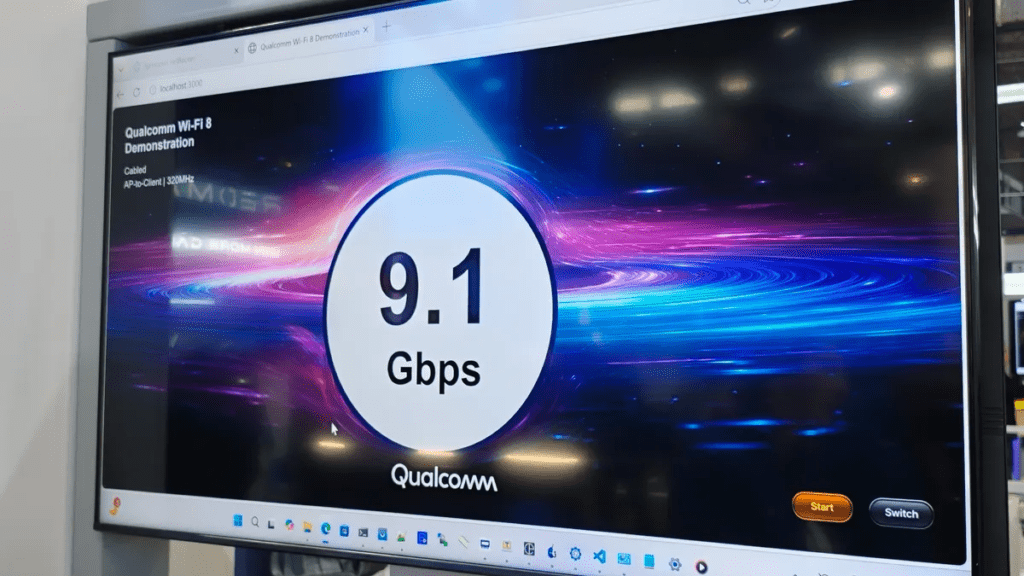
During a live demo, Qualcomm showcased devices reaching speeds of 9.1 Gbps in practical conditions, suggesting that Wi-Fi 8 will not only deliver faster speeds but also improve consistency, especially in environments with multiple connected devices. This marks a shift from the pursuit of raw speed to a focus on stability and reliability, which is essential as homes and workplaces increasingly adopt AI-powered devices.
From Consumer Devices to Enterprise Networks
The FastConnect 8800 chip will power a range of consumer devices, from smartphones to tablets and laptops. With Bluetooth 7.0 and High Data Throughput (HDT) support, the chipset also promises faster and more efficient Bluetooth connectivity, enhancing the overall experience for users across a variety of devices. It supports Bluetooth’s new HDT, which raises data transfer speeds to 7.5 Mbps, far surpassing the capabilities of Bluetooth Low Energy (LE).
Qualcomm’s Dragonwing Wi-Fi 8 platforms, including the NPro A8 Elite, take Wi-Fi 8 into enterprise and home network solutions. These platforms aim to deliver not just speed but intelligence through edge AI computing, transforming network devices into hubs that support autonomous, context-aware applications. The Dragonwing NPro A8 Elite, designed for high-end routers and enterprise access points, features a 5×5 Wi-Fi radio system with integrated AI processing capabilities. According to Qualcomm, this system improves throughput by up to 40%, reduces latency, and enhances power efficiency critical factors for next-generation networks.
These platforms are being engineered with the future in mind. With embedded AI and advanced connectivity features like Wi-Fi sensing and positioning, Wi-Fi 8 gateways and routers will play a pivotal role in enabling the smart, autonomous systems of tomorrow. Qualcomm envisions a new kind of network infrastructure that does more than just connect devices it will adapt to real-time needs, optimizing resources and enhancing both user experience and safety.
Also read: Qualcomm Unveils Snapdragon Wear Elite at MWC 2026, Powering a New Era of AI-Driven Wearables
Industry Impact: A New Era of Connectivity
Wi-Fi 8’s arrival is timely, as it addresses several challenges in the evolving connectivity landscape. With the proliferation of AI-driven devices, from smartphones to smart home gadgets, traditional networking standards are often stretched thin. Wi-Fi 8’s ability to support large-scale, high-demand environments, such as smart homes and enterprise campuses, will ensure that AI systems can operate smoothly and efficiently.
Moreover, the integration of edge AI into Wi-Fi 8 infrastructure aligns with the broader shift toward edge computing, where data processing happens closer to the device or endpoint rather than in centralized cloud servers. This development could significantly reduce latency, improve the responsiveness of AI-powered applications, and support new use cases in sectors like healthcare, robotics, and autonomous vehicles.
The Road Ahead: Commercial Rollout and Beyond
Although Wi-Fi 8 is not yet fully standardized, Qualcomm is already sampling its products to customers, with commercial devices expected to debut in late 2026. Over the next few years, the technology is expected to make its way into consumer routers, mobile phones, laptops, and other IoT devices. However, the mainstream adoption of Wi-Fi 8 may take a few more years as networks and device ecosystems fully transition to this next-gen standard.
Looking even further into the future, Qualcomm has also committed to pioneering 6G technology, targeting a global launch by 2029. This ambitious goal aligns with the company’s focus on AI-native, high-performance networks that will provide the connectivity backbone for the next wave of intelligent devices and systems.
What Happens Next?
Wi-Fi 8’s commercial introduction is expected to take place in late 2026, but its adoption will likely take a few more years to reach the mass market. For now, consumers and enterprises will have to wait to see how the technology performs in real-world settings as it is integrated into next-generation devices and infrastructure.
As Qualcomm pushes ahead with its vision for AI-native connectivity, the implications for both the consumer and enterprise sectors are profound. From smart homes and autonomous vehicles to industrial IoT applications, Wi-Fi 8 and the future rollout of 6G will be critical enablers for the AI-powered world that is rapidly taking shape.