
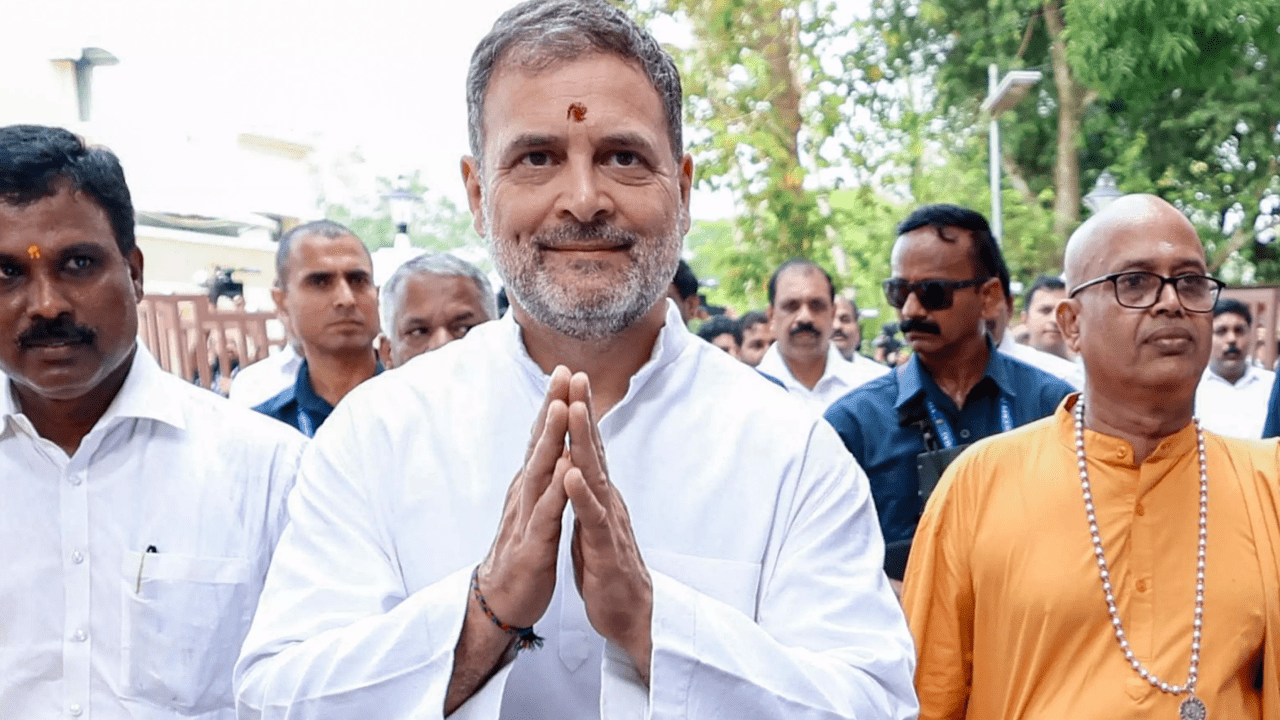
Rahul Gandhi visited Madina village in Sonipat, Haryana, on Tuesday to attend a wedding in a farmer’s family, drawing attention from local residents and political leaders alike. The Rahul Gandhi Sonipat visit comes amid the Congress leader’s continued outreach to rural communities and farmers across northern India.
The Leader of the Opposition in the Lok Sabha arrived in the village during the morning hours and was welcomed by Deepender Singh Hooda, the Congress Member of Parliament from Rohtak, along with other party leaders and supporters.
While the occasion was a personal celebration for the family hosting the wedding, Gandhi’s presence quickly turned the gathering into a moment of political interest in the region, with locals gathering to catch a glimpse of the senior Congress leader.
The visit reflects Gandhi’s ongoing efforts to maintain close engagement with grassroots communities, particularly farmers an influential political constituency in Haryana and across northern India.
Background Context
Madina village, located in Sonipat district of Haryana, lies in a region where agriculture remains the primary source of livelihood for a large section of the population. Farmers from the area have historically been active participants in political movements and policy debates related to agriculture.
Over the past several years, issues concerning farmers including crop prices, farm laws, and rural economic challenges have remained central themes in national politics. Congress leaders, including Rahul Gandhi, have frequently sought to highlight these concerns during public meetings, rallies, and rural outreach visits.
Attending social functions such as weddings or community gatherings is often viewed as a way for political leaders to strengthen personal connections with local communities beyond formal political events.
Gandhi’s visit to Madina village follows a pattern seen in many parts of the country where senior leaders participate in community events as part of broader engagement with grassroots supporters.
Why This Matters
The Rahul Gandhi Sonipat visit carries symbolic political significance, particularly in Haryana a state where farmers play a crucial role in shaping electoral outcomes.
Haryana has long been a politically competitive state, with major parties including the Congress, Bharatiya Janata Party (BJP), and regional forces vying for influence. Rural outreach remains a key strategy for political leaders seeking to strengthen their presence among farming communities.
Rahul Gandhi has consistently positioned himself as a strong advocate for farmers’ issues, often criticizing government policies that he claims adversely affect rural livelihoods. His appearances in villages and farming regions are frequently interpreted as part of the Congress party’s attempt to reinforce its connection with rural voters.
Such visits also help political leaders maintain visibility at the grassroots level, particularly in regions where local relationships and personal interactions often play an important role in political support.
Reactions and Local Engagement
Residents of Madina village and surrounding areas reportedly gathered to witness Gandhi’s arrival, turning what began as a private family event into a moment of public interest.
Congress leaders accompanying him described the visit as an example of the party’s ongoing connection with ordinary citizens and rural communities. The presence of Deepender Singh Hooda, a prominent Congress leader in Haryana, further highlighted the party’s local engagement.
Hooda has been an influential political figure in the region and has played a significant role in Congress outreach efforts across Haryana. His participation in welcoming Gandhi underscores the coordination between national and regional leadership within the party.
While the event itself remained centered on the wedding celebrations, Gandhi’s brief interaction with local residents and party workers added a political dimension to the visit.
What Happens Next
Although the Rahul Gandhi Sonipat visit was primarily social, such appearances often contribute to the broader political narrative in the state.
With national and state-level political dynamics evolving ahead of future elections, parties are increasingly focusing on strengthening their grassroots networks. Engagement with farmers and rural communities remains a critical component of that strategy.
Political observers note that visits like these allow leaders to maintain personal connections with voters while reinforcing their party’s presence at the local level. Haryana, with its politically aware rural population and strong farmer organizations, continues to be an important battleground for national parties.
As political activities intensify across northern India, outreach efforts involving direct community interaction are expected to remain a common feature of party strategies.