
The 2026 Rajya Sabha elections have significantly strengthened the ruling National Democratic Alliance (NDA) in India’s Upper House, with the alliance sweeping all five seats in Bihar and securing three of four contested seats in Odisha. The outcome of two seats in Haryana briefly came under scrutiny amid a dispute over alleged violations of vote secrecy, highlighting the political tensions surrounding the latest round of biennial polls.
The elections, held Monday to fill 37 Rajya Sabha seats across 10 states, were partly decided without voting as 26 candidates had already been elected unopposed earlier this month. Polling was required only for 11 seats in Bihar, Odisha, and Haryana, while the remaining members were declared winners before election day due to lack of opposition candidates.
The results reinforce the NDA’s growing strength in the Upper House, a development that could help the government advance key legislative priorities that often face resistance in the Rajya Sabha.
Key Results Across States
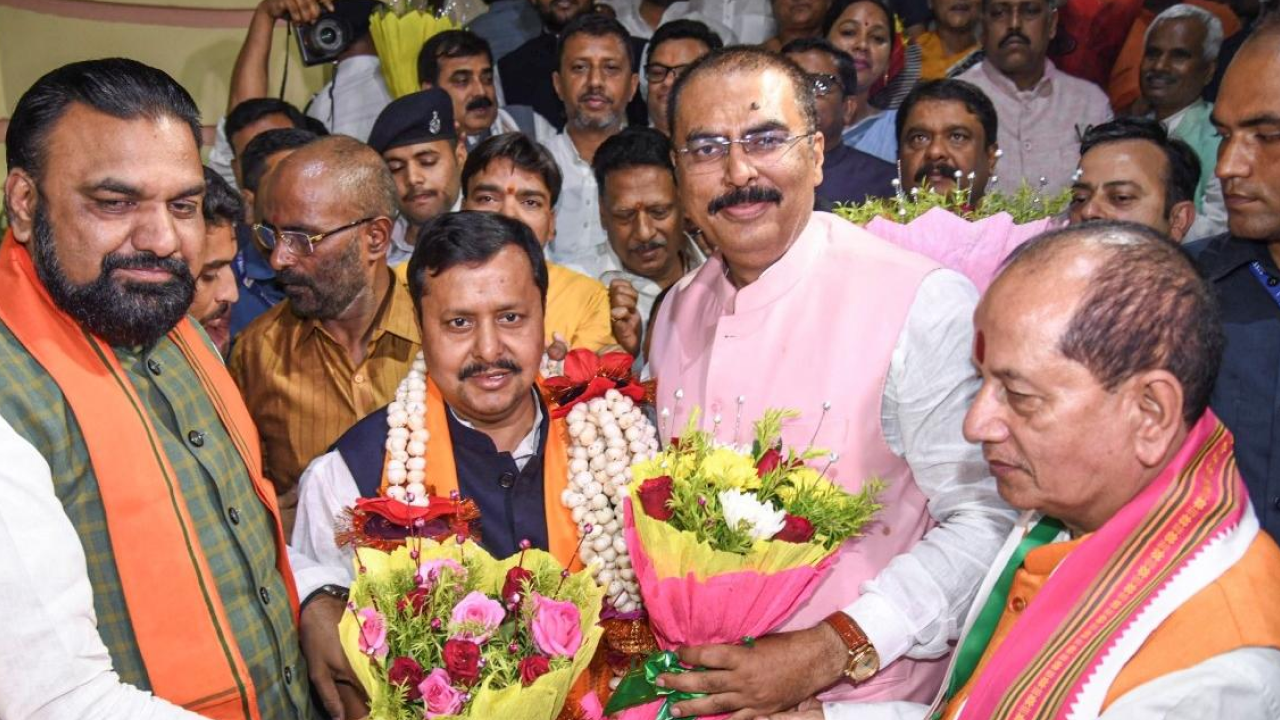
In Bihar, the NDA delivered a decisive sweep, capturing all five available seats. Among the winners was Nitish Kumar, the state’s longest-serving chief minister and leader of the Janata Dal (United). Other successful candidates included BJP’s Nitin Nabin and Shivesh Kumar, JD(U)’s Ram Nath Thakur, and Rashtriya Lok Morcha chief Upendra Kushwaha.
The results marked a setback for the opposition in the state, where efforts to consolidate votes were undermined by shifting alliances and political arithmetic.
In Odisha, the BJP secured three of the four seats decided through voting. The party’s state unit chief Manmohan Samal and sitting MP Sujeet Kumar were elected, while Dilip Ray, an Independent candidate backed by the BJP, also won. The remaining seat went to Santrupt Misra of the Biju Janata Dal (BJD).
The Odisha contest drew controversy after reports of cross-voting. Opposition leaders accused the BJP of influencing legislators, allegations the ruling party denied. The outcome nevertheless marked a notable expansion of the BJP’s presence in the state’s Rajya Sabha representation.
In Haryana, the election became the most contentious of the day. Counting for the two seats was temporarily halted after complaints from the BJP alleging that two Congress legislators violated ballot secrecy rules while voting. The Congress responded by urging the Election Commission to ensure that all valid votes were counted and demanded a review of polling footage.
Despite the dispute, the candidates eventually declared winners were BJP leader Sanjay Bhatia and Congress nominee Karamvir Singh Boudh.
Many Candidates Elected Unopposed
A majority of seats in this election cycle were decided without a contest. Across seven states, 26 candidates were elected unopposed, reflecting pre-poll political agreements and numerical advantages held by dominant parties in their respective assemblies.
Among the prominent leaders elected unopposed were Sharad Pawar, leader of the Nationalist Congress Party (Sharad Pawar faction), and Union minister Ramdas Athawale from Maharashtra.
In West Bengal, four candidates nominated by the Trinamool Congress Babul Supriyo, former state police chief Rajeev Kumar, senior Supreme Court advocate Menaka Guruswamy, and actor Koel Mallick — secured seats without opposition. Former state BJP president Rahul Sinha was also elected unopposed.
Guruswamy’s election marked a historic moment as she became India’s first openly queer member of Parliament.
Elsewhere, in Telangana, Congress leaders Abhishek Manu Singhvi and Vem Narender Reddy were elected unopposed. Tamil Nadu saw six uncontested victories involving candidates from the DMK, AIADMK, PMK, Congress, and DMDK. In Maharashtra, all seven candidates including those from the ruling Mahayuti alliance and Sharad Pawar secured seats without voting.
In Himachal Pradesh, Congress candidate Anurag Sharma, a close associate of Chief Minister Sukhwinder Singh Sukhu, also won his seat.
Why This Matters
The Rajya Sabha plays a crucial role in India’s legislative process, particularly for constitutional amendments and major policy reforms that require broader parliamentary support.
For the NDA government, expanding its presence in the Upper House is strategically important. The alliance has been working to close the gap toward the majority mark of 123 seats, which would significantly ease the passage of key legislation.
Several reforms particularly those related to labour laws, social policy, and economic restructuring have previously faced hurdles in the Rajya Sabha due to opposition strength. A stronger numerical position could allow the government to move these proposals forward with fewer obstacles.
Timeline of the 2026 Rajya Sabha Elections
- March 9, 2026: Twenty-six candidates across multiple states were elected unopposed after nominations closed without sufficient challengers.
- March 17, 2026: Voting held for 11 seats in Bihar, Odisha, and Haryana.
- 4:00 pm: Polling concluded.
- 5:00 pm: Counting began for the contested seats.
- Late evening: Haryana counting temporarily halted amid allegations of vote secrecy violations.
- Final results: NDA swept Bihar and gained a strong foothold in Odisha, while Haryana delivered a split outcome.
What Happens Next
The newly elected members will join the Rajya Sabha as the terms of outgoing MPs expire, gradually reshaping the political balance in the chamber.
With the NDA expanding its influence through wins in Bihar and Odisha, the BJP-led alliance is expected to emerge from this election cycle with a stronger position in the Upper House. Analysts say this shift could influence the pace and scope of legislation in the coming parliamentary sessions.
At the same time, disputes such as the one seen in Haryana illustrate how closely fought contests and tight assembly arithmetic can still produce political flashpoints in the electoral process.