
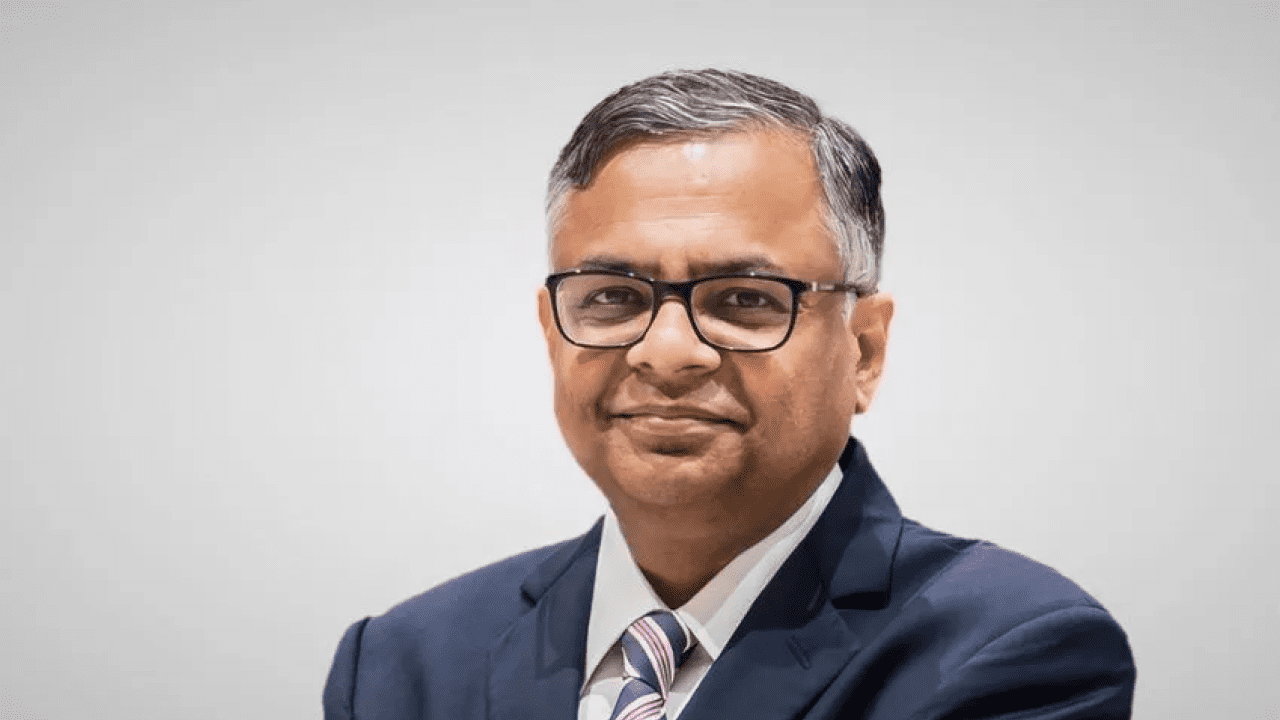
Tata Sons Chairman Natarajan Chandrasekaran’s reappointment was discussed but not finalized at a board meeting on Tuesday, signaling potential leadership tensions within India’s oldest conglomerate. The board of Tata Sons, the holding company of the Tata Group, deferred a decision on granting Chandrasekaran a third term, even as his current tenure runs until February next year.
People familiar with the matter said the board examined the reappointment but chose not to take a final call at this stage. The deferment comes amid reported differences among directors over financial losses in certain business units, raising questions about internal alignment at the top of the 156-year-old conglomerate.
A spokesperson for Tata Sons did not immediately respond to requests for comment.
Also read: Amar Sinha Exit Speculation Swirls at Radico Khaitan as Company Denies Leadership Change
Boardroom Differences Surface
According to individuals aware of the discussions, the delay reflects varying views within the board regarding the group’s financial performance in select divisions. The development was first reported by The Economic Times, which had earlier indicated that Chandrasekaran was likely to secure a third term.
While no formal decision has been made, the move has fueled speculation about a renewed power struggle within the group, reminiscent of past leadership conflicts.
Echoes of the 2016 Leadership Crisis
The latest uncertainty revives memories of the dramatic 2016 boardroom battle, when then-chairman Cyrus Mistry was abruptly removed in a move led by former chairman Ratan Tata. The episode marked one of India’s most high-profile corporate disputes and exposed tensions between Tata Sons and its majority shareholder, Tata Trusts.
Tata Trusts, which controls roughly two-thirds of Tata Sons, is now chaired by Noel Tata, Ratan Tata’s half-brother. Noel assumed leadership of the trusts in 2024, adding a new dimension to the conglomerate’s internal power dynamics.
The 2016 crisis disrupted what had historically been a model of stable leadership transitions within the Tata Group. For decades, chairmen were selected from within a close-knit leadership circle, and succession planning was largely smooth and discreet.
Leadership Continuity at Stake
Chandrasekaran, 62, became the first chairman of Tata Sons from outside the Tata family or its traditional inner circle when he was appointed in 2017. His elevation was widely viewed as a stabilizing move following the Mistry ouster.
Under his leadership, the group’s 15 largest listed companies have nearly doubled their combined revenues and profits. His tenure has been marked by strategic expansion and transformation initiatives, including plans to establish India’s first indigenous semiconductor fabrication facility and steering Tata Consultancy Services through rapid technological shifts driven by artificial intelligence.
However, the conglomerate also faced a challenging year marked by multiple crises. These included a deadly Air India crash, a cyberattack at Jaguar Land Rover, and renewed friction within Tata Trusts.
Noel Tata’s Growing Influence
The pending decision on Chandrasekaran’s tenure is also seen as a test of Noel Tata’s influence within the Tata ecosystem. Since taking charge of Tata Trusts, Noel has begun reshaping its leadership structure. His son Neville Tata was appointed as a trustee last year, while trustee Mehli Mistry stepped down.
Observers say the outcome of the reappointment process could indicate how assertively Noel Tata intends to shape the future leadership of the Tata Group and whether continuity will prevail over internal recalibration.
With Chandrasekaran’s current term still having months to run, the board retains time to deliberate. Yet the deferment underscores that succession and governance remain closely watched issues at one of India’s most influential business houses.