
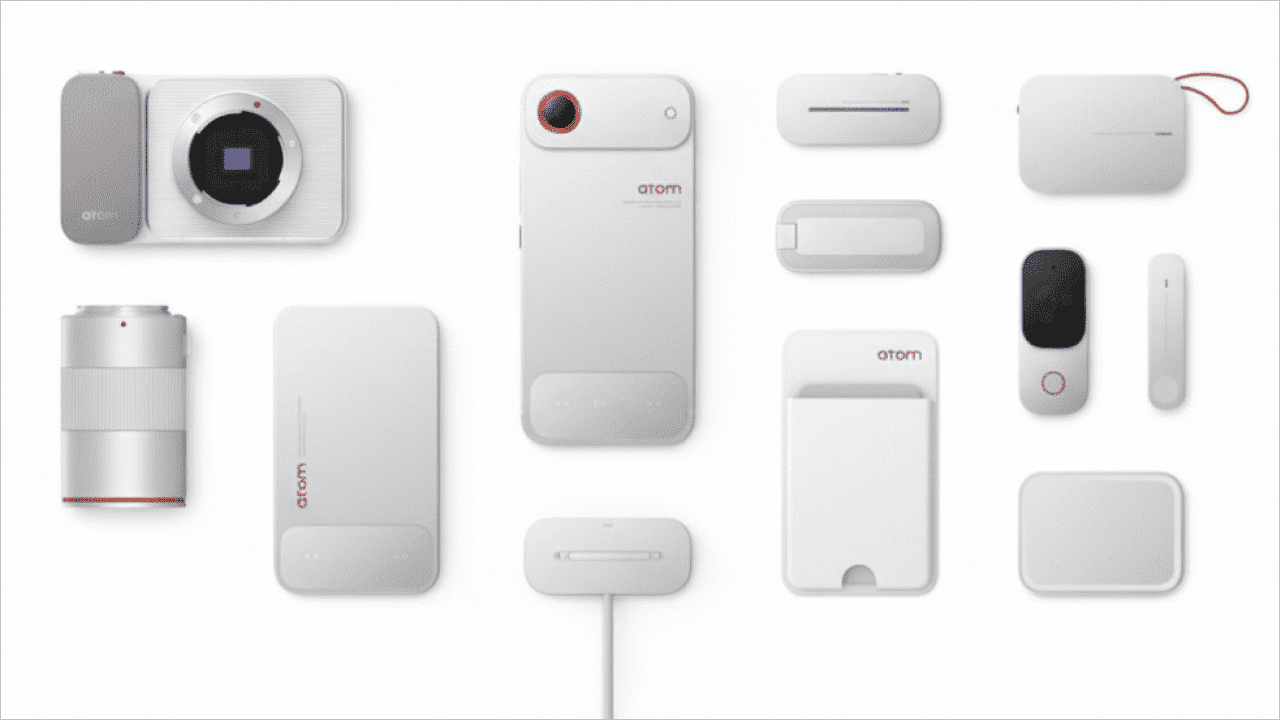
At Mobile World Congress 2026 in Barcelona, Tecno made a striking debut with a concept smartphone that promises to reshape the modular phone landscape. The device, which measures an ultra-thin 4.9mm, defies traditional smartphone design by ditching the charging port altogether, relying instead on a unique magnetic and modular accessory system. The vision, a highly customizable device that evolves with user needs, from photography enhancements to battery boosts and beyond.
The prototype, still in conceptual form, starts as a minimalist base a simple, screen-dominant body with a basic camera setup and a small internal battery. The real innovation lies in its rear panel, where magnets and pogo-pin connectors allow a wide array of accessories to snap on, transforming the device into a versatile platform. These modules, ranging from camera attachments to power banks, are designed to stack on one another, offering users an instant and intuitive way to adapt their phone to various tasks, without rebooting or complex setup.
Modular Revolution: How Tecno’s Concept Could Impact the Market
While modular smartphones have had a rocky history, from Google’s failed Project Ara to Motorola’s Moto Mods and LG’s G5, Tecno’s concept introduces a more seamless and sophisticated approach. Unlike past attempts, which often felt like gimmicks, Tecno’s system leverages magnets for quick connection, and it distributes both power and data through the modules ensuring the phone functions as a unified, stackable platform.
Key modules demonstrated include telephoto lenses, an action camera, a clip-on speaker, and even a wireless microphone. Perhaps most impressively, users can attach additional battery packs extending the phone’s life from its core 3,000mAh to a potential 10,000mAh. The lack of a built-in charging port in favor of a magnetic charging module adds another layer of convenience, allowing for easy, wireless recharging without the clutter of cables.
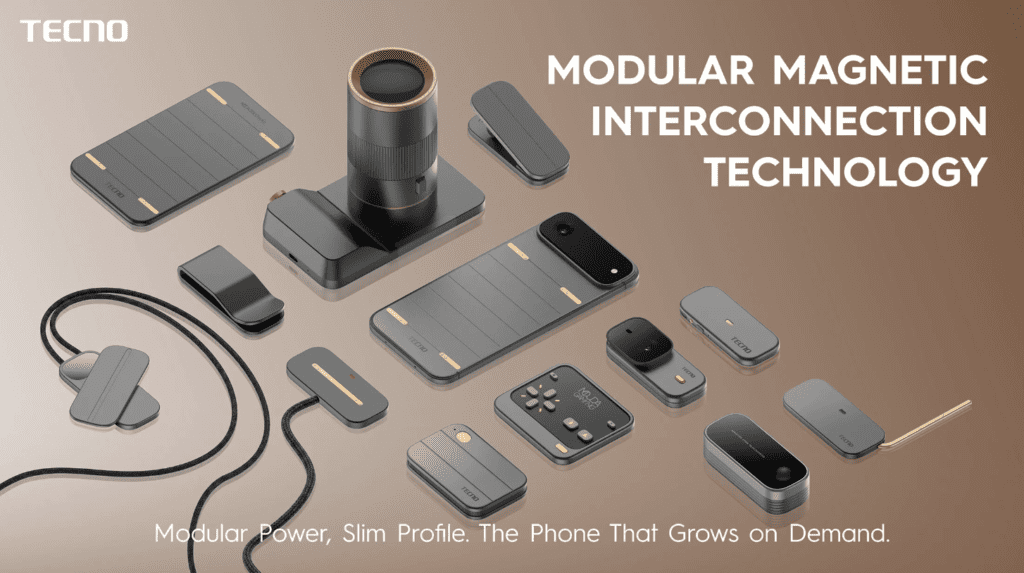
This approach tackles long-standing pain points for smartphone users, the need for better battery life, enhanced audio, and more powerful imaging capabilities. Whether for travelers, creators, or everyday users, the ability to snap on a bigger battery or a better camera on-the-go could solve critical issues that have plagued mobile devices for years.
Why Modularity Matters Now More Than Ever
Tecno’s design isn’t just about convenience it’s also a response to growing concerns about sustainability in the tech industry. The UN’s Global E-waste Monitor recently reported that the world generated 62 million metric tons of e-waste in 2022, a staggering figure with fewer than a quarter of devices being properly recycled. A modular approach could reduce e-waste by allowing users to replace or upgrade only the components they need, rather than discarding an entire device when it becomes outdated.
This shift aligns with the EU’s upcoming regulations aimed at enhancing battery replaceability by 2027, as well as global movements toward the right-to-repair. In this context, Tecno’s modular system could pave the way for a more sustainable future in smartphone design.
The Hurdles to Overcome: Will Tecno’s Modular Vision Survive?
While Tecno’s magnetic modular phone concept is undoubtedly exciting, there are significant engineering and market challenges that could impede its success. The primary hurdle will be ensuring that multiple modules can stack without compromising performance, whether it’s heat dissipation, power distribution, or data transfer. The modular design must also maintain smooth connectivity between stacked components, as lag or connection failures would quickly undermine the appeal.
Moreover, the durability of these modular components will be critical. Users will expect a robust ecosystem of modules that continue to function across multiple phone generations. The stability of this ecosystem will depend on consistent manufacturing standards, open specifications, and long-term support, areas where past modular initiatives have faltered.
For Tecno to succeed where others have failed, it will need to secure partnerships with accessory manufacturers, ensuring that the modules not only meet the high standards of quality but also remain widely compatible with future devices.
What’s Next: A Flexible Platform for the Future?
Tecno’s vision of a modular, snap-on device that adapts to users’ needs could be a game-changer, but the proof will be in execution. As history has shown, modularity in smartphones is compelling in theory but challenging in practice. To stand out, Tecno will need to ensure that its device feels effortless in daily use, combining simplicity with powerful customization options.
If Tecno succeeds in overcoming these challenges, the brand could set a new benchmark for the smartphone industry offering a device that can adapt and evolve alongside its users, reducing e-waste while delivering a better user experience. For now, the modular phone remains a tantalizing concept, and it will be fascinating to see if Tecno can turn this bold idea into a market-ready product.