
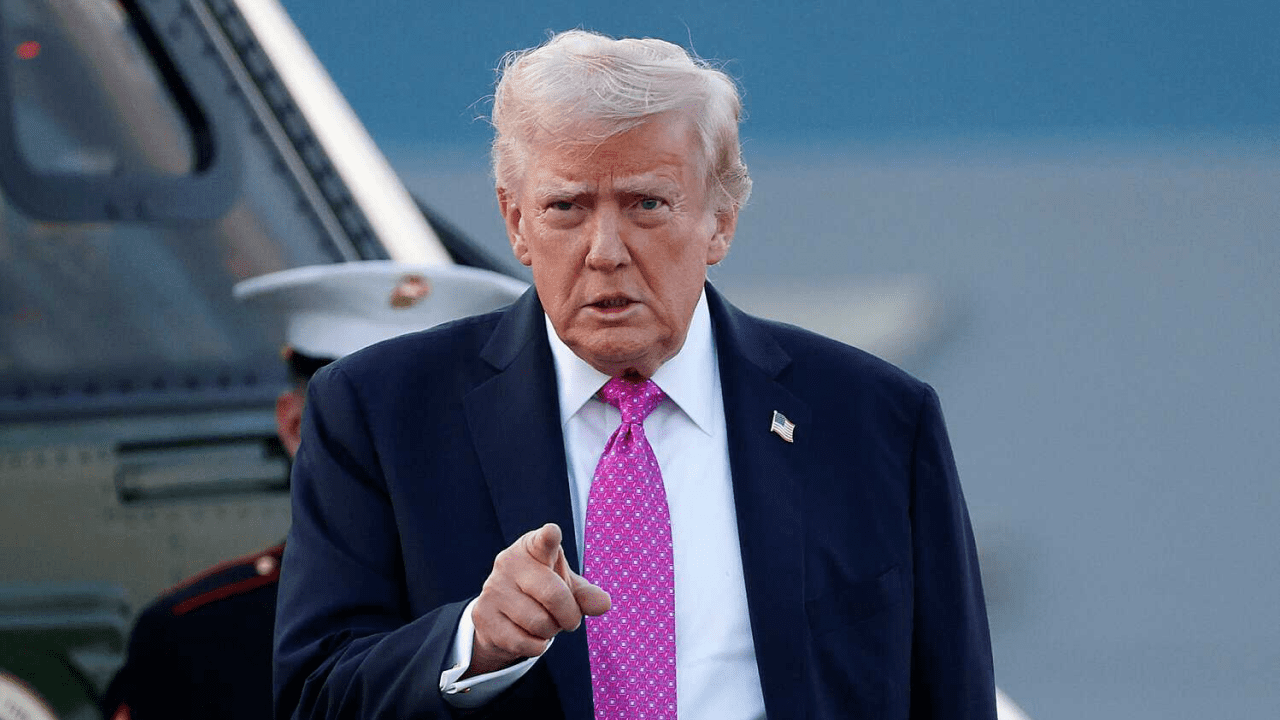
Trump tariffs Supreme Court ruling has upended one of President Donald Trump’s most sweeping trade measures, striking down his global tariff regime and triggering a new phase of legal battles, policy shifts and economic uncertainty. The decision delivers short-term relief to businesses and trading partners but sets the stage for renewed tariff action and prolonged courtroom fights as the administration pivots to alternative legal tools.
Within hours of the ruling, President Trump announced a new 10% tariff on imports from all countries, signaling that his aggressive trade strategy remains firmly intact despite the judicial setback. Analysts warn that the clash between the White House and the courts could reshape U.S. trade policy for years to come.
Also read: US Government Shutdown Begins as Congress Misses 2026 Budget Deadline
Supreme Court Strikes Down Global Tariffs
The U.S. Supreme Court invalidated the administration’s use of the International Emergency Economic Powers Act (IEEPA) to impose broad global tariffs. The decision effectively removes one of the fastest and most powerful mechanisms the president had used to levy sweeping duties.
The ruling immediately raises questions about the future of the roughly $133.5 billion collected in tariffs between January 2025 and mid-December.
However, the court did not address whether those funds must be refunded. That issue is now expected to be litigated in lower courts.
ING analysts Carsten Brzeski and Julian Geib said the U.S. Court of International Trade will likely oversee the process. Refunds will not be automatic, they noted, as importers must individually sue to reclaim their payments. More than 1,000 corporate entities have already initiated legal action.
President Trump acknowledged the prolonged legal fight ahead, stating the matter could remain in court for years.
Trump Announces New 10% Tariffs Under Trade Act
In a swift response, President Trump invoked Section 122 of the Trade Act of 1974, announcing a 10% global tariff that can remain in effect for 150 days unless Congress extends it.
Posting on Truth Social, Trump declared he had signed the new measure from the Oval Office, making it effective almost immediately.
Section 122 provides temporary authority, widely viewed as a bridge toward more durable trade actions. The president has also indicated he may pursue investigations under Section 301 of the Trade Act, which targets unfair trade practices and can lead to longer-term tariffs.
Josh Lipsky, chair of international economics at the Atlantic Council, said the ruling simply “opens a new chapter” in Trump’s tariff strategy. He warned businesses should prepare for continued volatility and complex trade negotiations.
Administration Vows to Restore Tariff Pressure
U.S. Treasury Secretary Scott Bessent defended the administration’s earlier use of emergency powers, arguing on Fox News that they were tailored to give President Trump leverage in negotiations.
He emphasized that tariff pressure would return through alternative channels, even if implemented in a less direct manner.
The Supreme Court’s decision removes one rapid pathway for imposing broad tariffs but does not dismantle the administration’s broader trade agenda.
Also read: US Senator Ted Cruz Says He Is ‘Battling White House’ to Secure India Trade Deal in Leaked Audio
What Happens to Collected Tariffs?
The fate of the $133.5 billion already collected remains uncertain.
If courts ultimately determine refunds are required, the process could take years. Importers must pursue individual lawsuits, adding complexity and prolonging uncertainty for businesses that have already absorbed higher import costs.
The growing number of legal challenges underscores the scale of financial and economic stakes tied to the ruling.
Impact on Trade Deals and Global Negotiations
Because emergency tariffs formed the basis of recent trade negotiations, some analysts suggest countries may attempt to revisit existing agreements.
However, Lipsky expects nations that have already reached deals to maintain them rather than risk destabilizing fragile trade arrangements.
Wendy Cutler, senior vice president at the Asia Society Policy Institute, indicated that most U.S. partners are unlikely to abandon agreements outright, as doing so could leave them in a weaker negotiating position with Washington.
Countries still engaged in negotiations may view the ruling as leverage, potentially complicating future talks.
Lower Tariffs For Now
According to The Budget Lab at Yale University, the ruling reduces the average effective tariff rate faced by consumers to 9.1%, down from 16.9%. Even so, the level remains the highest since 1946, excluding 2025.
Some economists believe the decision may prompt a recalibration of tariff policy.
Heather Long, chief economist at Navy Federal Credit Union, said the ruling is likely to reset tariff strategy and could result in lower overall rates alongside a more structured approach to future duties.
Prolonged Uncertainty Ahead
While the Supreme Court has curtailed one avenue for sweeping tariff action, it has not ended President Trump’s trade ambitions. Instead, the ruling ushers in a new period marked by temporary measures, legal disputes and strategic maneuvering.
For businesses, trading partners and consumers, the coming months may bring renewed instability as the administration works to restore tariff leverage through alternative legal frameworks.