
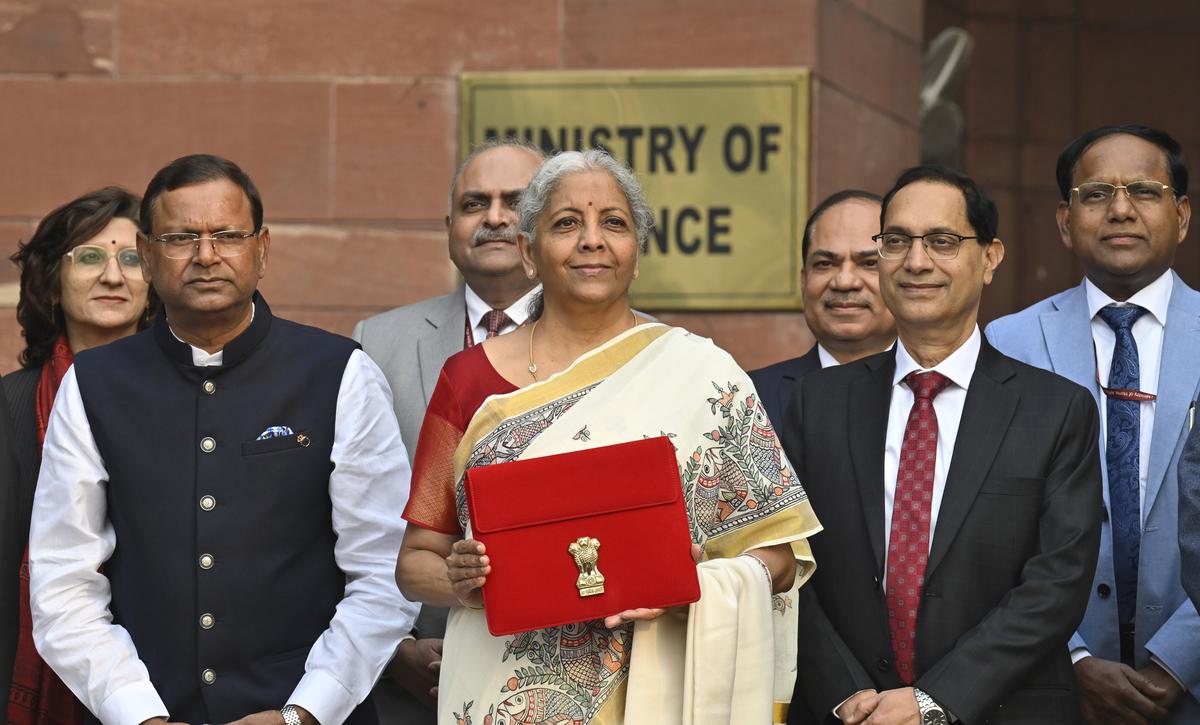
Union Budget 2026 is expected to prioritise higher public spending and structural reforms while maintaining a path of fiscal consolidation, as the Narendra Modi government looks to cushion the Indian economy from the impact of steep US tariffs and global uncertainties.
The budget, scheduled to be presented on February 1, 2026, is likely to focus on boosting infrastructure investment, improving ease of doing business, and simplifying compliance for small enterprises. With private investment remaining subdued amid weak corporate earnings and foreign capital outflows, Finance Minister Nirmala Sitharaman is expected to rely on public spending to support growth.
“The budget will focus on both resilience and growth,” said Dharmakirti Joshi, Chief Economist at Crisil Ltd. “The emphasis will be on maintaining fiscal discipline, sending the right signals on reforms, and encouraging private investment partly through reforms and partly through incentives.”
While rising global risks and higher US tariffs are weighing on India’s export outlook, economists expect any increase in government spending to be carefully calibrated to avoid derailing fiscal consolidation goals.
Budget 2026 Expectations: Government Capex and Debt
India’s capital expenditure, primarily directed towards roads, ports, and energy infrastructure, is projected to cross ₹12 lakh crore in FY27, up from an estimated ₹11.2 lakh crore in FY26, according to a median forecast of 29 analysts surveyed by Bloomberg News. Defence spending is also expected to rise following last year’s military clash with Pakistan.
Despite the push for higher capital outlay, analysts believe the government will remain committed to reducing debt levels. The fiscal deficit target is expected to be lowered to around 4.2% of GDP in the next financial year, aligning with the long-term goal of bringing federal debt down to about 50% of GDP, plus or minus one percentage point, by 2030–31.
The Reserve Bank of India recently cut its policy rate to a more than three-year low to support growth and counter the effects of 50% US tariffs on certain Indian exports, partly linked to purchases of Russian oil. The central bank has also indicated room for further easing if inflation remains under control, alongside liquidity measures to keep borrowing costs in check.
India-US Trade Deal and India-EU FTA
Uncertainty surrounding an India-US trade deal has added pressure on the rupee, which depreciated nearly 5% last year. While India’s economy posted strong growth of 8.2% in the July-September quarter, the overall outlook remains clouded by global headwinds. Growth is projected at 7.4% for the current financial year ending March 31.
To reduce dependence on traditional trade partners such as the US and China, the Modi government is actively diversifying India’s trade relationships. A landmark free trade agreement with the European Union is seen as a key driver for exports and investment, while Canada is emerging as another strategic focus as India searches for new growth engines amid rising global protectionism.
Budget 2026 Expectations: Higher RBI Dividend
To finance increased spending, the government is expected to lean more heavily on dividends from the Reserve Bank of India and other financial institutions. Economists, including Pranjul Bhandari, estimate RBI dividend payouts could reach as high as ₹3 lakh crore this year. Asset sales are projected to generate around ₹50,000 crore, indicating a continued slowdown in divestment activity.
Although Prime Minister Modi’s popularity remains largely intact, there is growing speculation that Union Budget 2026 may also carry targeted measures aimed at voters in politically crucial states such as Tamil Nadu and West Bengal, where the ruling party is seeking to expand its footprint.
“They tend to focus on states where elections are approaching, as they did with Bihar last time,” said Shumita Deveshwar, Chief Economist at GlobalData.TS Lombard. “It wouldn’t be surprising if they repeat that strategy this time.”