
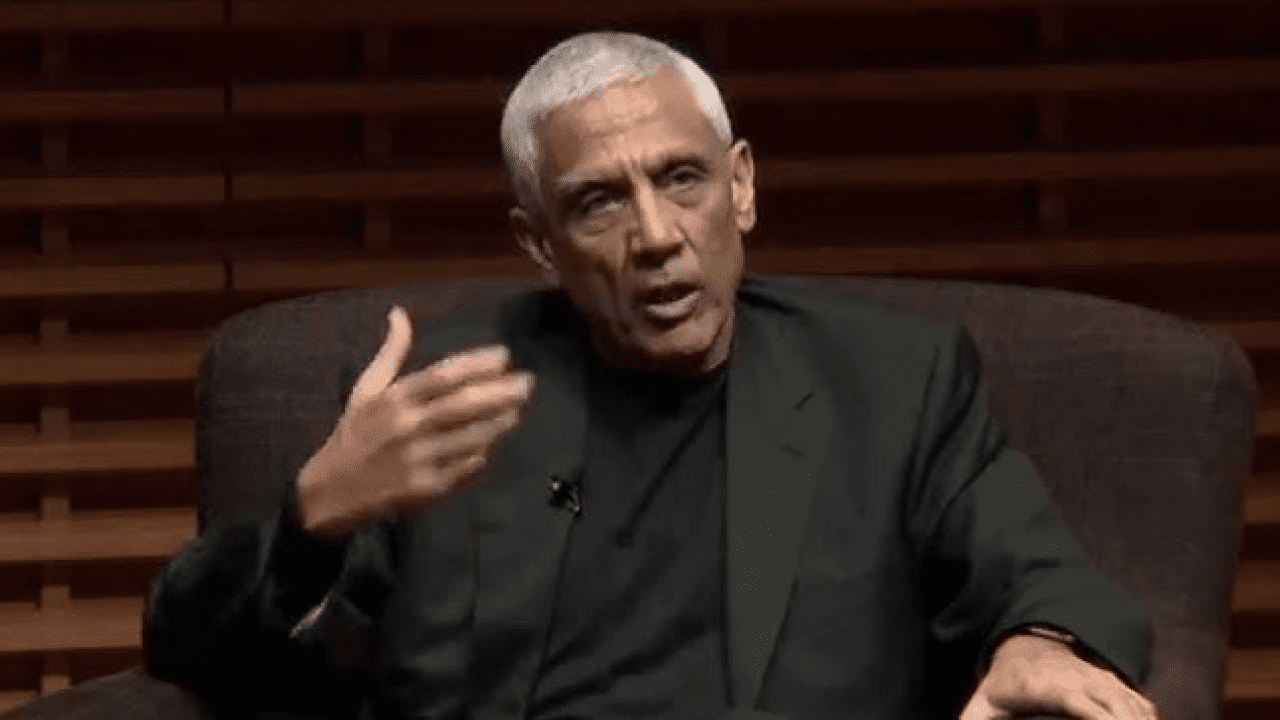
Vinod Khosla has issued a stark warning about the future of India’s IT and BPO sectors, predicting that rapid advances in artificial intelligence could render much of the country’s outsourcing industry obsolete within five years. Speaking ahead of the India AI Summit, the veteran venture capitalist said AI is advancing at a pace that threatens to disrupt expertise-driven professions, potentially reshaping global labour markets and intensifying competition among nations.
In an interview with Hindustan Times, Khosla cautioned that AI systems are moving quickly from functioning as digital assistants to operating as autonomous “AI workers” capable of performing economically valuable tasks more efficiently than humans. For a country like India where IT services and business process outsourcing (BPO) have generated millions of white-collar jobs the implications could be profound.
IT Services and BPO Face Major Disruption
Khosla said IT services and BPO roles could “almost completely disappear” within five years as AI tools take over routine and knowledge-based work. BPO, which involves companies outsourcing processes to third-party service providers, has long been a pillar of India’s services economy.
According to Khosla, AI’s growing ability to handle complex tasks threatens not only call centre operations and back-office functions but also high-skill, expertise-driven roles. Fields such as accounting, law, medicine and chip design could see significant disruption over the next 10 to 15 years.
Khosla, co-founder of Sun Microsystems and founder of Khosla Ventures, argued that AI differs fundamentally from earlier technological waves like the internet or smartphones. While previous platforms enabled new business models, AI replicates cognitive labour itself unlocking potentially dramatic productivity gains in the near term.
Echoes From Industry Leaders
Khosla’s remarks come amid similar warnings from global technology executives. Brian Chesky, CEO of Airbnb, recently revealed that the company’s customised AI agent now handles roughly one-third of customer support requests in North America, with plans for further international expansion. Chesky said AI is not only reducing costs but also improving service quality.
Likewise, Mustafa Suleyman, CEO of Microsoft AI, has warned that artificial intelligence could replace a significant share of white-collar jobs within the next 12 to 18 months. He noted that disruption will extend beyond coders and software engineers to lawyers, accountants and other professionals.
A Call for India to Pivot to AI-Native Innovation
Given India’s heavy reliance on outsourcing-driven growth, Khosla urged a strategic pivot toward building AI-native products and services. Instead of depending on traditional IT and BPO models, he said, young professionals should focus on creating and leveraging AI tools.
He also warned that large-scale job displacement could widen inequality and spark political backlash if productivity gains are not distributed broadly. Countries that invest early in sovereign AI capabilities including foundational models tailored to national priorities will be better positioned in a global landscape increasingly shaped by the United States and China, he added.
AI’s Promise – Lower Costs, Greater Access
Despite the warnings, Khosla stressed that AI also holds transformative potential. He said the technology could dramatically reduce the cost of essential services such as healthcare, tutoring and legal support, making high-quality expertise widely accessible at minimal expense.
He added that robotics currently lagging behind cognitive AI by a few years could soon accelerate automation in physical industries as well. Ultimately, the broader economic and social impact of AI will depend on policy choices and how governments and businesses manage the transition.
Describing AI as a once-in-a-generation shift, Khosla said its influence on global competition and labour markets is likely to unfold far more quickly than most policymakers and corporate leaders anticipate.