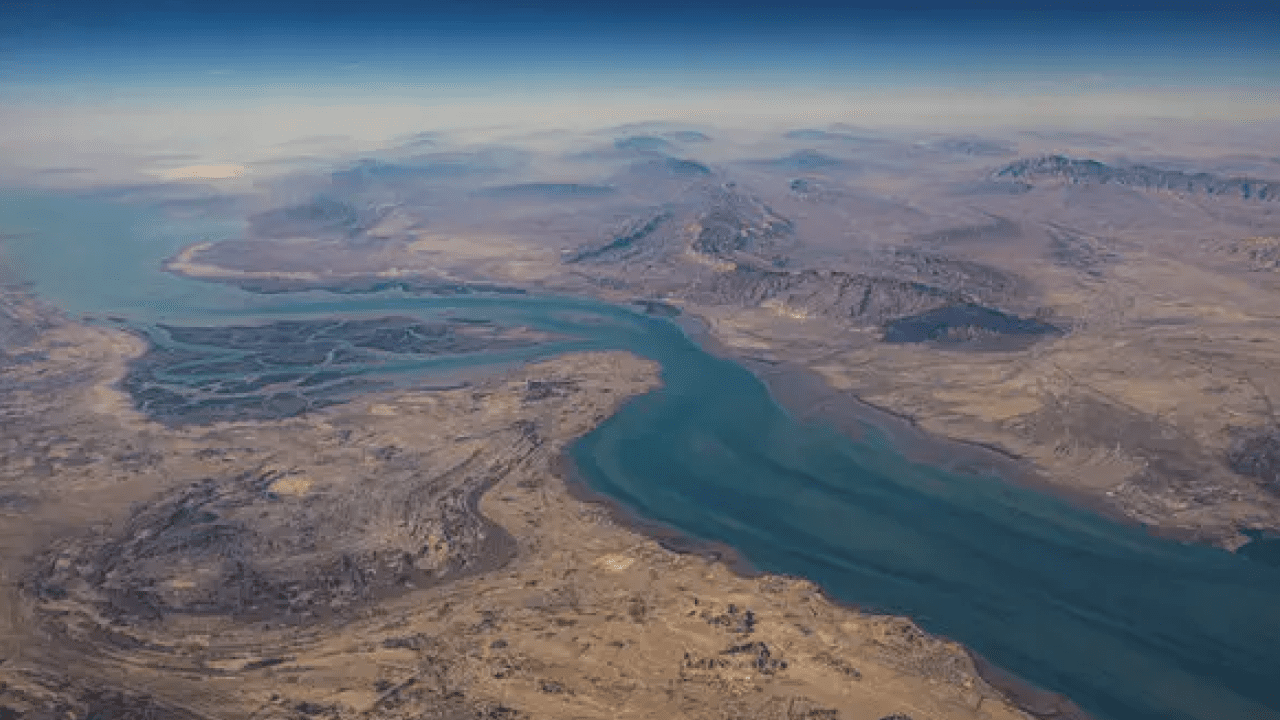
As tensions intensify in the Middle East, the Strait of Hormuz blockade has become both a geopolitical flashpoint and an unlikely stage for digital sparring, with Iran publicly mocking the United States even as military pressure escalates. Following the collapse of peace talks between Tehran and Washington, US President Donald Trump announced a naval blockade targeting Iranian ports an aggressive move with significant global implications given the strategic importance of the waterway.
Amid this high-stakes standoff, Iran’s diplomatic missions have taken to social media with pointed humor. The Iranian Consulate in Hyderabad drew widespread attention after posting on X: “The Strait of Hormuz isn’t social media. If someone blocks you, you can’t just block them back.” The remark encapsulates Tehran’s attempt to blend messaging with mockery, even as the situation on the ground remains volatile.
The blockade, enforced by US Central Command, aims to restrict vessels from entering or exiting Iranian ports across the Arabian Gulf and the Gulf of Oman. While disruptions in the strait have persisted since the outbreak of conflict earlier this year, the formal declaration signals a sharper escalation after negotiations in Islamabad reportedly mediated by Pakistan failed to yield a breakthrough.
Iran has condemned the move as an act of “piracy,” warning that any threat to its ports could destabilize maritime security across the broader region. The rhetoric has been matched by increasingly creative digital responses, as Tehran attempts to shape global perception while under mounting pressure.
Also read: Trump Warns of Massive Escalation as Fragile US-Iran Ceasefire Faces Mounting Strain
Background Context
The Strait of Hormuz is one of the world’s most critical energy corridors, handling a substantial share of global oil shipments. Any disruption in this narrow passage has immediate consequences for international markets and energy security.
The current crisis traces back to a broader conflict triggered by coordinated US-Israel military strikes on Iran earlier this year. Since then, tensions have steadily escalated, with intermittent attempts at diplomacy failing to produce lasting agreements.
Despite ongoing discussions about potential future negotiations, the blockade underscores Washington’s strategy to exert maximum economic and strategic pressure on Tehran. Analysts suggest the move is also aimed at influencing China, a major importer of Iranian oil, to intervene diplomatically.
The Rise of a Digital Propaganda Battle
While naval deployments dominate the physical landscape, a parallel contest is unfolding online. Iranian embassies and consulates have increasingly adopted humor, memes, and pop culture references to communicate their stance.
One widely shared example includes a Bollywood-inspired clip circulated by Iran’s Mumbai consulate, using a comedic chase scene to symbolize the US attempting to enforce restrictions on a region already experiencing disruption. The post was accompanied by the caption praising Indian meme culture, signaling a deliberate effort to connect with global audiences through familiar cultural touchpoints.
This approach marks a shift in diplomatic communication, blending traditional state messaging with internet-era tactics. By leveraging humor, Iran appears to be softening its image while simultaneously criticizing US actions turning complex geopolitical developments into shareable content.
Why This Matters
The convergence of military escalation and digital messaging highlights a new dimension of modern conflict. The Strait of Hormuz is not just a strategic chokepoint it is now central to both economic stability and narrative control.
Any sustained disruption could trigger spikes in global oil prices, disrupt supply chains, and heighten uncertainty in already fragile markets. At the same time, the online exchange between Iran and the US reflects how governments are increasingly using social media to influence public opinion and frame international events.
Iran’s meme-driven strategy may also serve a domestic purpose, reinforcing national sentiment and projecting resilience in the face of external pressure. For the US, the blockade represents a continuation of hardline tactics aimed at limiting Iran’s economic and geopolitical leverage.
What Happens Next
The immediate future remains uncertain, with both sides signaling readiness for further escalation while leaving the door open for renewed talks. The blockade could tighten economic constraints on Iran, but it also raises the risk of broader regional instability if retaliatory measures are taken.
International reactions have already begun to surface, with China criticizing the US move as “dangerous and irresponsible,” reflecting concerns among major global stakeholders about the potential fallout.
As diplomatic channels remain fragile, the situation in the Strait of Hormuz is likely to remain a focal point for both strategic maneuvering and global attention. Whether through naval operations or viral posts, the confrontation between Iran and the United States is unfolding across multiple fronts each with its own consequences.