
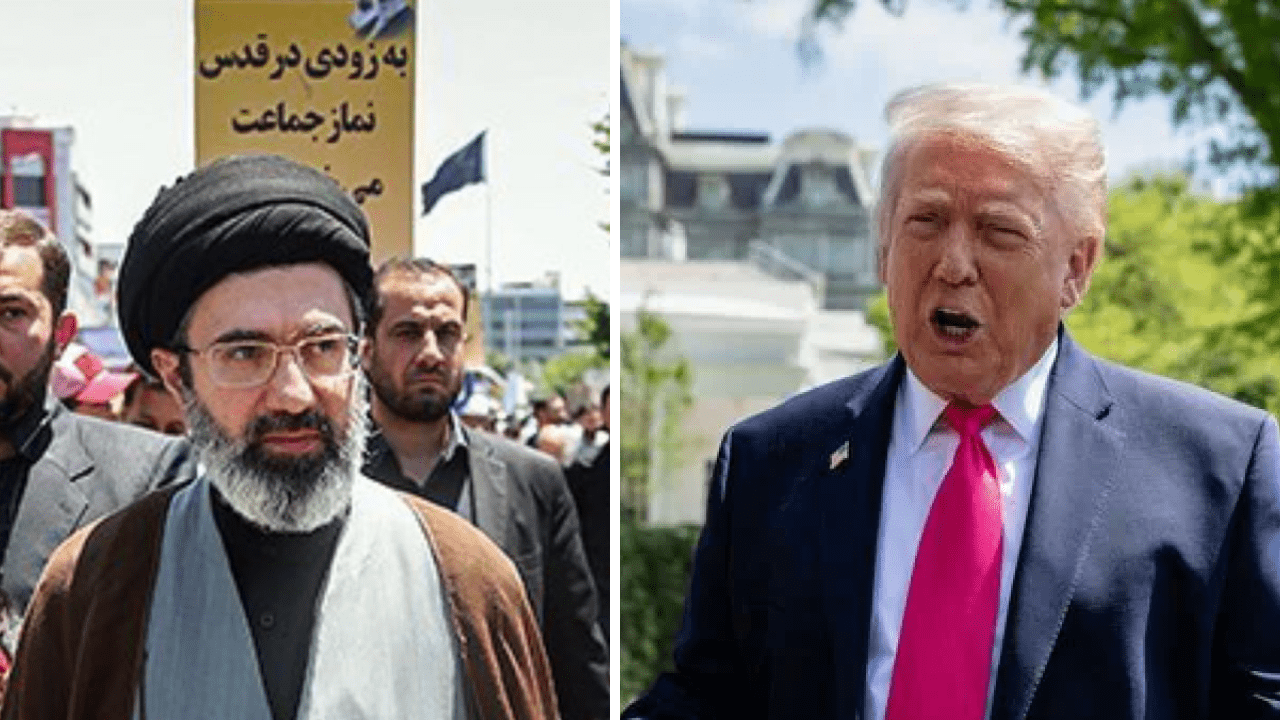
As the fragile US-Iran ceasefire approaches its April 22 deadline, tensions are rapidly intensifying, with both sides issuing stark warnings of renewed hostilities. The standoff rooted in last year’s “Operation Midnight Hammer” and a broader regional conflict involving Israel now threatens to evolve into a prolonged, low-intensity confrontation with global consequences.
US President Donald Trump reignited debate this week by defending the impact of Operation Midnight Hammer, a June 2025 military offensive targeting Iran’s nuclear infrastructure. The operation marked Washington’s formal entry into a 12-day conflict triggered by Israeli strikes on Iranian facilities and remains central to the current geopolitical deadlock.
With negotiations uncertain and mutual accusations mounting, analysts warn the conflict may not end decisively but instead settle into a volatile “frozen conflict” a scenario marked by intermittent violence, unresolved disputes, and persistent instability across the Middle East.
Also read: US-Iran Maritime Standoff Deepens as Navy Enforces Blockade, Redirects Multiple Vessels Near Hormuz
Escalation Rooted in Last Year’s Strikes
Operation Midnight Hammer, launched on June 22, 2025, saw US forces strike three key Iranian nuclear sites Fordow, Natanz, and Isfahan using bunker-buster munitions delivered by B-2 stealth bombers. The operation followed nearly two weeks of Israeli bombardments linked to concerns over Iran’s nuclear ambitions.
Trump has continued to describe the strikes as a decisive success, claiming they “obliterated” Iran’s nuclear capabilities, while criticizing media coverage for downplaying the role of US military personnel.
The strikes brought a temporary halt to hostilities, culminating in a ceasefire on June 24. However, that truce proved short-lived. By February 2026, renewed joint US-Israeli attacks triggered a broader regional war, marked by missile exchanges, drone warfare, and escalating maritime tensions in the Persian Gulf.
A key flashpoint has been the Strait of Hormuz, a strategic waterway through which roughly 20% of global oil and gas supplies transit. Iran has leveraged its geographic advantage to disrupt shipping, raising alarm in global energy markets.
Ceasefire on Brink as Talks Stall
A two-week ceasefire, brokered through negotiations in Pakistan, temporarily paused the latest round of fighting. But with the deadline imminent, prospects for extending the truce remain uncertain.
Washington has signaled readiness to resume negotiations in Islamabad, with Vice President JD Vance expected to participate. Trump has warned that failure to reach an agreement could lead to immediate escalation.
Tehran, however, has cast doubt on its participation, accusing the US of violating the ceasefire through naval blockades and the seizure of Iranian vessels. Iranian officials have rejected claims that they agreed to transfer enriched uranium stockpiles a central issue in negotiations and insist such concessions were never discussed.
Iran’s leadership has also issued warnings of potential military responses, including threats to target vessels in the Strait of Hormuz, further heightening the risk of economic disruption and military confrontation.
Also read: Iran Mocks US Over Strait of Hormuz Blockade as Online Meme War Escalates Amid Rising Tensions
Why a “Frozen Conflict” Is Increasingly Likely
Despite diplomatic efforts, experts suggest the trajectory of the conflict points toward a prolonged stalemate rather than a comprehensive peace agreement.
One key factor is the nature of recent ceasefires. The US administration has repeatedly framed ceasefires as definitive endpoints rather than temporary pauses for deeper negotiations. This approach has often left underlying disputes unresolved, creating conditions for recurring instability.
Another challenge lies in the asymmetric balance of power. While the US and Israel possess overwhelming military superiority, Iran has adopted unconventional strategies targeting regional infrastructure and disrupting maritime trade to offset this imbalance. Such tactics are designed to prolong conflict and impose economic and political costs rather than achieve outright military victory.
Finally, the core issues driving the conflict remain unaddressed. Chief among them is Iran’s nuclear program. Previous negotiations, including the 2015 nuclear deal, required extensive diplomatic engagement over many months. Current talks have made little progress, with both sides maintaining firm positions.
Industry / Market Impact
The instability has already sent ripples through global markets, particularly in the energy sector. The Strait of Hormuz remains a critical chokepoint, and any sustained disruption could significantly impact oil prices and supply chains.
Shipping routes have become increasingly volatile, with insurers raising premiums and some companies rerouting vessels to avoid the region. This has added logistical costs and heightened uncertainty for global trade.
Financial markets have also reacted to the geopolitical risk, with fluctuations in energy stocks and increased demand for safe-haven assets. Analysts warn that a prolonged standoff could exacerbate inflationary pressures worldwide, particularly in energy-dependent economies.
What Happens Next
The immediate future hinges on whether negotiations in Pakistan materialize and produce even a limited agreement. A short-term extension of the ceasefire remains possible, but expectations for a comprehensive resolution are low.
If talks collapse, both sides appear prepared to resume hostilities quickly. The risk of escalation is compounded by the involvement of regional actors and the strategic importance of the Gulf.
Over the longer term, the most probable outcome is a pattern of intermittent conflict sporadic military engagements punctuated by temporary ceasefires. This would mirror other global “frozen conflicts,” where wars effectively continue without formal resolution.
Background Context
The current crisis reflects a long history of tension between the US and Iran, particularly over nuclear development. Iran maintains its right to enrich uranium for civilian purposes, while the US and its allies view the program as a potential pathway to nuclear weapons.
Past agreements have failed to produce lasting stability. The 2015 nuclear deal temporarily eased tensions but collapsed after the US withdrawal in 2018, setting the stage for renewed confrontation.
Historical precedents from the Korean Peninsula to Eastern Europe demonstrate how unresolved conflicts can persist for decades, often punctuated by periodic violence and arms buildups.
Why This Matters
A frozen conflict in the Middle East carries significant global implications. Beyond the immediate humanitarian and security concerns, it risks triggering a regional arms race and further destabilizing an already volatile region.
Continued uncertainty around the Strait of Hormuz could disrupt global energy supplies, affecting economies far beyond the region. Meanwhile, the absence of a durable political solution increases the likelihood of future escalations, drawing in additional international actors.
As the ceasefire deadline looms, the situation underscores a broader reality, without addressing the underlying political and strategic disputes, temporary truces may only delay rather than prevent the next phase of conflict.