
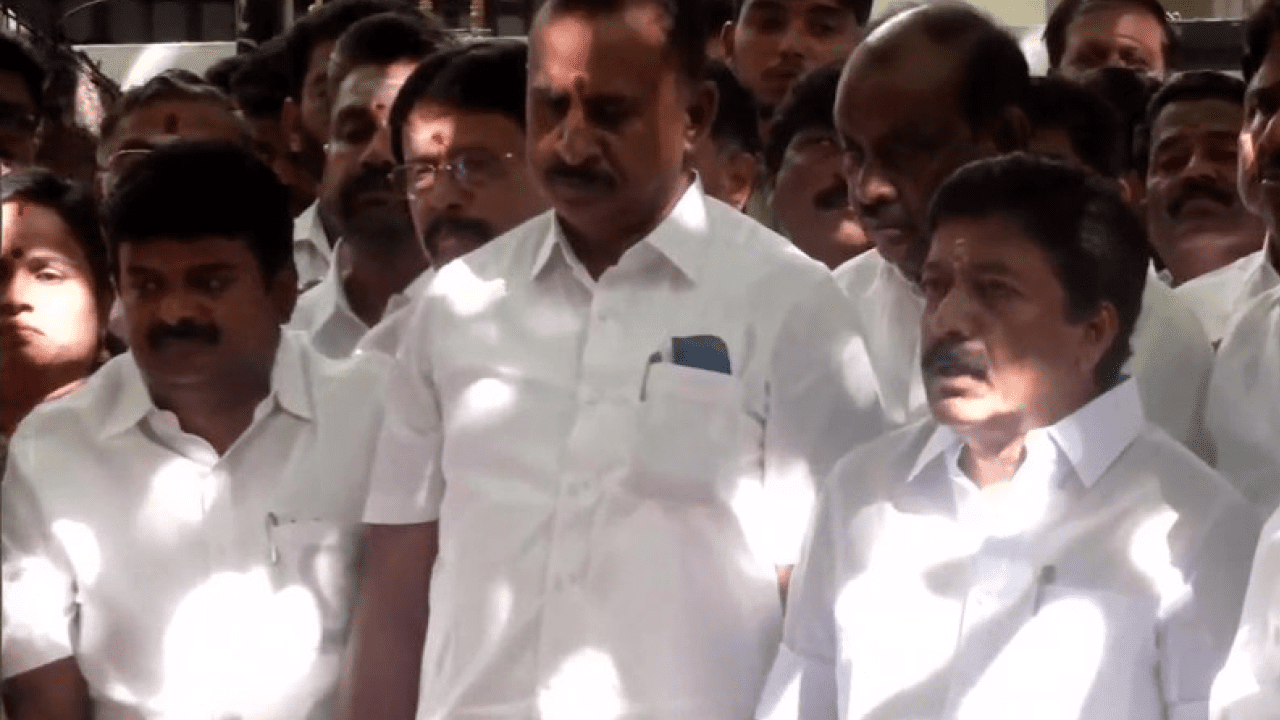
CHENNAI – Tamil Nadu’s political landscape is witnessing a historic realignment as a significant faction within the AIADMK moves to support the newly sworn-in Chief Minister C Joseph Vijay and his Tamilaga Vettri Kazhagam (TVK), challenging the authority of party general secretary Edappadi K. Palaniswami (EPS). The development comes days after the state assembly elections, which saw the AIADMK secure only 47 of 234 seats, marking a substantial electoral setback.
While EPS retains official control as AIADMK chief, internal divisions have intensified. A bloc led by senior leaders C Ve Shanmugham, S P Velumani, and former ministers including C Vijayabaskar now commands the backing of at least 30 MLAs, positioning themselves in favor of supporting Vijay’s TVK during the upcoming floor test. The rebel faction has convened separate meetings from EPS, drawing the majority of MLAs and district secretaries to their side, signaling a potential realignment in the party’s legislative strength.
EPS’s supporters, estimated at around 20–22 MLAs, remain loyal to the party head, with some formally submitting letters recognizing him as AIADMK Legislature Party leader. In contrast, the rebel faction has sought to endorse Velumani as their floor leader, reflecting a strategic challenge to EPS’s command. This internal fracture follows the collapse of prior attempts at a DMK-AIADMK understanding, which left both Dravidian parties politically embarrassed and heightened the stakes for AIADMK’s survival in the state assembly.
The conflict revolves primarily around whether AIADMK should extend support to Vijay’s TVK government, which successfully crossed the majority mark after post-election negotiations and alliance support. Sources within the party indicate that Shanmugham and Velumani’s faction has already initiated informal contacts with TVK leadership, though Vijay has reportedly insisted that AIADMK MLAs resign and contest by-elections on the TVK symbol a proposal that has met resistance due to potential backlash in their constituencies.
This episode has not only exposed ideological and strategic differences within the AIADMK but also highlighted lingering dissatisfaction with EPS’s leadership. Several senior figures have openly criticized EPS for the party’s continued electoral defeats and isolation from emerging political coalitions, with some MLAs calling for his voluntary resignation to facilitate party unity.
Expert Analysis / What This Means
The ongoing rift within AIADMK is more than a simple leadership tussle; it carries implications for both state governance and the broader political equilibrium in Tamil Nadu. The pro-Vijay faction’s move signals a willingness to prioritize pragmatic alliances over party loyalty, potentially reshaping legislative dynamics in the assembly. For AIADMK, this could accelerate a leadership transition, forcing EPS to negotiate concessions or risk a formal split.
For voters, these developments may influence policy continuity and government stability, as support from defecting MLAs could determine the success of legislative measures proposed by the TVK. Comparisons to past Dravidian power shifts suggest that this fracture could redefine electoral coalitions ahead of future polls. Industry observers note that such political instability could temporarily affect investor confidence and administrative planning in Tamil Nadu, particularly in sectors sensitive to policy consistency.
Timeline of Events
- April 2026: Tamil Nadu assembly elections result in AIADMK winning 47 of 234 seats.
- Immediately post-election: Rebel bloc of AIADMK leaders proposes support for Vijay’s TVK; EPS initially resists.
- Days following election: Separate meetings held; majority of MLAs align with Shanmugham and Velumani.
- Swearing-in of CM Vijay: Rebel faction signals intention to vote for TVK in floor test; discussions on resignation and by-election take place.
- Current: Pro-Vijay MLAs consolidate, challenging EPS’s authority; internal reconciliation efforts fail.
Why This Matters
AIADMK’s internal discord represents a pivotal moment for Tamil Nadu politics. The party, historically dominant in the state, now faces a leadership and strategic crisis that could redefine its role as the opposition. The emergence of a pro-TVK bloc not only strengthens CM Vijay’s legislative position but also underscores the fluidity of political loyalties post-elections. The outcome of this factional struggle may set a precedent for future party alignments and coalition-building across southern India.
Background Context
AIADMK, founded by late J Jayalalithaa, has long maintained a centralized leadership structure. However, her passing left a vacuum that successive leaders, including EPS, have struggled to fill effectively. Repeated electoral setbacks and failed alliance negotiations have eroded internal confidence, allowing emerging leaders like Shanmugham and Velumani to challenge established hierarchies. The party’s current predicament highlights the broader volatility in Dravidian politics, where personal clout often intersects with legislative strategy.