
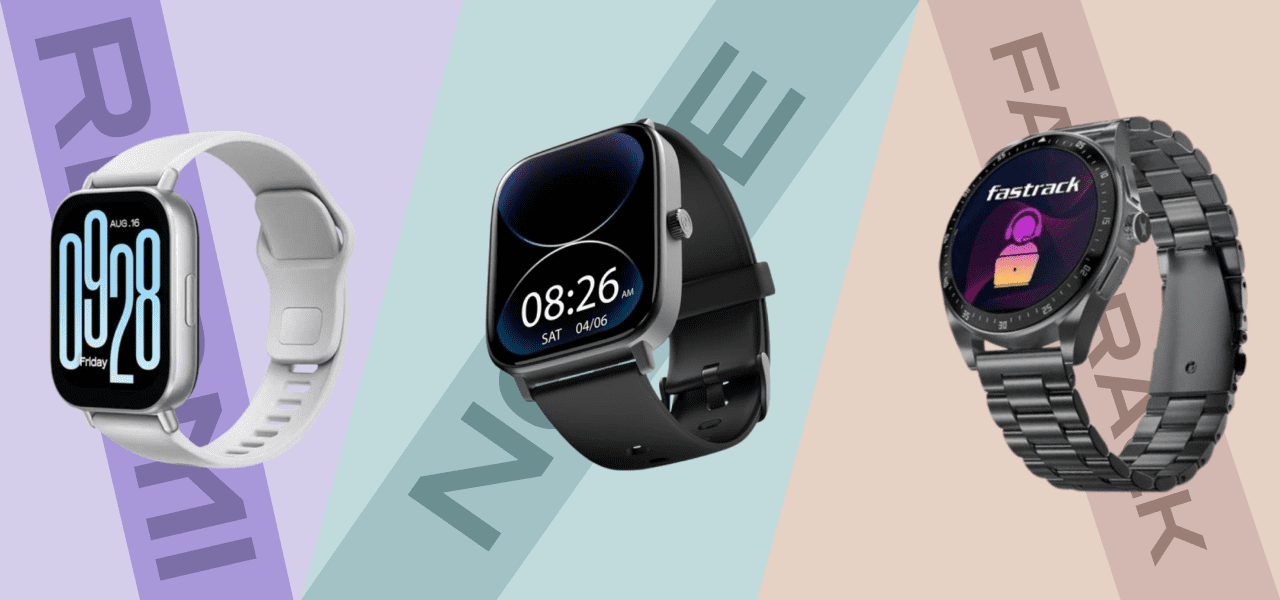
The Indian smartwatch market has entered a highly competitive phase in 2026, with brands aggressively pushing AMOLED displays, Bluetooth calling, and advanced health tracking into the sub-₹3,000 segment, making it a highly attractive budget AMOLED smartwatch under 3000 category. Devices that were once considered premium such as SpO2 monitoring, Always-On Display, and even VO2 Max estimation are now widely available at entry-level pricing.
Among the latest offerings, multiple smartwatches from brands like boAt, Noise, Fastrack, and Redmi are competing for dominance, each targeting slightly different user needs such as battery endurance, design appeal, or fitness accuracy. At the same time, global budget wearables like Amazfit continue to influence consumer expectations around battery life and health tracking reliability.
What stands out in this segment is not just feature availability, but how aggressively brands are balancing cost with performance. The result is a category where buyers must choose between design, battery life, ecosystem integration, and health accuracy rather than basic functionality.
Also read: NoiseFit Diva Araya Smartwatch Launched in India with Jewellery-Inspired Design and AMOLED Display
AMOLED Smartwatch Segment Under ₹3,000 Becomes a Feature Battlefield
One of the most noticeable trends in this price range is the standardisation of AMOLED displays. Models such as the boAt Chrome Horizon, Redmi Watch Move, Noise Halo 2, and Fastrack Astor FR2 Pro all offer high-resolution AMOLED panels with brightness levels suitable for outdoor use.
The Redmi Watch Move leans heavily into usability with a 1.85-inch AMOLED screen, 60Hz refresh rate, and up to 14 days of battery life, making it one of the strongest endurance-focused options. Meanwhile, boAt Chrome Horizon introduces a smaller 1.51-inch AMOLED panel but compensates with higher brightness, premium build materials, and deeper fitness analytics.
On the design front, Noise Halo 2 and Fastrack Astor FR2 Pro focus on metal finishes and rotating crown mechanisms, signalling a shift toward premium styling even in budget wearables.
Also read: Samsung Galaxy Watch Battery Drain Issue Sparks User Frustration Across Multiple Models
boAt Chrome Horizon Emerges as the Most Feature-Loaded Option
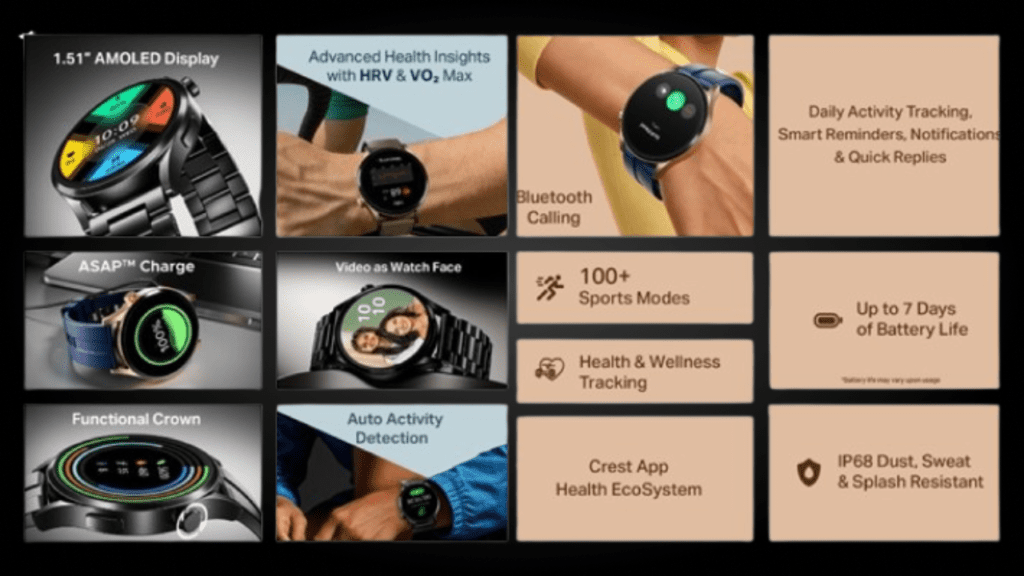
The most aggressively positioned device in this segment is the boAt Chrome Horizon, priced at around ₹2,999. It combines a 1.51-inch AMOLED display with a metal body, Bluetooth calling, and a rotating crown interface.
What differentiates it from competitors is its focus on advanced fitness analytics, including VO2 Max estimation, Heart Rate Variability (HRV), and continuous SpO2 monitoring. These metrics are typically reserved for higher-priced fitness watches, making its inclusion at this price point notable.
The device also supports more than 100 sports modes, auto activity detection, and a suite of health tools including sleep tracking and stress monitoring. Battery life extends up to seven days under standard usage, supported by fast charging technology that significantly reduces downtime.
From a usability standpoint, features such as video watch faces, smart notifications, and in-watch utilities like music control and SOS functionality make it a more integrated daily companion rather than just a fitness tracker.
Entry-Level Competition: Redmi, Noise, and Fastrack Target Different Users
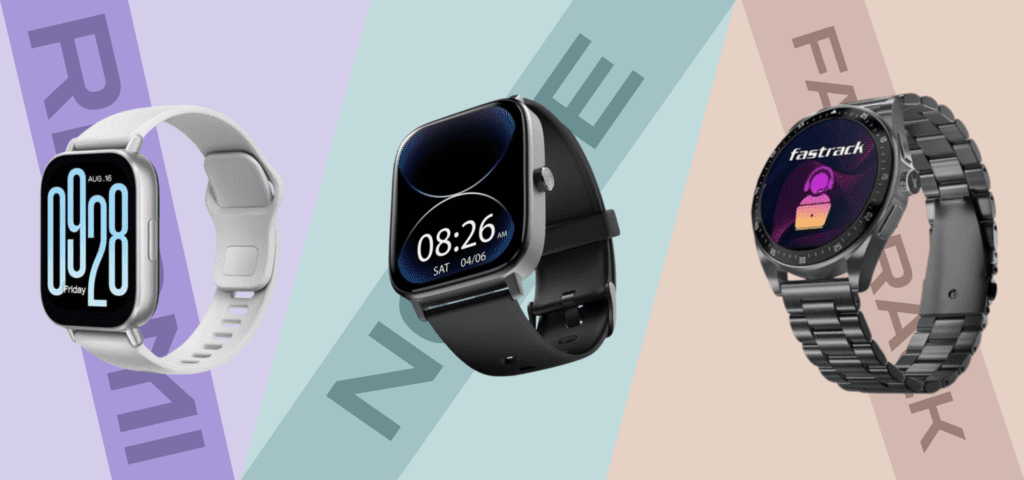
While boAt focuses on feature density, other brands are taking more segmented approaches.
The Redmi Watch Move prioritises endurance and smooth software experience, offering up to 14 days of battery life and a lightweight interface built on HyperOS. It is positioned as a practical smartwatch for users who value longevity over premium materials.
Noise Halo 2, on the other hand, leans heavily into design. Its rotating bezel and metal construction aim to replicate a luxury smartwatch aesthetic, while still offering essential health tracking and Bluetooth calling.
Fastrack Astor FR2 Pro continues this trend with a strong emphasis on styling and everyday usability, combining a premium finish with standard fitness features and a simple interface.
Across all these devices, Bluetooth calling and SpO2 tracking have become baseline expectations rather than premium additions.
Also read: NASA Artemis Watch 2.0 Brings Coding and Space Tech to Your Wrist Amid Artemis II Buzz
Expert Analysis / What This Means
The rapid feature expansion in sub-₹3,000 smartwatches reflects a broader shift in the wearable industry where hardware differentiation is shrinking but software ecosystems are becoming more important. Manufacturers are now competing less on “what features exist” and more on how well those features are implemented.
Battery life remains a major dividing line, with devices like Redmi Watch Move outperforming others significantly in endurance-focused use cases. Meanwhile, boAt Chrome Horizon demonstrates how brands are pushing premium health metrics like VO2 Max into mass-market pricing, a move previously limited to sports-focused devices costing several times more.
However, this aggressive feature stacking also introduces inconsistency. Some devices prioritise design over accuracy, while others sacrifice ecosystem refinement for hardware specifications. Compared to older generations of budget smartwatches, the current lineup offers far more capability but also requires users to carefully choose based on priorities rather than brand alone.
The market is also increasingly influenced by global budget wearables such as Amazfit Bip series devices, which are often praised for long battery life and stable fitness tracking. These global benchmarks continue to pressure Indian brands to improve sensor accuracy and software reliability.
Ultimately, the sub-₹3,000 smartwatch category is evolving into a highly segmented ecosystem where no single device is universally best but several are highly optimised for specific user needs.
What Happens Next
The next phase of competition is likely to focus on AI-driven health insights, improved sensor accuracy, and tighter smartphone integration. Brands are expected to push deeper into predictive health tracking and contextual notifications rather than simply increasing feature counts.
We may also see stronger differentiation between fitness-first watches and lifestyle-oriented smartwatches, especially as battery efficiency and display technology continue to improve at lower price points.
Industry / Market Impact
- AMOLED displays are now a standard expectation in budget wearables
- Bluetooth calling has become a baseline feature across brands
- Health tracking is expanding into advanced metrics like VO2 Max and HRV
- Battery life remains the key differentiator for user satisfaction
- Design-focused models are targeting fashion-conscious buyers alongside fitness users
Background Context
Earlier generations of budget smartwatches primarily focused on step counting, basic notifications, and short battery cycles. In contrast, 2026’s lineup reflects a convergence of fitness trackers and smart assistants, offering advanced biometric tracking and smartphone-level interaction from the wrist.
This shift is also driven by increased consumer awareness of health metrics and growing demand for affordable fitness monitoring tools in urban markets.
Key Figures and Data
- Display range: 1.43-inch to 1.85-inch AMOLED panels
- Battery life: 6 to 14 days depending on model
- Price range: ₹2,199 to ₹2,999
- Sports modes: 100+ across most devices
- Charging time (best-in-class): ~45 minutes (select models)
- Health tracking: SpO2, HRV, sleep, stress, VO2 Max (select devices)