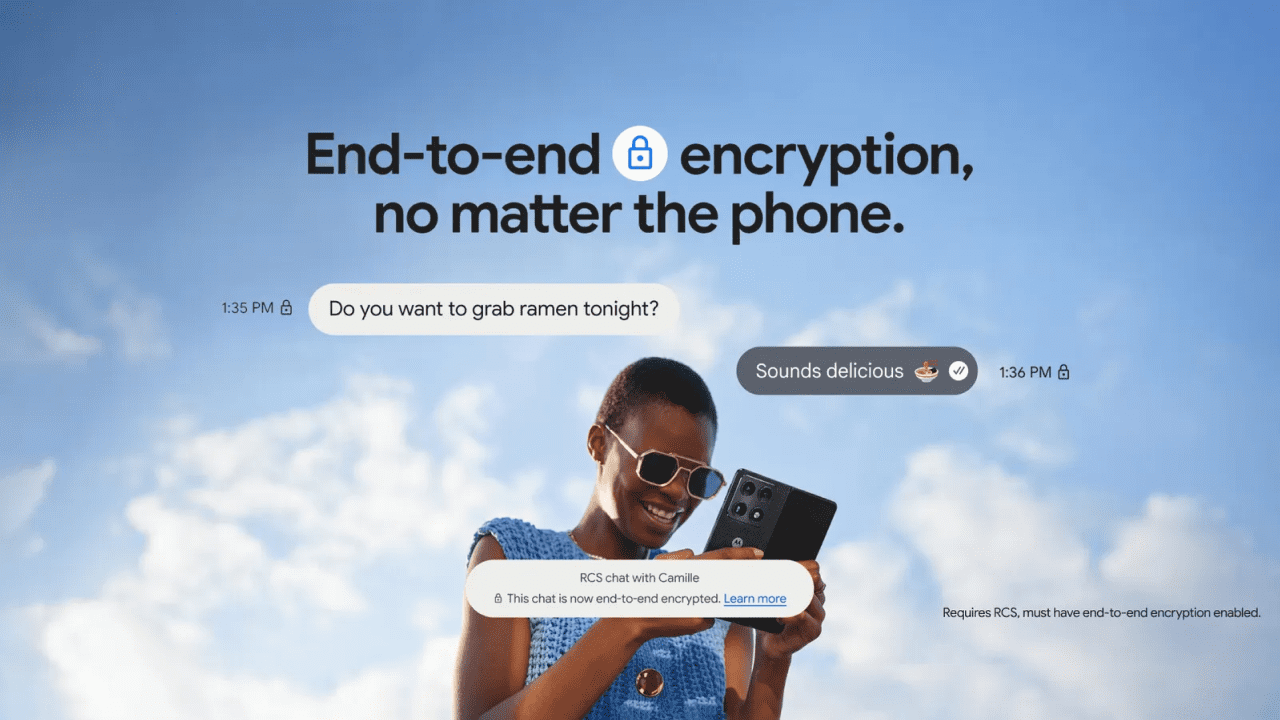
Apple and Google have officially begun rolling out end-to-end encryption (E2EE) for Rich Communication Services (RCS), marking a major step forward in secure cross-platform messaging. Previously limited to Android devices, RCS now offers users the ability to send messages that are fully encrypted between devices, shielding conversations from potential interception. The rollout begins in beta for iPhone users on iOS 26.5 and Android users on the latest version of Google Messages, with carrier support required on select networks.
This launch is significant because RCS is designed to replace traditional SMS with richer, more modern messaging features. For years, Android users have enjoyed end-to-end encrypted RCS chats among themselves, but cross-platform messaging with iPhone devices lacked the same level of security until now. Users can confirm encryption is active in a conversation by a small lock icon, signaling that messages are secured automatically.
For iPhone users, the update is especially crucial. Apple’s iMessage has long been praised for its privacy-first design, and the integration of E2EE RCS ensures that communication with Android users can now approach the same level of security. On the Android side, Google Messages remains the central hub for RCS, with Samsung even directing its users to rely on the app for a consistent experience.
Supported U.S. carriers include AT&T, Verizon, T-Mobile, US Cellular, Boost Mobile, Cricket, Metro by T-Mobile, and several others, with Apple noting that the list will expand over time.
Also read: Microsoft Warns of Explosive Rise in QR Code Phishing as Global AiTM Campaign Hits 35,000 Users
Expert Analysis / What This Means
The introduction of end-to-end encrypted RCS messaging carries significant implications for both users and the mobile industry. For consumers, it means that cross-platform communication is now far less vulnerable to interception, addressing long-standing privacy concerns. This could encourage broader adoption of RCS as a true replacement for SMS, which remains inherently insecure.
For the industry, this launch represents a rare moment of collaboration between two rival tech giants, Apple and Google, in standardizing secure communication protocols. It signals a shift toward interoperability in messaging platforms a trend that could influence future mobile operating system updates and carrier partnerships. Looking ahead, this could pressure other messaging apps to adopt similar encryption standards or risk losing privacy-conscious users. Historically, attempts to unify messaging standards have faced hurdles, making this cross-platform encryption rollout a potential benchmark for future cooperation.
Also read: Google Teases Major Android Overhaul Ahead of May 12 Showcase
Industry and Market Impact
The adoption of end-to-end encrypted RCS could accelerate the decline of traditional SMS, which remains widely used but lacks encryption and advanced features. Mobile carriers may see an increase in data usage as users shift to RCS for richer media and secure messaging. Security-focused enterprises could also leverage this change for internal communications, particularly in sectors handling sensitive customer data.
From a market perspective, Apple and Google’s joint effort strengthens both companies’ positions in privacy-conscious markets. While iMessage retains advantages in its native Apple ecosystem, E2EE RCS levels the playing field for secure messaging across device types, potentially encouraging more users to consider Android options without compromising privacy.
Also read: Apple’s macOS 27 Set to Refine Liquid Glass Design and Supercharge AI Features
What Happens Next
As the beta rollout continues, both companies will likely expand carrier support and fine-tune encryption integration. Users can expect encryption to automatically enable in both new and existing RCS conversations over time. Industry observers anticipate updates to account for features like message reactions, media attachments, and group chats to ensure full encryption coverage.
For mobile users, the next step is clear: updating devices to iOS 26.5 or the latest Google Messages version is essential to benefit from the enhanced security. Carriers will play a pivotal role in extending access, and widespread adoption could redefine how mobile users communicate securely across platforms.