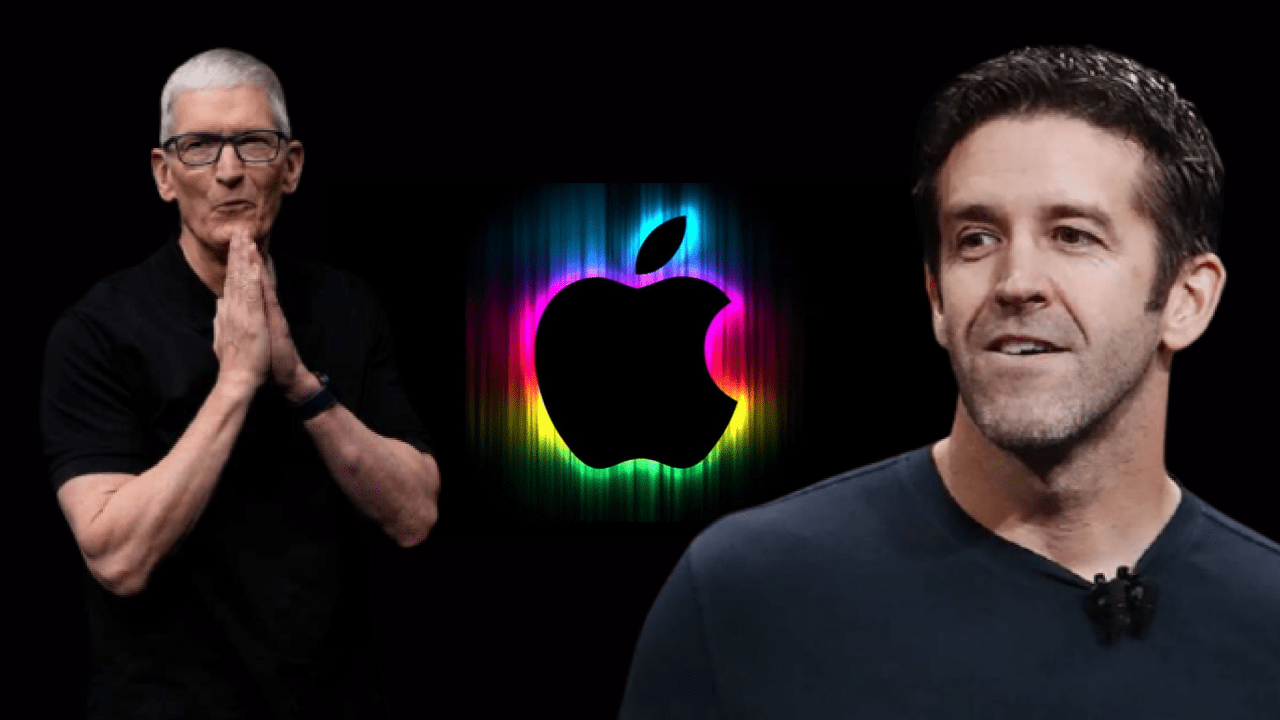
Apple is entering a pivotal new chapter as longtime chief executive Tim Cook prepares to step down, handing leadership to hardware chief John Ternus at a moment when the tech giant faces mounting pressure to redefine its innovation strategy particularly in artificial intelligence.
The company confirmed that Cook will relinquish the CEO role on September 1, transitioning to executive chairman after more than a decade at the helm. His successor, Ternus, a veteran engineer who has overseen key product development efforts, will assume leadership during a critical period marked by intensifying competition in AI, evolving consumer hardware trends, and growing investor scrutiny.
The leadership shift marks the end of an era defined by operational excellence and massive financial growth, but also raises questions about Apple’s pace of innovation in emerging technologies.
Cook, who took over in 2011 following Steve Jobs, transformed Apple into a $4 trillion powerhouse. Under his leadership, the company expanded far beyond its core products, building thriving businesses in wearables, services, and entertainment. Yet as the tech landscape shifts toward AI-driven ecosystems and new device categories, Apple’s recent track record has drawn mixed assessments.
A Legacy of Scale, Stability and Selective Innovation
Cook’s tenure will likely be remembered for turning Apple into one of the most valuable companies in history, while maintaining a disciplined approach to product development and global operations.
He successfully scaled the iPhone into a platform powering an ecosystem of products and services, including the Apple Watch, AirPods, and Apple TV+. The company’s services division became its second-largest revenue engine, while wearables evolved into a major growth category.
Beyond products, Cook navigated Apple through complex global challenges from supply chain disruptions during the COVID-19 pandemic to geopolitical tensions and trade policies affecting manufacturing. His close engagement with policymakers and strategic investments in domestic production helped stabilize Apple’s global footprint.
However, Apple’s cautious approach to emerging technologies has also become a focal point of criticism.
Innovation Gaps: AI, Foldables, and Mixed Product Reception
In recent years, Apple has been perceived as lagging in key areas shaping the future of consumer technology.
Artificial intelligence stands out as the most significant gap. While competitors such as Google and Microsoft have rapidly advanced generative AI platforms, Apple’s efforts have appeared slower and less competitive. Delays in upgrading Siri and reliance on external partnerships have raised concerns about the company’s long-term positioning in the AI race.
Similarly, Apple has yet to enter the foldable smartphone market, a category that rivals particularly Samsung have spent years refining. Although Apple has historically waited for technologies to mature before entering a space, its absence has limited its influence in shaping this fast-growing segment.
Even its most ambitious recent product, the Vision Pro headset, has struggled to achieve mainstream traction. Despite advanced technology and polished execution, high pricing and limited practical use cases have kept it a niche offering rather than a mass-market success.
These factors have contributed to a broader narrative that, while Apple continues to execute well, it may be losing its edge in defining the next wave of innovation.
Also read: Apple’s First Foldable iPhone Nears Launch: Expected Price, Features, and Market Impact
Industry / Market Impact
The CEO transition is already being interpreted by analysts and investors as a signal of strategic recalibration.
Market reactions have been mixed, reflecting both confidence in Apple’s long-term fundamentals and uncertainty about its innovation roadmap. While the company’s stock saw only minor movement following the announcement, analysts note that leadership changes at this level often indicate deeper shifts in priorities.
Many see Ternus’s appointment as a deliberate move to refocus Apple on product innovation. With a background rooted in hardware engineering, he represents a contrast to Cook’s operational expertise. This could signal a renewed emphasis on breakthrough devices and tighter integration between hardware and emerging technologies like AI.
At the same time, expectations are rising. Investors are increasingly focused on Apple’s ability to compete in an AI-driven landscape, where rivals are aggressively capturing market share and setting new benchmarks.
Why This Matters
Apple’s leadership transition comes at a moment when the company’s strategic direction carries broader implications for the tech industry.
For years, Apple has thrived on a “second-mover advantage” entering markets late but redefining them with superior execution. However, analysts warn that this approach may not yield the same results in the rapidly evolving AI space, where early leadership is proving critical.
The shift also highlights a deeper tension within Apple’s identity: balancing its legacy of careful, user-focused design with the need to move faster in a highly competitive environment.
Ternus’s leadership will be closely watched for signs of change not only in product development but also in how aggressively Apple pursues acquisitions, partnerships, and new categories.
What Happens Next
The coming months are expected to be crucial in shaping Apple’s next phase.
Cook will remain CEO through the summer, ensuring continuity during key events, including the company’s Worldwide Developers Conference (WWDC), where major updates particularly around AI are anticipated.
Ternus is expected to take full control ahead of Apple’s next iPhone launch cycle, giving him an early opportunity to define his leadership style and strategic priorities.
Key areas to watch include:
- AI Strategy: Whether Apple can deliver a competitive, integrated AI ecosystem.
- Product Innovation: Potential breakthroughs in hardware, including rumored foldable devices.
- Ecosystem Expansion: Continued growth of services alongside next-generation devices.
Cook’s continued role as executive chairman suggests that while operational leadership is changing, Apple will retain continuity in governance and global strategy.
Ultimately, the transition reflects both the strength of Apple’s foundation and the urgency of adapting to a new technological era. As the company moves forward, the challenge for its next leader will not just be maintaining Apple’s dominance but redefining it.