
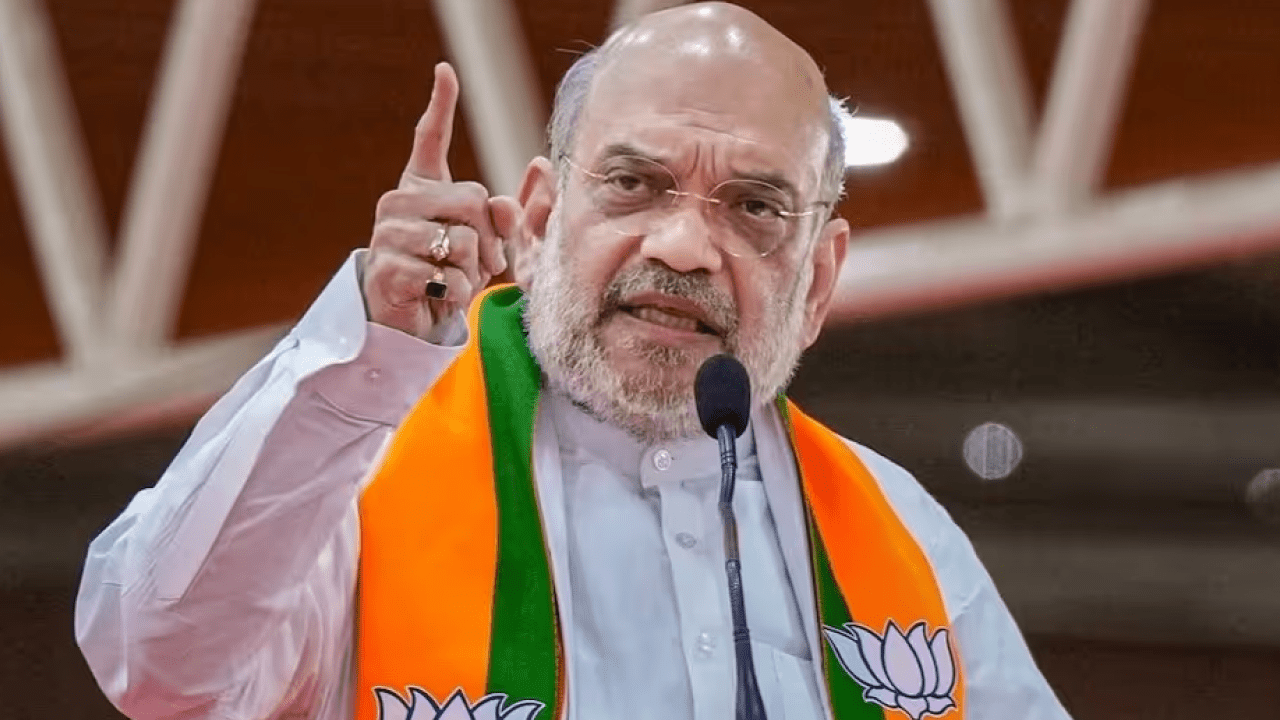
Union Home Minister Amit Shah has intensified political rhetoric in West Bengal’s high-stakes assembly elections, issuing a sharp warning to alleged “goons” linked to the ruling Trinamool Congress (TMC) even as the state recorded historic voter participation in the opening phase of polling. The remarks, delivered both at a rally in Darjeeling and later on social media, come amid a tense electoral climate marked by sporadic violence and fierce political contestation between the Bharatiya Janata Party (BJP) and Chief Minister Mamata Banerjee’s party.
The warning follows the conclusion of the first phase of polling, which saw an unprecedented voter turnout of over 92%, according to election authorities one of the highest ever recorded in the state since Independence. The next phase of voting is scheduled for April 29, raising concerns about security and electoral conduct.
Shah’s comments, which included a threat to “hang troublemakers upside down” if they disrupt peace, signal the BJP’s aggressive posture in a state where elections have historically been marred by allegations of violence and intimidation.
Also read: Kharge’s ‘Terrorist’ Remark on PM Modi Triggers Political Firestorm Ahead of Tamil Nadu Polls
High Turnout Amid Tension and Sporadic Violence
Despite the record-breaking turnout, the first phase was not entirely free of disruptions. Incidents of violence were reported from districts such as Murshidabad, Birbhum, Cooch Behar, and Dakshin Dinajpur. Reports included stone-pelting, crude bomb attacks, and clashes between rival political supporters.
In Birbhum’s Kharisaol area, allegations emerged that votes cast in favor of the TMC were being misattributed to the BJP, leading to protests and temporary suspension of polling. Elsewhere, in Naoda, a political convoy was attacked with stones, triggering further clashes that required intervention by central security forces.
Authorities had deployed Central Armed Police Forces (CAPFs) in large numbers to ensure orderly voting. While officials described the overall process as more peaceful than previous elections, these isolated incidents underscored persistent concerns over electoral violence in the state.
Shah’s Warning and Political Messaging
Shah’s remarks formed part of a broader campaign strategy aimed at projecting the BJP as a force capable of restoring law and order in West Bengal. Addressing a rally in Darjeeling ahead of the first phase, he warned that anyone threatening citizens particularly after the final phases of polling would face strict consequences.
He reiterated the warning after the first phase concluded, urging alleged TMC-linked elements to stay off the streets during subsequent rounds of voting. The strong language reflects the BJP’s continued focus on law-and-order issues, a central theme in its campaign against the ruling party.
Alongside the warnings, Shah congratulated voters for what he described as a “historic” level of participation and praised the Election Commission, central forces, and state police for conducting the polls.
Also read: Women’s Quota Amendment Bill Fails in Lok Sabha, Dealing Rare Setback to Modi Government
Campaign Promises and Regional Focus
At the Darjeeling rally, Shah also outlined a series of welfare measures targeting women, youth, and tea garden workers. He promised monthly financial assistance of ₹3,000 for women and unemployed youth, along with improved wages and educational infrastructure in tea plantation areas.
The BJP leader further emphasized resolving long-standing issues in the Darjeeling hills, particularly those concerning the Gorkha community. He criticized the state government for allegedly failing to engage in dialogue and assured that a BJP-led administration would deliver a solution.
Additionally, Shah accused the state government of uneven allocation of development funds, alleging disparities in budgetary provisions for different communities and regions claims that are likely to remain a contentious part of the campaign narrative.
Why This Matters
The escalating rhetoric highlights the increasingly polarized nature of West Bengal’s electoral battle. With both the BJP and TMC accusing each other of fostering violence and corruption, the election has become a referendum not only on governance but also on law and order.
High voter turnout suggests strong public engagement, but the accompanying tensions raise questions about whether subsequent phases can remain peaceful. Shah’s remarks are likely aimed at consolidating voter confidence among BJP supporters while signaling a tough stance on post-poll violence an issue that has historically plagued the state.
What Happens Next
The second phase of polling, scheduled for April 29, will be closely watched for both turnout trends and security conditions. Election authorities are expected to maintain heightened vigilance, with central forces continuing to play a key role in sensitive constituencies.
Political campaigning is also set to intensify in the coming days, with both major parties sharpening their messaging. The BJP is likely to continue focusing on governance, welfare promises, and law enforcement, while the TMC is expected to counter with its own record and allegations against the opposition.
As West Bengal moves deeper into its multi-phase election process, the balance between democratic participation and electoral security will remain under scrutiny, with national political implications riding on the outcome.