
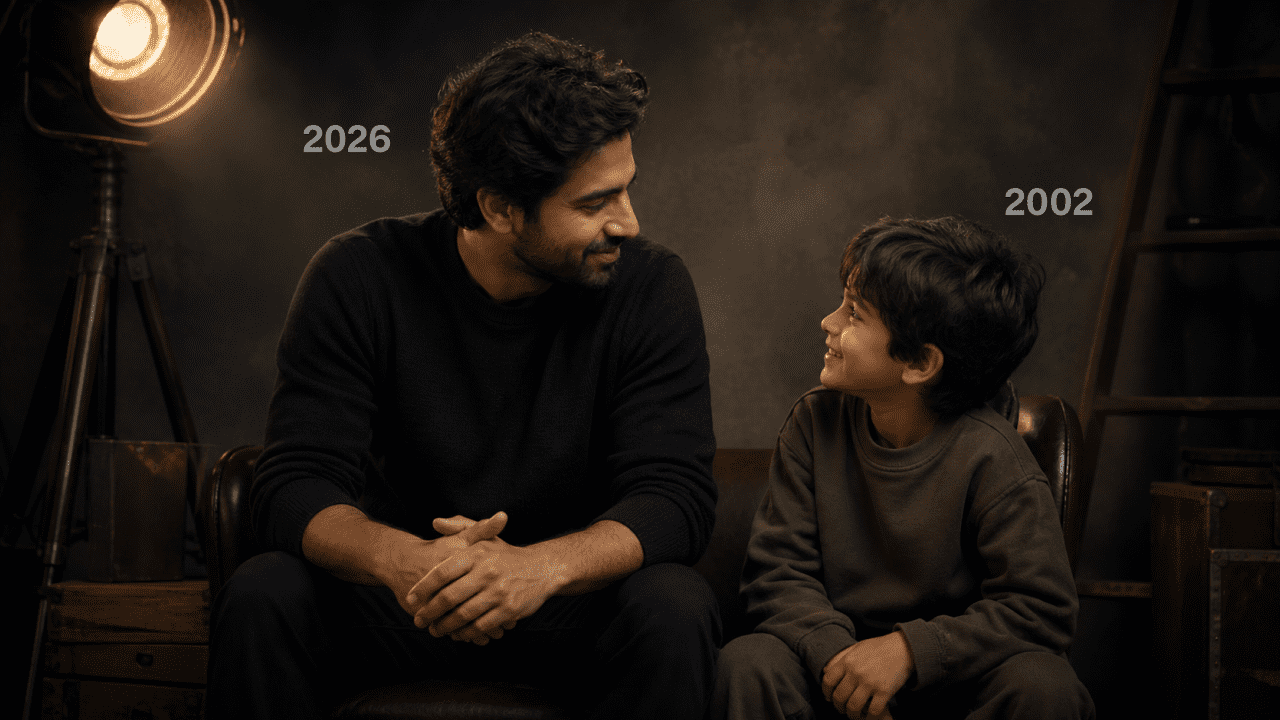
The AI childhood self portrait trend is rapidly gaining traction across social media platforms, with users in India and beyond creating emotionally charged images that place their present-day selves alongside childhood versions. Powered by tools like ChatGPT and Google Gemini, the trend blends personal memory, visual storytelling, and generative AI into a format that is both highly shareable and deeply introspective.
What began as a niche experiment in AI-generated imagery has quickly evolved into one of 2026’s most recognizable digital movements. On platforms like Instagram and X, users are producing cinematic portraits that simulate a “meeting” between past and present selves often framed as quiet, reflective encounters. The appeal lies not just in the novelty of AI, but in the emotional resonance: these images visually capture growth, time, and identity in a single frame.
How the Trend Works
At its core, the trend involves merging two timelines into one cohesive image. Users upload a recent photograph alongside a childhood picture, then use AI image-generation tools to create a unified composition. The output typically places both versions of the same person in a shared setting often a studio-style environment with soft lighting and minimal distractions.
Popular variations include black-and-white portraits with cinematic lighting, or symbolic setups such as a table with a birthday cake indicating the user’s current age. The younger self is usually depicted with a natural, candid expression, while the adult version appears more contemplative, creating a visual contrast that enhances the emotional impact.
Unlike traditional photo editing, this process relies heavily on detailed text prompts. Users describe everything from lighting and posture to mood and background, allowing the AI to generate highly realistic, almost photographic results.
Also read: ChatGPT Images 2.0 Redefines AI Visual Creation With Breakthrough Text Accuracy and Design Precision
The Role of Prompts in Viral Success
A defining feature of the AI childhood self portrait trend is the importance of prompt engineering. Widely shared “copy-paste” prompts have helped standardize the format, enabling even beginners to produce high-quality results.
These prompts often specify:
- Scene composition (left/right positioning of subjects)
- Lighting style (soft, cinematic, studio-quality)
- Facial expressions and body language
- Background elements and symbolic props
- Image quality and aspect ratio
Small tweaks in wording can significantly alter the final image, leading users to experiment with tone, realism, and emotional depth. This has turned prompt writing itself into a creative skill, with users refining instructions to achieve more lifelike and personalized outputs.
Beyond the Trend: Recreating the Past With AI
While the viral format focuses on side-by-side portraits, a broader movement is emerging around AI-generated nostalgia. Tools such as Nano Banana 2 allow users to recreate themselves across different life stages and eras from 1980s toddler portraits to 1990s school photos and early 2000s candid shots.
These variations emphasize historical detail, incorporating elements like vintage film grain, retro clothing, and era-specific lighting. The goal is not perfection but authenticity users are encouraged to include imperfections like messy hair or uneven lighting to make images feel like genuine memories rather than polished edits.
Why the Trend Is Going Viral
The explosive popularity of the AI childhood self portrait trend can be traced to a combination of emotional and technological factors.
First, it taps into universal themes of nostalgia and self-reflection. The idea of “meeting” one’s younger self resonates across age groups, offering a visual way to process personal growth and life changes.
Second, the accessibility of AI tools has lowered the barrier to entry. Users no longer need advanced editing skills; a clear photo and a well-written prompt are enough to create compelling content.
Finally, the shareability factor is significant. These images encourage storytelling, prompting captions that reflect on childhood memories, life lessons, or personal milestones driving higher engagement through comments and reposts.
Also read: Google Unveils Gemma 4: Open AI Models Designed to Run From Data Centres to Smartphones
Expert Analysis / What This Means
The rise of the AI childhood self portrait trend signals a broader shift in how people use artificial intelligence in everyday digital expression. Rather than focusing solely on novelty or entertainment, users are increasingly turning to AI for introspection and identity exploration.
For content creators, this trend represents a move toward emotionally driven engagement, where relatability and storytelling outperform purely aesthetic content. Social platforms may see longer interaction times as audiences connect with deeply personal narratives.
From an industry perspective, it highlights the growing importance of prompt-based creativity, where the ability to communicate ideas to AI becomes a valuable skill. This could influence the future of design, marketing, and digital storytelling.
There are also implications for privacy and authenticity. As AI-generated images become more realistic, distinguishing between real and synthetic memories may become more complex, raising questions about digital identity.
Compared to earlier AI trends focused on avatars or filters, this movement is more introspective and narrative-driven, suggesting a maturation in how users engage with generative technology.
Industry / Market Impact
The trend is accelerating adoption of AI image tools among mainstream users, expanding their reach beyond tech-savvy audiences. Companies developing generative AI platforms are likely to invest more in user-friendly interfaces and customizable prompt systems to capitalize on this demand.
Social media platforms, meanwhile, benefit from increased engagement, as emotionally resonant content tends to drive higher interaction metrics. This could influence algorithm priorities, favoring storytelling-driven visuals over traditional short-form trends.
Brands and marketers are also beginning to explore similar formats, using AI-generated “past vs present” narratives to create campaigns that evoke nostalgia and emotional connection with audiences.
What Happens Next
The AI childhood self portrait trend shows no signs of slowing down, but it is likely to evolve. Future iterations may incorporate video, allowing users to simulate conversations between past and present selves, or even interactive experiences using augmented reality.
Advancements in AI realism could further blur the line between memory and creation, making these images even more immersive. At the same time, increased awareness around AI limitations such as occasional inaccuracies in generated faces may lead users to demand greater control and precision.
As generative AI continues to integrate into daily life, trends like this suggest that its most powerful applications may lie not in productivity, but in helping people tell their own stories.