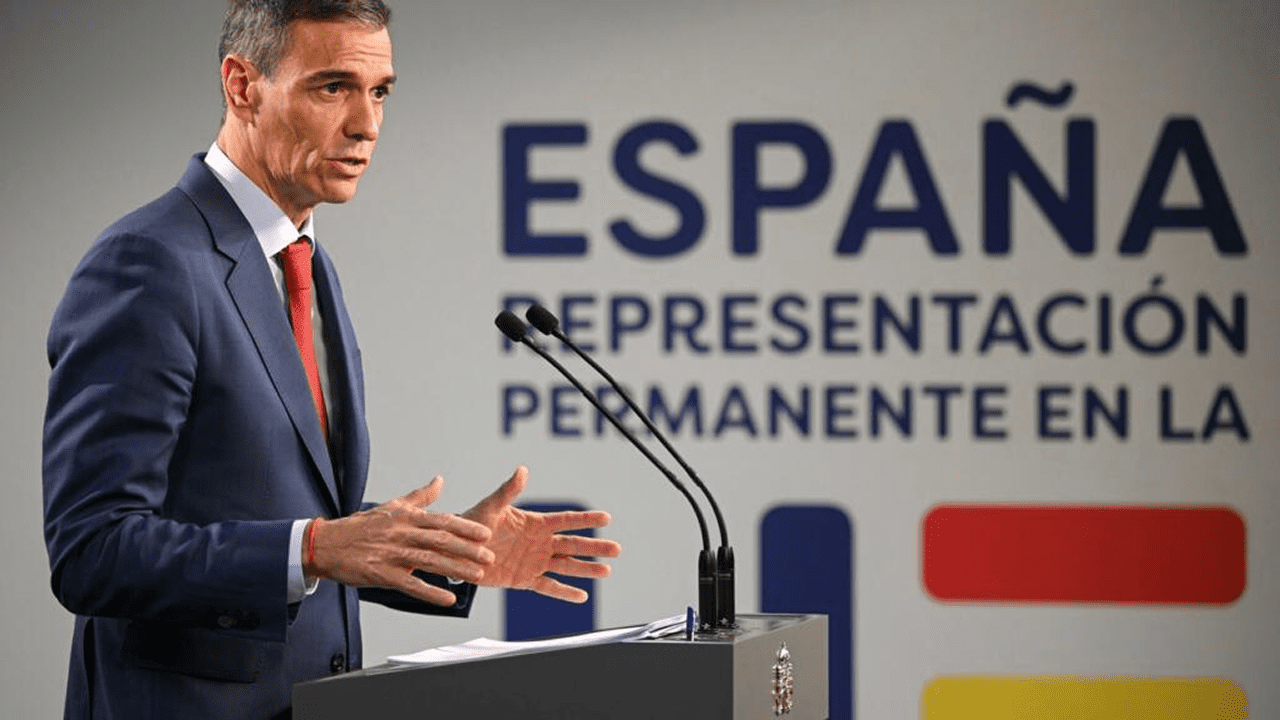
Spain social media ban under 16 is gaining momentum after Prime Minister Pedro Sánchez announced plans to prohibit children from accessing social media platforms, citing escalating concerns over online harm, illegal content, and weak enforcement by technology companies.
The proposal was revealed during Sánchez’s speech at an international summit in Dubai and would place Spain alongside countries such as Australia and France that are tightening controls on minors’ digital access. If approved by parliament, the ban would require platforms to adopt strict age-verification systems and could significantly reshape how young people in Spain engage online.
Also read: Ghaziabad Sisters’ Deaths Spark Probe Into Online Gaming Addiction
Government Push to Protect Minors Online
Sánchez said the measure aims to shield children from exposure to harmful and illegal content, including child sexual abuse material and nonconsensual sexualized deepfake images. He accused major technology firms of allowing such content to spread and criticized governments for failing to respond decisively.
“Today, our children are exposed to a space they were never meant to navigate alone,” Sánchez said. “We will no longer accept that.”
Under the proposal, social media companies would be required to enforce age limits through robust verification systems rather than relying on self-declared ages or simple checkboxes, which are commonly used today.
Part of Broader Digital Safety Legislation
Spain’s social media ban for under-16s would be incorporated into an existing bill focused on digital protections for minors that is currently under debate in parliament, according to a government spokesperson. Sánchez said the government could move to add the measure as early as next week.
However, its passage is uncertain. Sánchez’s left-wing coalition lacks a parliamentary majority, meaning the proposal will depend on support from opposition parties.
Political Reaction and Parliamentary Uncertainty
The announcement prompted mixed reactions across Spain’s political landscape. The far-right Vox party criticized the proposal, arguing it was intended to silence criticism of the government. The center-right Popular Party said it had proposed similar restrictions last year, suggesting it may support the measure.
Both the social media ban and related regulatory changes would require parliamentary approval to become law.
Spain Joins Global Trend on Social Media Restrictions
Spain’s move follows similar initiatives elsewhere. France approved legislation in January banning social media for children under 15, with the law expected to take effect at the start of the next school year in September. Australia has begun implementing the world’s first nationwide social media ban for under-16s, holding platforms legally responsible for preventing minors from creating accounts.
Denmark has introduced comparable legislation for users under 15, while the United Kingdom has said it is considering further restrictions as part of broader efforts to protect children from harmful content and excessive screen time.
Tech Industry Response and International Coordination
Major platforms including Meta, which owns Facebook and Instagram, and X did not immediately respond to requests for comment. Elon Musk, X’s billionaire owner, publicly criticized Sánchez in a post referencing the Spanish leader’s speech.
Sánchez also said Spain has joined five other European countries in what he described as a “coalition of the digitally willing,” aimed at coordinating multinational regulation of social media companies.
Tougher Penalties for Platforms and Executives
Beyond age limits, Sánchez outlined additional measures that would criminalize the manipulation of algorithms to amplify illegal content. The proposals would also seek to hold technology executives personally liable for failing to remove criminal material from their platforms.
“No more pretending that technology is neutral,” Sánchez said.
A government spokesperson confirmed that these measures, like the proposed social media ban, would require parliamentary approval before taking effect.