
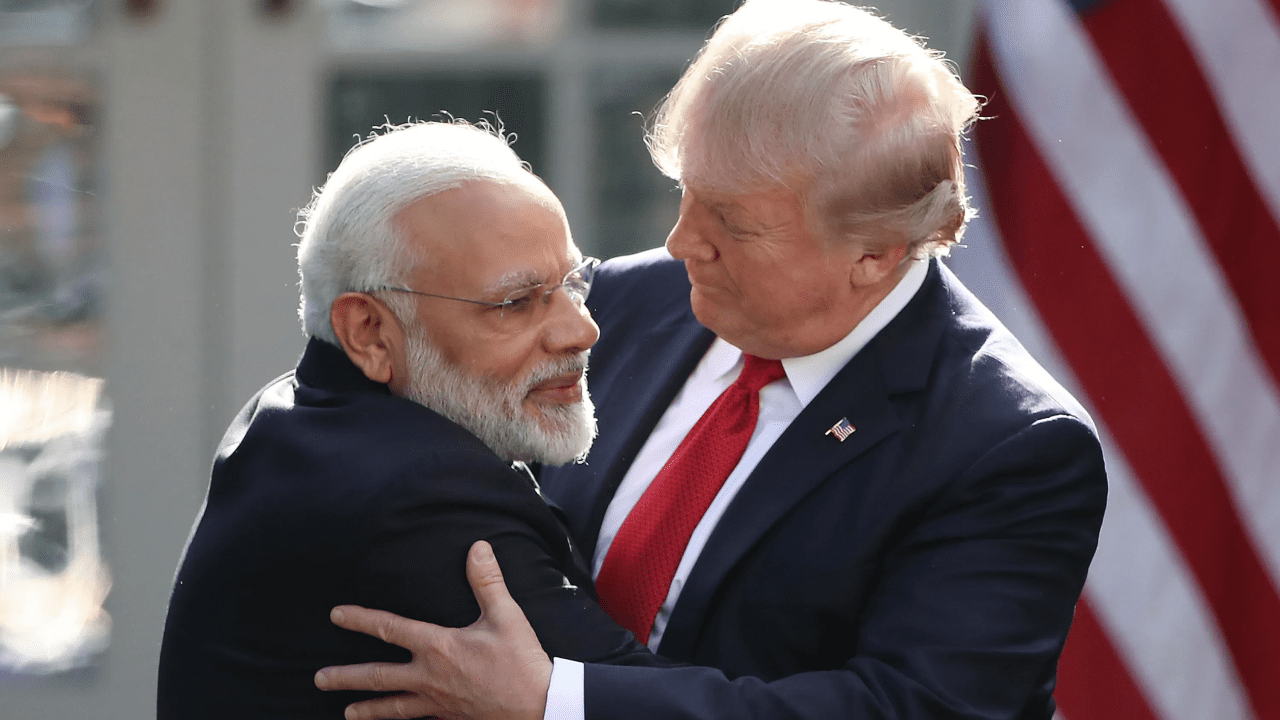
India US trade deal developments have clarified a crucial question that lingered after the announcement of reduced American tariffs on Indian goods, what India will import in return. A joint statement released on Saturday outlining the interim framework of the India-US trade agreement confirms that New Delhi has committed to purchasing $500 billion worth of American goods over the next five years, cementing a deeper economic partnership between the two countries.
The framework follows last week’s announcement that the US would cut tariffs on Indian exports from 50 per cent to 18 per cent, giving India a significant competitive advantage over key rivals such as China, Vietnam, Indonesia, Bangladesh and Pakistan. The agreement is positioned as a major step toward expanding bilateral trade and strengthening supply chains between the world’s two largest democracies.
Also read: US Senator Ted Cruz Says He Is ‘Battling White House’ to Secure India Trade Deal in Leaked Audio
India gains tariff edge over regional rivals
Under the revised tariff structure, Indian exports to the US will face an 18 per cent duty, lower than China’s 33 per cent and higher tariffs imposed on Vietnam and Bangladesh at 20 per cent, and Indonesia and Pakistan at 19 per cent. This makes India the most competitive exporter among major Asian economies in the US market.
Commerce Minister Piyush Goyal described the framework as a “historic” and “very fair, equitable and balanced agreement,” highlighting its potential to unlock new opportunities for Indian exporters across multiple sectors.
What India will import from the United States
In exchange for tariff relief, India has committed to purchasing $500 billion worth of US goods over five years. According to the joint statement, these imports will include:
- Energy products
- Aircraft and aircraft parts
- Precious metals
- Technology products such as graphics processing units (GPUs) used in artificial intelligence and data centres
- Coking coal
The statement noted that India “intends to purchase” these products, with the US agreeing to make its best efforts to meet the supply commitment.
Commerce ministry officials said India already imports many of these items, with current imports valued at around $300 billion annually and growing at 8–10 per cent each year. They added that demand for such products could rise to as much as $2 trillion in the coming years, calling the agreement a potential “win-win” for both economies.
Also read: India-US trade deal enters final stages as Piyush Goyal defends agreement amid political backlash
Zero-duty access and protection for Indian agriculture
Goyal said India will focus on importing products that are not sufficiently produced domestically. At the same time, the agreement provides zero US tariffs on a wide range of Indian agricultural exports, benefiting domestic farmers and growers.
Products set to benefit include Indian spices, tea, coffee, copra, areca nut, cashew, chestnuts, selected fruits and vegetables, as well as avocadoes, bananas, guava, mango, papaya and pineapples.
The minister also stressed that sensitive agricultural and dairy sectors in India have been fully protected through carefully crafted exceptions.
Boost for labour-intensive sectors and key exports
Reduced tariffs are expected to provide immediate relief to labour-intensive sectors such as textiles and apparel, leather and footwear, plastics, and rubber. These industries had been grappling with the impact of cumulative tariffs as high as 50 per cent before the agreement was announced.
The 32 percentage-point reduction restores India’s competitiveness against rivals like Bangladesh, China and Vietnam in the US market. The deal also allows zero duties on Indian exports such as gems and diamonds, generic pharmaceuticals and aircraft parts as early as March, when the agreement is scheduled to be formally signed.
Additional benefits include relief under Section 232 for aircraft parts, preferential tariff quotas on auto parts, and negotiated outcomes for generic pharmaceuticals, all of which are expected to translate into tangible export gains.
‘Mission 500’ and the road ahead
The agreement forms a key pillar of ‘Mission 500’, a target announced by Prime Minister Narendra Modi and US President Donald Trump in February 2025 to more than double bilateral trade to $500 billion by 2030.
“We have put in motion our goal of achieving $500 billion in annual bilateral trade,” Goyal said, adding that the framework also includes safeguards allowing both countries to respond if either side makes unilateral changes to agreed tariffs.
The interim deal signals a decisive step toward deeper economic integration between India and the US, with both sides positioning the agreement as a long-term strategic partnership rather than a short-term trade adjustment.