
US military buildup in the Middle East has reached its most significant level since the 2003 Iraq invasion, as Washington moves advanced fighter jets, aircraft carriers and missile defense systems closer to Iran amid rising fears of a potential conflict.
Over recent days, the United States has deployed cutting-edge F-35 and F-22 stealth fighters, along with support and command aircraft, into the region. The surge in military assets comes as tensions between Washington and Tehran intensify, with officials signaling that possible military action against Iran could occur sooner rather than later.
The developments follow domestic unrest in Iran that began with protests over inflation and economic hardship before evolving into broader anti-government demonstrations. The crackdown by the regime led by Ayatollah Ali Khamenei further strained relations with the United States, where President Donald Trump has sharply criticized Tehran’s nuclear program, missile capabilities and leadership.
Also read: Balochistan attacks leave over 190 dead as Pakistan hunts militants, India denies involvement
Advanced Fighter Jets Deployed to the Region
According to reports, the US has steadily moved advanced F-35 Lightning II and F-22 Raptor jets toward the Middle East. Flight-tracking data and US officials cited by media outlets indicate that the aircraft are being positioned to support a large-scale operation if ordered.
In addition to stealth fighters, command-and-control aircraft critical for coordinating complex air campaigns are also en-route. Missile defense systems have reportedly been deployed to protect US assets and allies in the region.
Aircraft Carriers Strengthen US Naval Presence
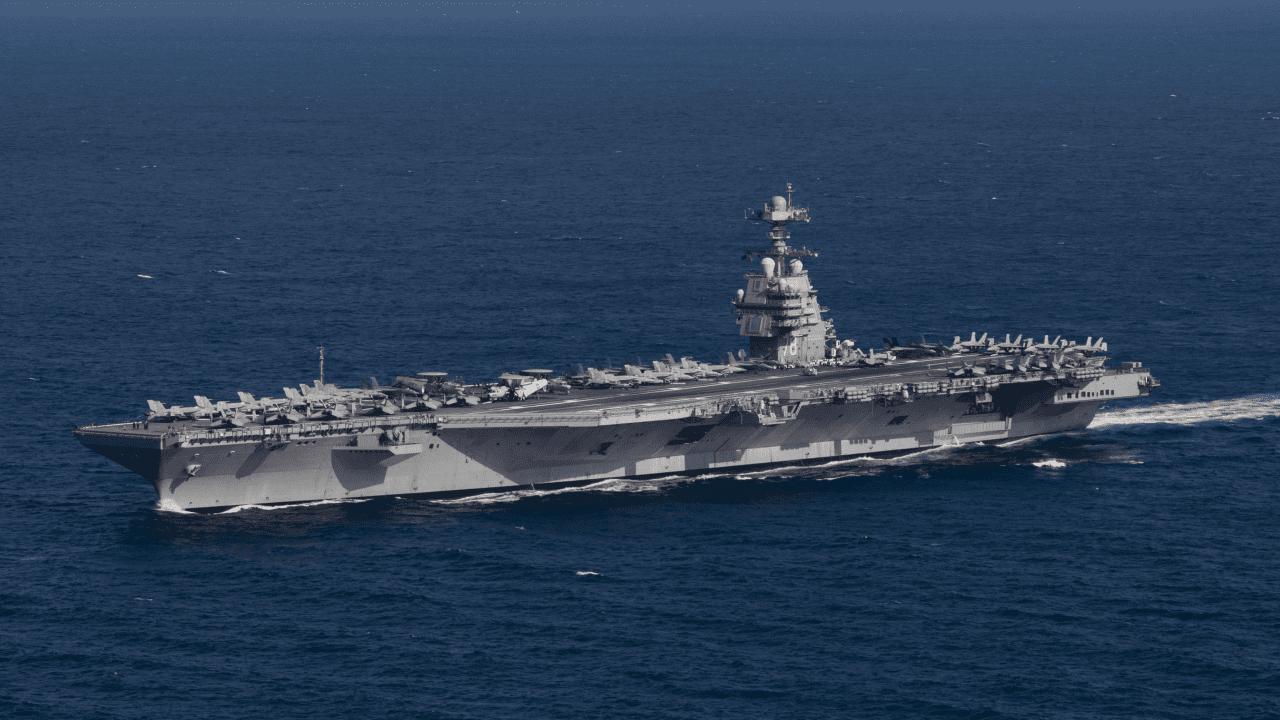
The naval buildup includes the deployment of the USS Gerald R. Ford, which joins the USS Abraham Lincoln already operating within range of Iran’s coastline.
The USS Gerald R. Ford carries attack aircraft and electronic-warfare planes designed to suppress enemy air defenses and communications. Together, the carrier strike groups significantly expand the US military’s operational reach in the region.
According to reports, the scale of the deployment gives Washington the capacity to conduct a sustained, weeks-long air campaign a marked shift from previous limited US strikes that targeted specific Iranian nuclear facilities in short, one-off operations.
What Are President Trump’s Military Options?
While the military buildup is substantial, US officials have emphasized that President Trump has not yet made a final decision on whether to launch strikes.
Briefings reportedly presented to the president outline several potential courses of action. One option involves a broad campaign targeting Iran’s political and military leadership and its regional proxies, potentially aiming to weaken or destabilize the ruling regime. Another scenario includes a more limited air operation focused on nuclear infrastructure and ballistic missile facilities.
Both options would likely unfold over several weeks rather than as a single, targeted strike.
Nuclear Talks Continue Despite Escalation
Even as military assets pour into the region, diplomatic efforts are ongoing. Representatives from the United States and Iran recently met in Geneva to discuss Iran’s uranium enrichment activities.
White House Press Secretary Karoline Leavitt said there has been “a little bit of progress” in the negotiations but acknowledged that both sides remain “very far apart on some issues.”
The current military posture provides Washington with strategic flexibility whether to leverage force in negotiations or to prepare for a prolonged conflict. For now, the decision rests with the White House, as the region watches closely for the next move.