
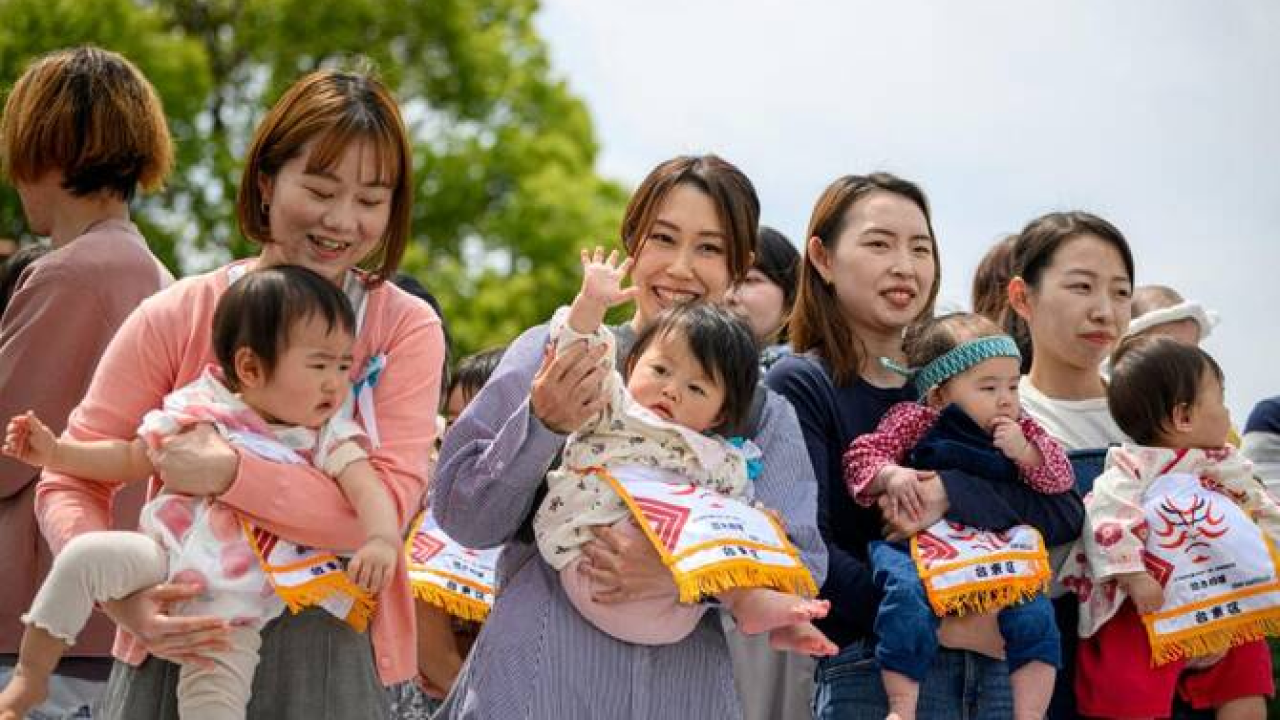
Japan recorded its 10th straight year of falling births, with preliminary data showing roughly 706,000 newborns, underscoring a demographic crisis that threatens the nation’s economic stability and social fabric. The decline, down 2.1% from 2024, comes as Japan’s overall population shrinks to an estimated 122.86 million, according to the Internal Affairs Ministry, intensifying concerns about labor shortages, aging communities, and rising fiscal pressures.
The falling birth rate, coupled with an estimated 1.6 million deaths last year, reflects a long-term demographic trend that has left Japan with one of the world’s lowest fertility rates. Rural areas are particularly affected, with nearly four million abandoned homes and over 40% of municipalities at risk of extinction. Experts warn that continued population shrinkage will further strain social security systems and reduce the pool of working-age taxpayers.
Prime Minister Sanae Takaichi, Japan’s first female premier, has repeatedly described the decline as a “quiet state of emergency,” stressing that the trend threatens the country’s vitality. Despite a modest increase in marriages 505,656 couples tied the knot in 2025, up 1.1% from the previous year and a drop in divorces to 182,969, the measures have yet to translate into a significant rise in births.
Also read: Donald Trump Declares ‘Golden Age of America’ in State of the Union Address
Government Measures and Policy Responses
To counter the decline, Takaichi’s administration has introduced a suite of proposals aimed at reducing the financial and logistical burdens of child-rearing. These include tax incentives for babysitters and household helpers, corporate tax cuts for firms operating in-house childcare centers, and plans to establish a national qualification and improved pay standards for childcare workers. Prenatal and delivery costs would also be eased under proposed reforms, though implementation remains pending.
The government’s 3.6 trillion yen ($23 billion) annual childcare package, first introduced under former Prime Minister Fumio Kishida and continued by successive administrations, aims to bolster fertility rates. A population strategy headquarters was established last November to plan more targeted interventions to address the projected short-term decline.
However, critics argue that demographic issues are competing with other national priorities, such as security and immigration policy. Hitoshi Kikawada, the minister overseeing population policy, also manages 11 additional portfolios, raising concerns that the falling birth rate may not receive the focused attention it requires. Immigration, often suggested as a partial solution to labor shortages, remains politically contentious. Under pressure from the nationalist Sanseito party, Takaichi has maintained a restrictive stance, pledging tighter immigration controls.
Demographic Projections and Comparisons
Projections by the Asahi Shimbun indicate that Japanese births could drop to around 667,500 in 2025 for Japanese nationals alone, marking the lowest figure since records began in 1899. This projection significantly undercuts the National Institute of Population and Social Security Research’s previous forecasts, even the pessimistic low-variant estimate of 681,000.
The aging population is equally stark, nearly 100,000 people are now aged 100 or older, with women accounting for close to 90% of centenarians. Japan’s demographic trajectory stands in contrast to other nations in East Asia. South Korea, for instance, reported a slight uptick in fertility rates in 2025 after implementing measures to reduce child-rearing costs, while China and the United States have introduced financial incentives to encourage births.
Economic and Social Implications
The sustained population decline presents complex economic challenges. Fewer working-age citizens exacerbate labor shortages across industries, increase the fiscal burden of social security, and limit economic growth potential. Rural depopulation is particularly acute, threatening local economies and leading to large-scale abandonment of homes.
Takaichi has emphasized that a robust economy is key to reversing the trend, with government support intended to lessen childcare-related costs for working families. Yet analysts caution that without broader social reforms and potential easing of immigration restrictions, Japan may struggle to mitigate the long-term consequences of a shrinking and aging population.
What Happens Next
The government is expected to release finalized birth data later this year, including detailed statistics on Japanese nationals. Meanwhile, Takaichi’s administration continues to explore incentives and reforms to make child-rearing more accessible and affordable. Internationally, Japan’s demographic strategy is being watched closely, with policymakers citing its experience as a potential model or cautionary tale for other aging societies.
The demographic challenge is poised to remain a defining issue for Japan’s economy and society, shaping policy decisions for decades to come.