
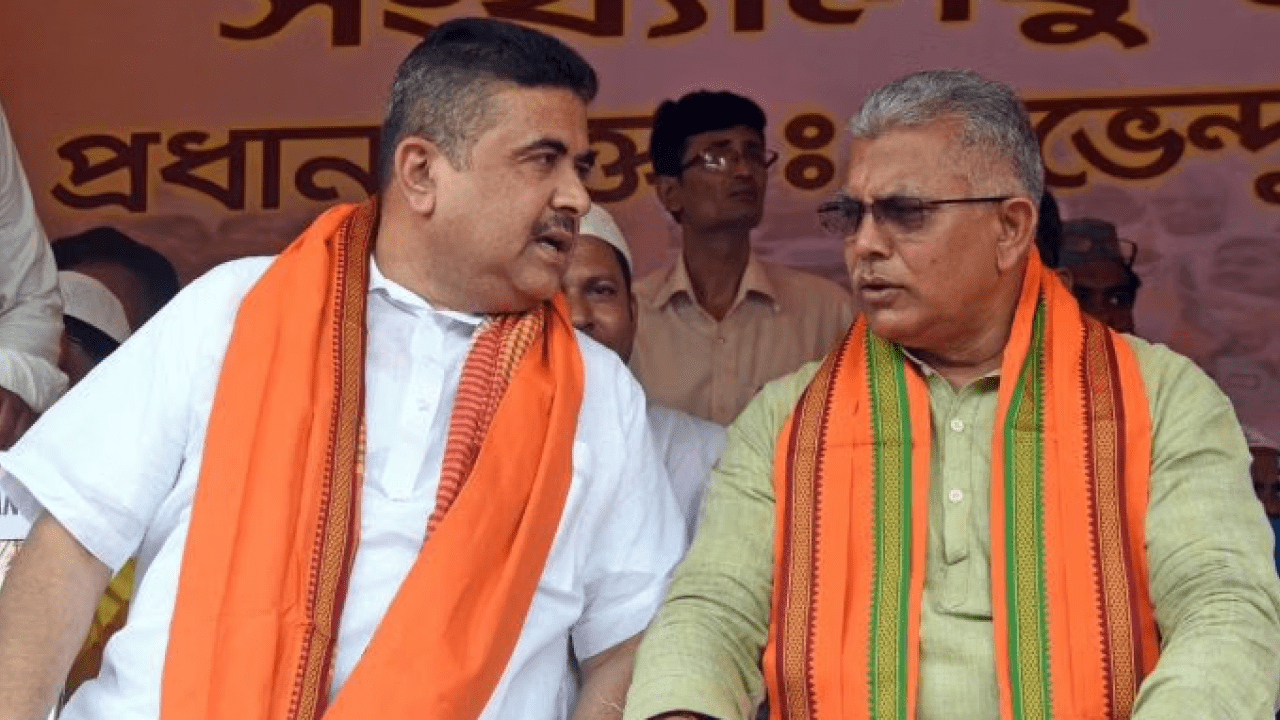
The debate over the West Bengal elections intensified on Saturday after senior BJP leader Dilip Ghosh declared that polling in the state “cannot be conducted without central forces,” citing alleged tensions and incidents of violence during the ongoing Special Intensive Revision (SIR) of electoral rolls. His remarks come amid mounting political friction over the scale of voter list scrutiny, judicial intervention, and accusations that democratic rights may be at stake.
Speaking during the BJP’s “Parivartan Yatra,” Ghosh argued that the atmosphere surrounding the SIR exercise underscores the need for central security deployment to ensure free and fair elections. He maintained that the revision process had unfolded under strained conditions and insisted that voters themselves are demanding a neutral security presence during polling.
The controversy unfolds against the backdrop of heightened political sensitivities in West Bengal, where electoral contests have frequently drawn national attention due to allegations of political violence and fierce rivalry between the ruling Trinamool Congress (TMC) and the BJP.
Mounting Dispute Over Voter Roll Revision
At the heart of the confrontation lies the Special Intensive Revision of the state’s voter rolls a legally mandated but politically sensitive exercise designed to update electoral records. Chief Minister Mamata Banerjee recently voiced serious concern over the scale of potential deletions emerging from the revision process.
According to her assessment, nearly 1.20 crore names could be removed from the rolls. Banerjee framed the issue not as a partisan dispute but as a broader democratic question, asserting that the implications transcend party lines and religious identities.
The matter escalated to judicial scrutiny after a significant volume of objections surfaced. The Chief Justice of the Calcutta High Court flagged a shortage of officers to process more than 50 lakh objections categorized under “Logical Discrepancy” within the stipulated timeframe. The High Court observed that even if 250 judicial officers were assigned, verification could take approximately 80 days.
In response, the Supreme Court of India stepped in. A bench led by Chief Justice Surya Kant allowed the Chief Justice of the Calcutta High Court to deploy additional civil judges with at least three years of experience to accelerate the process. The order also permitted coordination with the Chief Justices of Jharkhand and Odisha if further judicial assistance becomes necessary.
The West Bengal government welcomed the Supreme Court’s intervention, signaling institutional cooperation even as political rhetoric intensifies.
Political Flashpoint, Parivartan Yatra Row
Ghosh’s call for central forces was delivered during the BJP’s Parivartan Yatra a campaign initiative aimed at mobilizing support ahead of the polls. He alleged that the state government has refused permission for the march. However, he asserted that the party has secured court approval and will proceed regardless.
The dispute over campaign permissions adds another layer of friction between the BJP and the TMC-led administration. The BJP has framed the issue as evidence of administrative obstruction, while the state government has not publicly detailed its position in response to these specific claims.
With both sides positioning themselves ahead of elections, the convergence of security demands, judicial oversight, and mass voter scrutiny has transformed what is typically a technical administrative process into a high-stakes political battleground.
Why This Matters
The scale of the SIR exercise in West Bengal is significant by any standard. A potential deletion of 1.20 crore names if confirmed would represent one of the largest revisions in recent state electoral history. Even the 50 lakh objections under review indicate an unusually heavy administrative burden.
The stakes are particularly high in a state known for close electoral contests and intense political competition. Any perception of voter exclusion, delayed verification, or security inadequacy could become a rallying point for competing narratives about democratic fairness.
For the BJP, the demand for central forces aligns with its longstanding claim that neutral security deployment is essential in West Bengal’s electoral environment. For the TMC, the emphasis has been on safeguarding voter rights and ensuring due process in roll verification.
The judiciary’s involvement underscores the institutional complexity of the issue. By expanding the pool of judicial officers and potentially drawing support from neighboring states, the Supreme Court has attempted to balance administrative efficiency with procedural integrity.
What Happens Next
The immediate focus will be on whether the expanded judicial mechanism can process the objections within a workable timeline. The High Court’s earlier estimate of 80 days even with substantial manpower highlights the logistical challenge.
Meanwhile, political rhetoric is likely to intensify as election preparations advance. The question of central force deployment will ultimately depend on decisions by the Election Commission and the Union government, in accordance with established election protocols.
If tensions surrounding the SIR persist, they may influence campaign strategies and voter sentiment in the months leading up to polling. Both major political players appear determined to frame the narrative one around electoral security, the other around democratic inclusion.
As the administrative review continues under judicial supervision, West Bengal’s electoral landscape remains in flux, with institutional safeguards and political contestation unfolding simultaneously.