
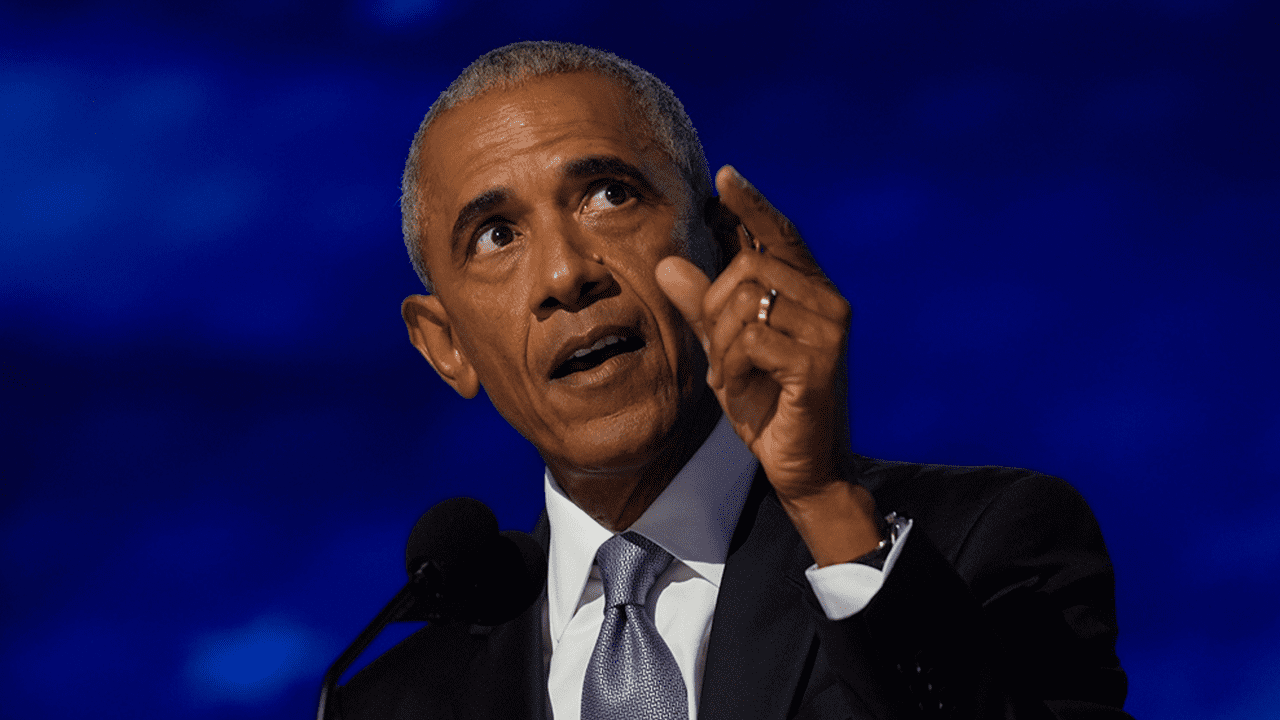
As Black History Month concludes on February 28, renewed attention has turned to one of the most enduring lines of the modern political era, the Barack Obama quote, “We are the ones we’ve been waiting for. We are the change that we seek.” Delivered during his 2008 presidential campaign, the statement has resurfaced in civic discussions marking the annual observance, underscoring themes of participation, responsibility, and collective action that continue to shape public discourse nearly two decades later.
The phrase originated in a pivotal campaign speech in which Obama urged Americans not to wait for rescue from political gridlock or social stagnation. In its fuller form, he warned, “Change will not come if we wait for some other person or some other time.” The words became a defining refrain of his White House bid one that framed his candidacy not merely as a personal ambition, but as a broader civic movement.
Obama’s 2008 campaign was notable for its emphasis on grassroots organizing, volunteer mobilization, and energizing first-time voters. Rather than relying exclusively on traditional party machinery, the campaign built a national network of community-based supporters, reinforcing the idea that political transformation required active citizen engagement.
Also read: Donald Trump Declares ‘Golden Age of America’ in State of the Union Address
Background Context
Born in Honolulu, Obama’s early life exposed him to diverse cultural influences that later informed his political philosophy. After earning a political science degree from Columbia University in 1983, he worked as a community organizer in Chicago, engaging directly with working-class neighborhoods confronting economic inequality.
Seeking to expand his impact, Obama enrolled at Harvard Law School, where he became the first Black president of the Harvard Law Review. He later returned to Chicago as a civil rights attorney and lecturer in constitutional law at the University of Chicago.
His formal political career began in 1996 with his election to the Illinois State Senate. By 2004, he had won a U.S. Senate seat and delivered a widely praised keynote address at the Democratic National Convention, propelling him to national prominence. Four years later, after securing the Democratic nomination, he defeated Republican candidate John McCain to become the first African American president of the United States.
Throughout his presidency from navigating the global financial crisis and advancing sweeping healthcare reforms to authorizing the operation that killed Osama bin Laden Obama’s rhetoric often echoed the participatory themes embedded in his campaign message. His administration also oversaw the end of the Iraq War, appointed two Supreme Court justices, and reoriented U.S. climate and diplomatic policy during his second term.
Why This Matters
The renewed focus on the Barack Obama quote during Black History Month carries particular symbolic weight. The month-long observance traces its origins to historian Carter G. Woodson, who launched “Negro History Week” in 1926. It expanded into a month-long national commemoration in 1976, recognizing the contributions and achievements of Black Americans across generations.
Obama’s presidency is widely regarded as a milestone within that historical arc. As the nation’s first Black president, his election in 2008 was viewed by supporters as evidence of expanding civic inclusion, even as debates over race, representation, and systemic inequality persisted.
Scholars who study political rhetoric have noted that Obama’s oft-quoted line reflects themes deeply rooted in civil rights-era discourse, self-determination, shared struggle, and collective responsibility. Rather than presenting change as the product of a single leader, the quote positions ordinary citizens as central actors in democratic renewal.
The resonance of that message has extended beyond campaign politics. It has been cited in classrooms, community forums, and social justice movements, frequently invoked during moments of national reflection or political uncertainty. The language is direct and accessible, yet it carries historical weight echoing traditions of grassroots activism that shaped the broader civil rights movement.
Industry / Political Impact
Obama’s 2008 campaign strategy reshaped modern political organizing. By integrating digital outreach, data analytics, and volunteer-driven field operations, the campaign set a template later adopted across party lines. Political analysts credit the approach with transforming voter engagement, particularly among younger Americans and communities historically underrepresented at the polls.
The phrase “We are the change that we seek” became both slogan and organizing principle, reinforcing a participatory model of politics that blurred the line between candidate and movement. That approach helped build one of the most expansive grassroots coalitions in contemporary U.S. electoral history.
Beyond electoral mechanics, the quote’s endurance illustrates how political messaging can transcend a single election cycle. It remains one of the most recognizable lines associated with Obama’s presidency, often appearing alongside discussions of his broader legacy in civic education and public discourse.
What Happens Next
As Black History Month concludes, the continued circulation of the Barack Obama quote signals more than nostalgia. It reflects ongoing debates about civic participation in an era marked by polarization, rapid technological change, and evolving democratic norms.
Obama, who left office in 2017, remains active in public life, campaigning for Democratic candidates and supporting civic initiatives through his foundation. Plans for his presidential library in Chicago continue to move forward, intended as both archival repository and community center.
Whether invoked in political campaigns, community meetings, or academic discussions, the message endures, meaningful progress depends on collective engagement rather than passive expectation. In that sense, the line that defined a campaign has evolved into a broader civic refrain one revisited each February as the nation reflects on its history and contemplates its future.