
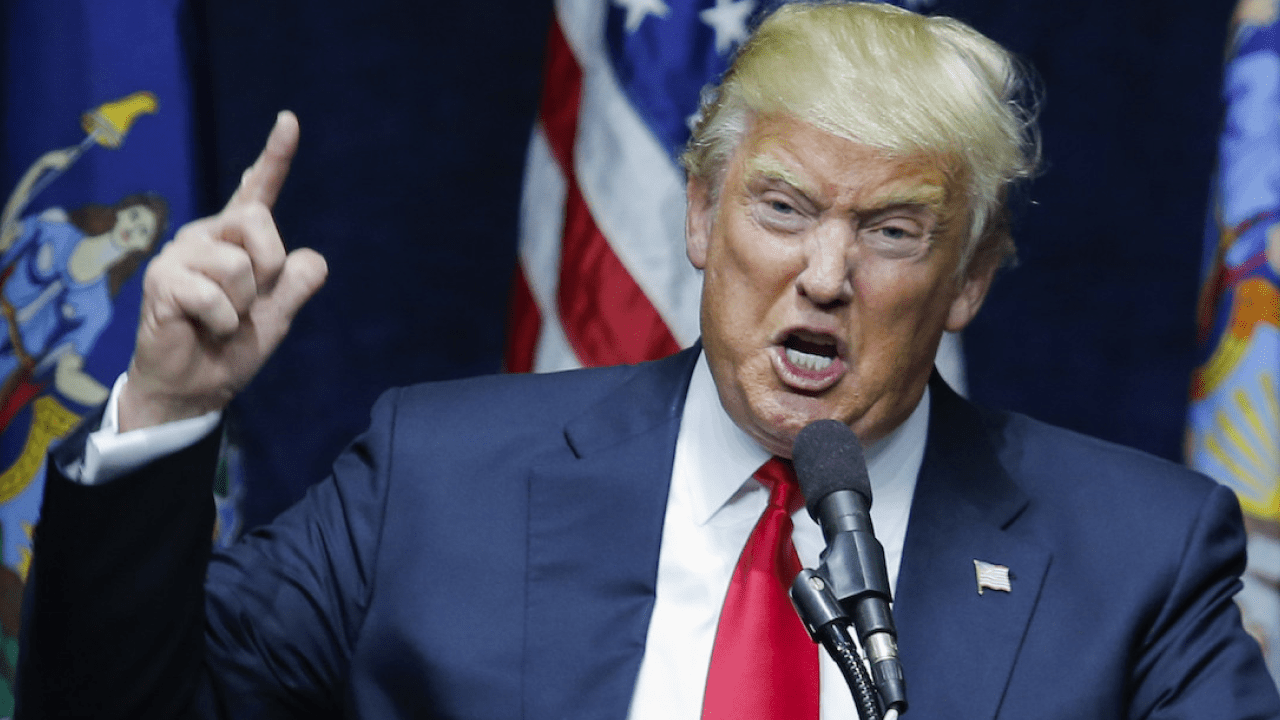
A dramatic escalation in the Middle East has pushed Washington and Tehran to the brink of full-scale war after President Donald Trump warned Iran against retaliation following a joint U.S.–Israeli military operation that killed Supreme Leader Ayatollah Ali Khamenei.
In a social media post on Sunday, Trump said U.S. intelligence was closely monitoring reports that Iran planned to respond “very hard.” He cautioned Tehran against further action, declaring that any strike on the United States or Israel would be met with military force “that has never been seen before.” The warning came as Iran’s powerful paramilitary wing, the Islamic Revolutionary Guard Corps (IRGC), vowed severe punishment for those responsible for Khamenei’s death.
The confrontation follows what U.S. officials described as “major combat operations” under an operation dubbed “Operation Epic Fury,” carried out in coordination with Israel. The strikes reportedly eliminated not only Khamenei but also senior figures in Iran’s leadership, marking one of the most consequential military actions against Tehran in decades.
The scale of the attack and Trump’s rhetoric signal that the conflict extends beyond limited retaliation. In a recorded address after the first strikes, the president urged Iranian security forces to surrender or face destruction, and called on the Iranian public and ethnic minorities to rise up against the ruling establishment once hostilities subside. Israeli Prime Minister Benjamin Netanyahu said Israel joined the operation to eliminate what he called an “existential threat” from Iran’s leadership.
Iran has responded with sweeping denunciations. In a statement, the IRGC described the killing of Khamenei as a criminal act and vowed a “ferocious offensive operation.” Tehran has signaled that American and Israeli targets could face reprisals, raising fears of a broader regional war.
Also read: US Military Buildup in Middle East Marks Largest Deployment Since 2003 as Iran Tensions Escalate
Background Context
The Trump administration has framed its actions as preemptive measures to protect American lives and neutralize threats stemming from Iran’s missile and nuclear programs. Officials argue that Tehran posed an imminent danger, though no detailed public evidence has been presented to substantiate that claim.
Critics in Washington and abroad have questioned both the legal basis and strategic logic of the strike. Some lawmakers say Congress was not meaningfully consulted before hostilities began, reviving debates about executive war powers that have simmered since the 2003 invasion of Iraq. At that time, intelligence assessments later proved flawed. The comparison has resurfaced in policy circles, with skeptics warning against another prolonged Middle Eastern conflict.
The military buildup preceding the operation was significant. Trump had recently touted the presence of a large U.S. naval and air deployment in the region, describing it as a powerful deterrent. Negotiations between U.S. and Iranian representatives over uranium enrichment limits had taken place in the weeks prior, but those talks appear to have collapsed amid rising tensions.
The president, who campaigned on reducing overseas military entanglements and had launched an initiative styled as a “Board of Peace,” now finds himself overseeing the most consequential U.S. military campaign of his current term.
Industry / Market Impact
The Trump Iran warning has reverberated across global energy and financial markets. Traders are closely watching the Strait of Hormuz, a narrow waterway through which roughly a fifth of the world’s oil supply passes. Any disruption there could trigger sharp price spikes and destabilize global supply chains.
Iran possesses a range of asymmetric capabilities that analysts say could threaten shipping lanes, including short-range missiles, naval mines, drones and anti-ship systems. Even limited skirmishes in the Gulf could push crude prices higher, affecting inflation and economic stability in the United States and Europe.
Defense stocks have rallied amid expectations of sustained military engagement, while airlines and shipping companies face heightened risk premiums. Regional markets in the Gulf states have also shown volatility as investors assess the likelihood of retaliatory strikes.
What Happens Next
The immediate question is whether Iran will act on its threats. The IRGC has indicated that retaliation is forthcoming, but the scale and timing remain unclear. Analysts say Tehran could pursue a range of options, from direct missile strikes to proxy attacks on U.S. interests in the region.
Trump has ruled out a ground invasion, instead suggesting that sustained aerial operations would weaken Iran’s power structures and create conditions for internal political change. History, however, offers mixed evidence on whether air campaigns alone can topple entrenched regimes.
Congressional leaders from both parties were briefed shortly before the president’s State of the Union address, but some lawmakers have expressed concern about the absence of a clear strategic roadmap. Public opinion polls indicate limited appetite among American voters for another major conflict in the Middle East.
Internationally, U.S. allies are weighing how closely to align with Washington’s next moves. European governments have urged restraint, while regional actors brace for potential spillover.
For now, the Trump Iran warning stands as both deterrent and escalation. With Iran’s leadership decapitated and its military establishment promising revenge, the coming days may determine whether this confrontation remains a contained exchange of strikes or spirals into a wider war with global consequences.