
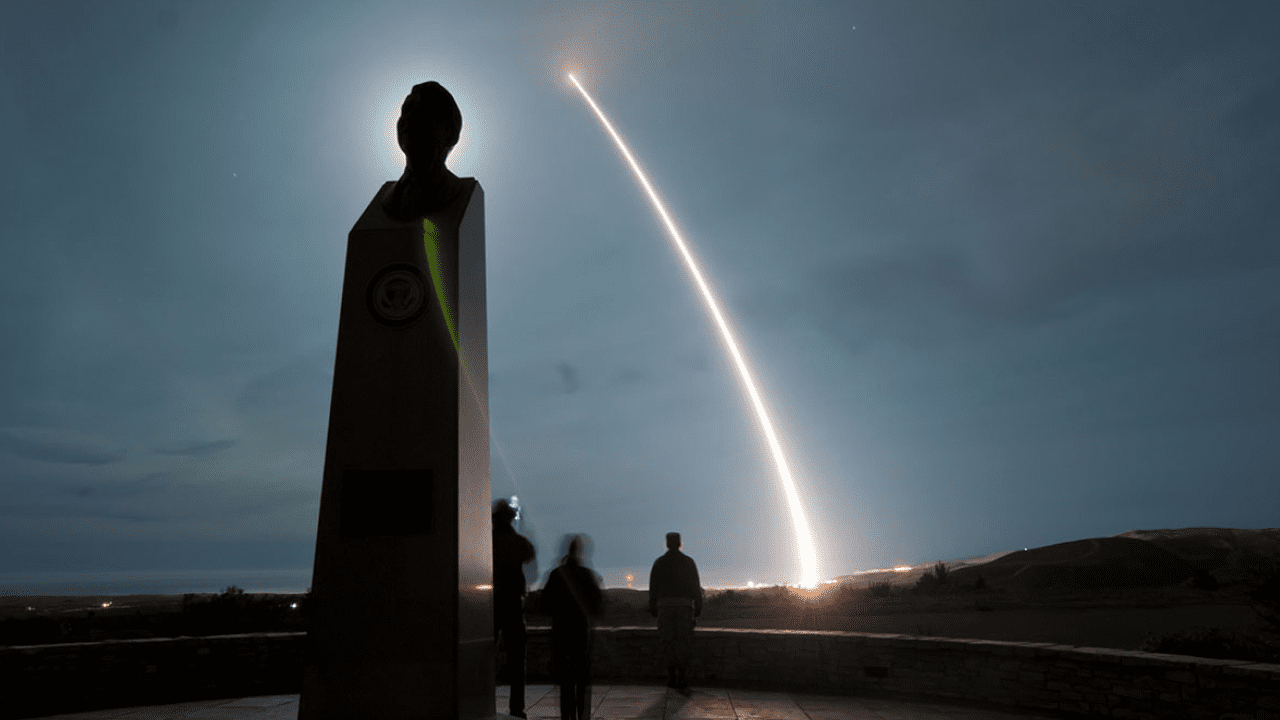
On March 3, 2026, the United States successfully conducted a test of its LGM-30G Minuteman III intercontinental ballistic missile (ICBM) from Vandenberg Space Force Base in California. This test, which involved the unarmed missile GT-254, comes at a time of heightened global tensions, notably amid the ongoing war between the US and Iran.
Although the missile test was unrelated to the current conflict in the Middle East, it has captured attention due to its symbolic association with the US nuclear deterrence strategy. The Minuteman III, capable of carrying nuclear warheads with a destructive power twenty times that of the Hiroshima atomic bomb, is one of the most potent weapons in the US military’s arsenal. Its range of 6,000 miles and speed exceeding 15,000 miles per hour make it an integral part of the United States’ nuclear triad the three-pronged strategy of land-based missiles, submarine-launched weapons, and strategic bombers.
Purpose and Technical Aspects of the Test
The launch was part of a routine program designed to test the readiness and effectiveness of the US’s ICBM systems. Officials from the Air Force Global Strike Command emphasized that the test had been scheduled years in advance and was not a response to any current geopolitical events. The test’s primary goal was to assess the performance of the missile system and evaluate the operational capabilities of its components.
Lt. Col. Karrie Wray, commander of the 576th Flight Test Squadron, explained that the test allowed engineers to analyze various mission profiles, ensuring that the missile’s re-entry vehicles and other components would function as intended. The Minuteman III test included the use of two re-entry vehicles that separated from the missile and re-entered the Earth’s atmosphere, simulating an actual strike scenario. These vehicles play a critical role in the missile’s ability to deliver multiple independently-targeted payloads to different locations.
US-Iran Conflict and Global Tensions
While the missile test was not directly tied to the US-Iran war, it comes at a particularly sensitive time. The conflict, which entered its sixth day on the same day as the test, has already escalated significantly, with both sides engaging in missile exchanges and military strikes. US military assets have been deployed to target key Iranian installations, and in retaliation, Iran launched missile barrages aimed at Israeli targets. With diplomatic efforts faltering and global tensions mounting, the US’s display of military readiness by testing its nuclear deterrent has taken on an added significance.
Following the US-led airstrike that killed Iranian Supreme Leader Ayatollah Ali Khamenei, and subsequent missile exchanges, both countries have signaled their intention to escalate military actions. US President Donald Trump warned that “the big one is coming,” referring to the possibility of further intensified actions. At the same time, the missile test demonstrates the US’s commitment to maintaining a strategic deterrent force capable of responding rapidly to any nuclear threats.
The Minuteman III: A Key Component of US Deterrence
The Minuteman III missile, first deployed in 1970, remains a crucial element of the United States’ nuclear triad. The weapon’s ability to travel vast distances, strike quickly, and carry powerful nuclear warheads ensures that the US retains a credible deterrent against nuclear threats. Despite being more than five decades old, the Minuteman III is continuously tested and modernized to ensure its reliability in times of crisis.
Currently, the US has 400 Minuteman III missiles deployed in silos across the western states of Montana, North Dakota, and Wyoming. These missiles are capable of reaching nearly any target on Earth, making them an essential part of the country’s defensive capabilities. The Air Force Global Strike Command, which oversees the testing and maintenance of these missiles, ensures that the ICBM fleet is constantly evaluated to maintain peak performance.
Industry and Global Implications
The Minuteman III missile tests play a significant role in global security by maintaining the US’s nuclear deterrence posture. These tests ensure that the US is ready to launch a retaliatory strike in the event of a nuclear attack, thereby discouraging potential adversaries from pursuing nuclear warfare. The missile system’s capabilities also serve as a warning to adversarial nations, reinforcing the US’s resolve to defend itself and its allies.
On the global stage, the test comes at a time of significant uncertainty in the Middle East. As the US and Iran engage in increasingly hostile actions, the stability of the region remains under threat. In addition, US military activities in the area, including airstrikes and missile exchanges, continue to raise concerns about further escalation. The Minuteman III missile tests reaffirm the US’s readiness to protect its interests worldwide, but also serve as a reminder of the catastrophic consequences of nuclear conflict.
What Happens Next?
With the test of the Minuteman III missile successfully completed, the US is likely to continue conducting similar evaluations as part of its broader strategy to ensure its nuclear arsenal remains operational. The missile test’s role in assessing multiple re-entry vehicles suggests that the US is also preparing for the future evolution of missile systems and may incorporate new technologies into its existing deterrent force.
The war with Iran shows little sign of abating, and tensions in the Middle East will likely continue to influence military strategy and testing in the coming months. As the situation unfolds, the Minuteman III will remain an essential pillar of US defense policy, with the potential for further tests and adjustments to the nuclear deterrence system.