
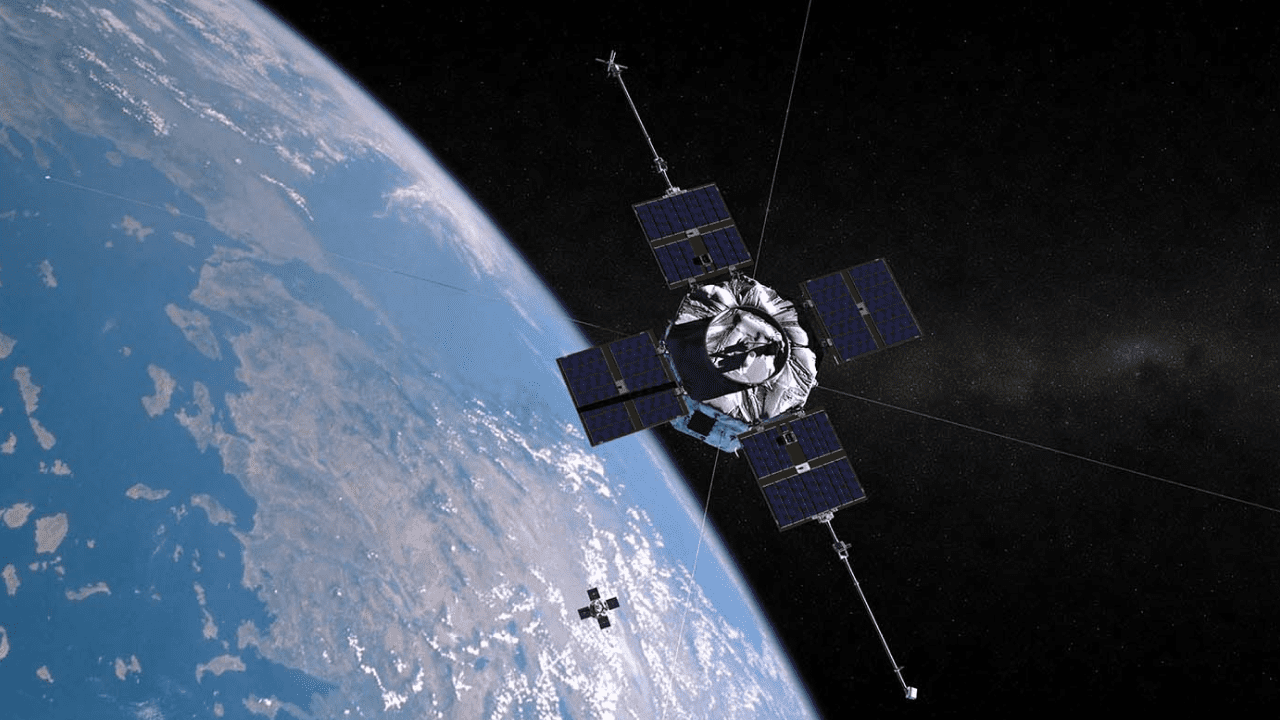
A 1,300-pound NASA satellite known as the Van Allen Probe A is expected to reenter Earth’s atmosphere on March 10 after nearly 14 years in orbit, marking the final stage of a mission that helped scientists better understand the hazardous radiation surrounding the planet.
The spacecraft, launched in August 2012, has been gradually descending since its mission ended in 2019. Tracking data from the U.S. Space Force indicates the satellite could plunge back through the atmosphere at approximately 7:45 p.m. EDT (2345 GMT), although the timing could vary by as much as 24 hours.
While the reentry will occur at extremely high speeds and across a wide geographic window, NASA says the risk to people on the ground is extremely small. Most of the satellite is expected to burn up during atmospheric entry, though a few pieces of debris could survive the fall.
According to NASA estimates, the probability of someone being harmed by debris is roughly 1 in 4,200, or about 0.02 percent. Scientists note that because oceans cover around 70 percent of Earth’s surface, any surviving fragments are far more likely to land in open water than near populated areas.
Also read: Qualcomm Unveils Wi-Fi 8 as the Backbone for AI-Powered Connectivity in Homes and Enterprises
Mission That Unlocked Earth’s Radiation Belts
Van Allen Probe A was part of a two-spacecraft mission designed to study the Van Allen radiation belts, two doughnut-shaped zones of charged particles trapped by Earth’s magnetic field. These regions play a crucial role in protecting the planet from cosmic radiation and solar storms.
The spacecraft launched alongside its twin, Van Allen Probe B, on August 30, 2012. Initially known as the Radiation Belt Storm Probes, the mission aimed to explore how high-energy particles enter, move within, and escape from the radiation belts.
Orbiting Earth in a highly elliptical path, the probes traveled as far as 18,900 miles (30,415 kilometers) from the planet and as close as 384 miles (618 kilometers) during each orbit. This trajectory allowed them to repeatedly pass through the radiation belts and collect detailed measurements of their behavior.
Although the mission was originally planned to last two years, both spacecraft far exceeded expectations. Probe B remained operational until July 2019, while Probe A continued collecting data until October 2019, when the spacecraft eventually ran out of fuel and could no longer maintain proper orientation toward the Sun.
The observations gathered during those seven years are still being analyzed by researchers today.
Why the Satellite Is Returning Earlier Than Expected
When NASA ended the mission, scientists initially predicted that both spacecraft would remain in orbit until around 2034. However, the Sun’s recent activity altered those projections.
The current solar cycle has proven stronger than anticipated. In 2024, scientists confirmed that the Sun had reached solar maximum, a peak period characterized by increased solar storms and heightened space weather.
These conditions cause Earth’s upper atmosphere to expand slightly, increasing atmospheric drag on satellites in low-Earth orbit. That extra drag gradually slows spacecraft and lowers their orbital altitude, accelerating their descent.
For Van Allen Probe A, the effect was significant enough to bring its expected reentry forward by nearly a decade.
Probe B, however, remains in orbit and is not expected to reenter before 2030, according to NASA projections.
Why the Van Allen Probes Were Important
The mission dramatically improved scientists’ understanding of the radiation environment surrounding Earth an area that poses risks to astronauts, satellites, and critical infrastructure.
The Van Allen belts contain high-energy particles that can damage spacecraft electronics and expose astronauts to dangerous radiation levels during missions beyond Earth’s protective atmosphere.
By flying directly through these regions for years, the probes captured detailed measurements of how the belts change in response to solar storms and other space-weather events.
Scientists now use this data to refine models that predict space weather, helping operators better protect satellites and other technologies that modern societies rely on.
NASA researchers say archived data from the mission continues to support studies on how solar activity can disrupt communications systems, navigation networks, and even power grids on Earth.
What Happens During Reentry
As Van Allen Probe A falls back toward Earth, it will enter the atmosphere at thousands of miles per hour, creating intense friction and heat.
This heating effect typically causes spacecraft structures to disintegrate and burn up during descent. However, certain dense components such as tanks or structural elements can sometimes survive the fall.
Because the spacecraft’s trajectory spans a large swath of the globe during the reentry window, predicting the exact landing location of any surviving debris is extremely difficult.
Tracking teams from the U.S. Space Force will continue refining the reentry estimate as new orbital data becomes available in the hours leading up to the event.
What Happens Next
Although the satellite’s return marks the end of its physical journey, the mission’s scientific legacy will continue for years.
Researchers are still analyzing the enormous dataset collected by the Van Allen Probes, which has already reshaped understanding of the radiation belts and their interaction with solar activity.
Those insights are helping engineers design more resilient spacecraft and improve forecasting systems for solar storms a growing priority as the world becomes increasingly dependent on satellites for communication, navigation, and global connectivity.