
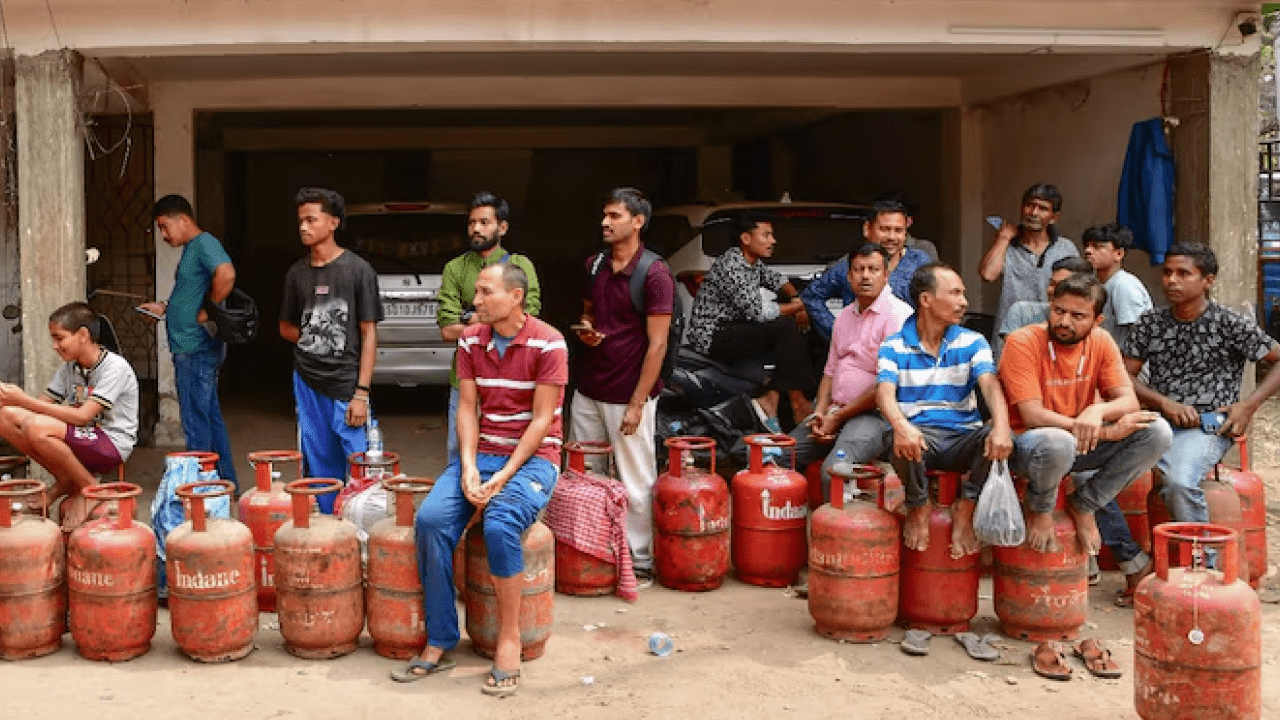
India is facing a growing LPG shortage in India, as disruptions in global energy supply linked to escalating tensions in West Asia ripple through domestic markets, affecting households, restaurants and transport sectors across multiple cities.
Reports from major urban centres including Delhi, Mumbai, Bengaluru, Pune and Kolkata suggest that irregular cylinder deliveries, rising prices and supply restrictions on commercial LPG are forcing communities and businesses to adapt quickly. Long queues outside gas agencies, shrinking restaurant menus and the increasing use of alternative fuels such as electricity, coal and wood highlight the scale of the disruption.
The supply strain comes amid the ongoing conflict involving the United States, Israel and Iran in West Asia, which has disrupted international energy supply routes. While the government has urged citizens not to panic and insists domestic LPG availability remains adequate, demand has surged dramatically as consumers rush to secure cylinders.
Oil marketing companies have prioritised domestic consumption, but deliveries have slowed and commercial LPG supplies have been curtailed significantly. In many regions, restaurants, caterers and mess services heavily dependent on commercial cylinders are bearing the brunt of the disruption.
Shortages Hit Cities, Campuses and Restaurants
The impact of the LPG supply disruption is already visible across India’s urban centres.
In Delhi, several campus canteens are scaling back operations due to uncertainty in LPG supplies. At one university canteen, operators have begun reducing menu options and may soon limit offerings to tea and basic snacks if the situation persists. Another well-known campus eatery is considering restricting its menu to only a few items as rising costs make it difficult to operate under fixed student pricing structures.
Mumbai residents reliant on LPG cylinders are also facing delays. In several neighbourhoods from Kandivali in the western suburbs to Dharavi and Bhandup in the east people have been waiting in long queues outside gas agencies. Households dependent on a single cylinder are particularly vulnerable, with some residents reportedly taking leave from work to secure refills.
Student hubs in Pune are witnessing similar pressure. Mess operators in traditional student neighbourhoods have reported difficulty obtaining cylinders, forcing some to increase meal prices while others are considering temporary closures. Students who depend on low-cost meal plans say they are now sharing tiffins or searching for smaller kitchens still able to cook with limited supplies.
In Bengaluru, the crisis is affecting both food services and transport. Auto-rickshaw drivers using LPG as fuel reported a sudden increase of about ₹10 per litre within two days, significantly increasing operating costs. Meanwhile, supply disruptions have also raised concerns about the functioning of subsidised public meal programmes.
Restaurants in Kolkata are also struggling to secure commercial LPG cylinders. Many eateries have reduced menu items or increased prices, while others are exploring temporary shutdowns until supplies stabilise.
Kerala Restaurants Face Large-Scale Shutdown
Among the hardest-hit states is Kerala, where industry representatives estimate that around 40% of restaurants may shut down due to lack of LPG supplies.
Hotel and restaurant associations say many establishments are unable to shift to alternative fuels because their modern kitchens are not designed for firewood or coal-based cooking systems. Apart from restaurants, caterers, hostels and institutional kitchens are also facing operational challenges.
In some states, the shortage has triggered a shift back to traditional cooking fuels. Hotels and eateries in parts of Rajasthan, particularly in Ajmer, have begun using coal and wood as LPG becomes scarce. Traders report that demand for firewood has doubled in recent days, pushing up prices.
Panic Buying and Appliance Demand Surge
The LPG shortage has also triggered panic buying and a dramatic surge in demand for electric cooking appliances.
Consumers across cities have reported booking systems failing due to heavy traffic, with mobile apps, IVRS numbers and WhatsApp booking channels frequently displaying “server down” messages. Distributors say booking volumes have jumped nearly tenfold compared to normal levels.
As households seek alternatives, retailers and e-commerce platforms are reporting a sharp spike in demand for induction cooktops, electric kettles and rice cookers. Some sellers say demand for induction stoves has increased by more than twenty times compared to usual levels.
Authorities have also reintroduced kerosene and coal as temporary cooking alternatives, allocating around 40,000 kilolitres of additional kerosene to states to ease pressure on LPG demand.
Crackdown on Hoarding and Black Marketing
The supply disruption has also triggered concerns over hoarding and black-market sales.
Police in multiple states have conducted raids targeting illegal storage and diversion of LPG cylinders. In one case in Uttar Pradesh, authorities seized dozens of domestic cylinders allegedly being sold illegally for profit. In Tamil Nadu’s Madurai district, police arrested two individuals after recovering nearly 400 LPG cylinders, including both domestic and commercial units.
Officials said the cylinders were allegedly diverted from subsidised domestic supplies and sold commercially at higher prices, a violation of the Essential Commodities Act.
Governments have warned distributors and private dealers against hoarding or black marketing, promising strict action against offenders.
Government Response and Political Reactions
The central government has sought to calm fears of a nationwide energy crisis.
Prime Minister Narendra Modi said the country is making continuous efforts to stabilise supply chains and ensure energy availability. He criticised attempts to spread panic, emphasising that global geopolitical tensions have affected energy markets worldwide but that India is taking steps to manage the situation.
Union Petroleum and Natural Gas Minister Hardeep Singh Puri said India has diversified its LPG procurement sources, securing cargoes from countries including the United States, Norway, Canada, Algeria and Russia in addition to traditional Gulf suppliers. He also noted that domestic LPG production had increased in recent days.
State governments have echoed similar messages, urging residents to avoid panic buying and assuring that domestic LPG stocks remain sufficient for households.
However, opposition leaders have questioned the government’s assessment of the situation, arguing that long queues and supply delays indicate deeper challenges on the ground.
What Happens Next
Energy experts say the trajectory of the crisis will depend largely on how long disruptions in West Asia continue and how quickly global LPG shipping routes stabilise.
For now, authorities are prioritising domestic households while rationing commercial supply and expanding alternative cooking fuel options. Officials in several states have indicated that supply conditions could improve within the next one to two weeks as additional imports arrive.
But if geopolitical tensions persist, the ripple effects could continue to affect India’s food services industry, urban households and small businesses that depend heavily on LPG.