
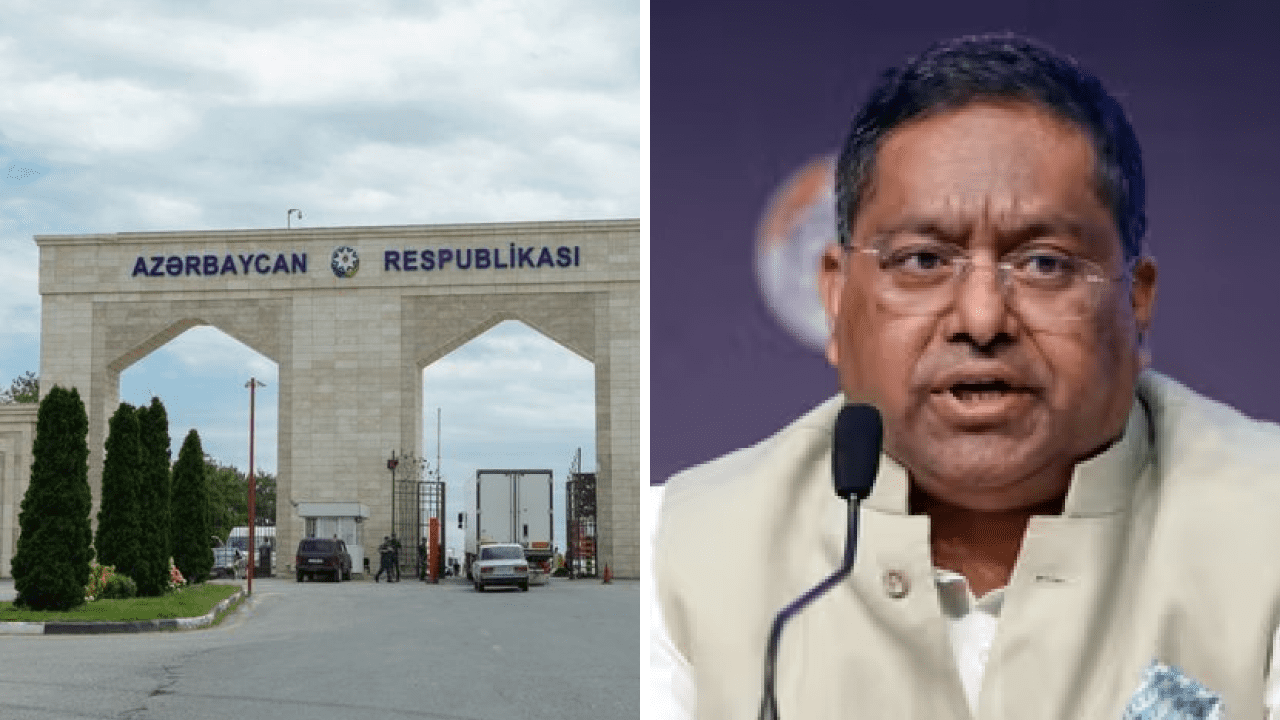
Hundreds of Indian nationals have begun leaving Iran through neighboring countries as the government intensifies efforts to safeguard citizens amid escalating tensions in West Asia following the ongoing US–Israel and Iran conflict. According to the Ministry of External Affairs (MEA), many Indians have already crossed into Armenia and Azerbaijan by land, while others are being relocated to safer areas within Iran as authorities coordinate evacuation and travel arrangements.
MEA spokesperson Randhir Jaiswal confirmed that at least 550 Indian nationals have crossed into Armenia, while around 90 Indians have moved into Azerbaijan through land border crossings facilitated by the Indian embassy in Tehran. The crossings were organized to help citizens access commercial flights from these countries and return home safely.
Among those evacuated are 284 Indian pilgrims who had traveled to Iran for religious purposes. Some have already returned to India, while others are expected to travel back in the coming days via commercial flight routes from Armenia and Azerbaijan.
The Indian embassy in Tehran remains operational despite the regional tensions and is actively assisting citizens on the ground. As a precautionary measure, Indian students in Tehran have been relocated to safer cities outside the Iranian capital, officials said, while maintaining constant communication with local authorities and Indian communities across the region.
The evacuation efforts come as regional hostilities continue to disrupt airspace and transportation networks across several Gulf countries, prompting India to activate emergency coordination mechanisms to ensure the safe return of its citizens.
Also read: Sri Lanka Applies International Law After U.S. Sinks Iranian Warship Near Its Coast
Evacuation Efforts Expand Across Borders
Indian missions in Iran and neighboring countries have been coordinating closely to assist nationals seeking to leave the region. Embassy officials have helped travelers with visa approvals, immigration procedures, and cross-border transit arrangements, enabling them to reach Armenia and Azerbaijan safely.
Once across the border, Indian nationals are being guided toward available commercial flights to India. The MEA also established a dedicated control room earlier this month to manage emergency queries from families and citizens.
Officials said the control room has already received around 900 phone calls and 200 emails since its launch on March 4, reflecting the high level of concern among families. However, authorities noted that the number of inquiries has gradually declined as evacuation operations progressed and communication channels improved.
Meanwhile, Indian authorities remain in regular contact with state governments and Union Territories to coordinate support for returning nationals and ensure smooth reintegration upon arrival.
Flights Operating From Gulf Countries
In addition to overland evacuations from Iran, the Indian government has been coordinating large-scale flight operations from several Gulf countries to bring citizens home.
Officials confirmed that 45 flights were scheduled in a single day from major transit hubs including the United Arab Emirates, Saudi Arabia, Oman, and Qatar. Qatar’s airspace, which had been partially restricted due to the conflict, has begun reopening, allowing limited flight movements.
For travelers currently in Bahrain and Iraq, authorities are facilitating transit through Saudi Arabia to access available flights to India.
However, Kuwait’s airspace remains closed, and officials said special non-scheduled flights may be deployed to help stranded passengers once conditions allow.
Government data indicates that around 220,000 Indians have returned to India since February 28, when hostilities escalated dramatically in the region.
Diplomatic Engagement Intensifies
Alongside evacuation efforts, India has increased diplomatic engagement with regional leaders to address the safety of its citizens and maintain economic stability.
Prime Minister Narendra Modi recently spoke with Iranian President Masoud Pezeshkian, expressing concern over the deteriorating security situation and emphasizing the need to protect civilians and foreign nationals in the region. The discussion also touched on energy supply and trade routes, both of which have been disrupted by the conflict.
India reiterated its long-standing position that dialogue and diplomacy are essential to de-escalate tensions and restore stability.
External Affairs Minister S. Jaishankar also held discussions with Iranian Foreign Minister Seyed Abbas Araghchi, covering bilateral relations and cooperation within the BRICS grouping, while exchanging views on the unfolding regional crisis.
Casualties and Safety Concerns
While evacuation efforts continue, the government confirmed that two Indian nationals were killed in Sohar, Oman during the period of heightened tensions in the region.
The Indian embassy in Muscat is coordinating with Omani authorities and the victims’ families to facilitate the return of their mortal remains to India.
Officials emphasized that embassies across the Gulf remain on high alert and are closely monitoring developments while assisting Indian nationals who may require relocation or emergency support.
Background Context
The current crisis escalated sharply after joint military strikes by the United States and Israel on February 28 targeted Iranian leadership and infrastructure. The strikes reportedly resulted in the death of Iran’s 86-year-old Supreme Leader, Ayatollah Ali Khamenei, triggering retaliatory attacks by Iran against Israeli and U.S. assets across the region.
The subsequent exchanges have disrupted shipping routes, regional airspace, and energy markets, raising concerns about wider geopolitical instability.
For India, which has millions of citizens working and traveling across the Gulf and maintains strong energy ties with the region, the safety of nationals and the continuity of trade routes remain critical priorities.
What Happens Next
Indian authorities say evacuation assistance will continue as long as the security situation remains uncertain. Embassies in Iran, Armenia, Azerbaijan, and Gulf countries are working together to track Indian citizens and ensure they have safe routes to leave if necessary.
Officials have urged Indian nationals in affected areas to remain in contact with embassies and follow official advisories. As diplomatic efforts continue and airspace restrictions gradually ease, more return flights are expected in the coming days.