
The Strait of Hormuz crisis has deepened as U.S. President Donald Trump faces growing resistance from key allies over his call for a multinational naval effort to reopen the critical oil transit route, even as the conflict with Iran intensifies across the Middle East.
Nearly three weeks into the U.S.-Israel war with Iran, the strategic waterway through which roughly 20% of global oil and liquefied natural gas flows remains largely shut following Iranian retaliation that includes naval mines, missile strikes, and drone attacks. The closure has heightened fears of a prolonged energy shock and broader regional instability.
Despite Washington’s push for coordinated action, several European partners including Germany, Spain, Italy, and the United Kingdom have declined to commit warships, citing legal, political, and strategic constraints. Their reluctance has exposed fractures within Western alliances at a moment of acute geopolitical risk.
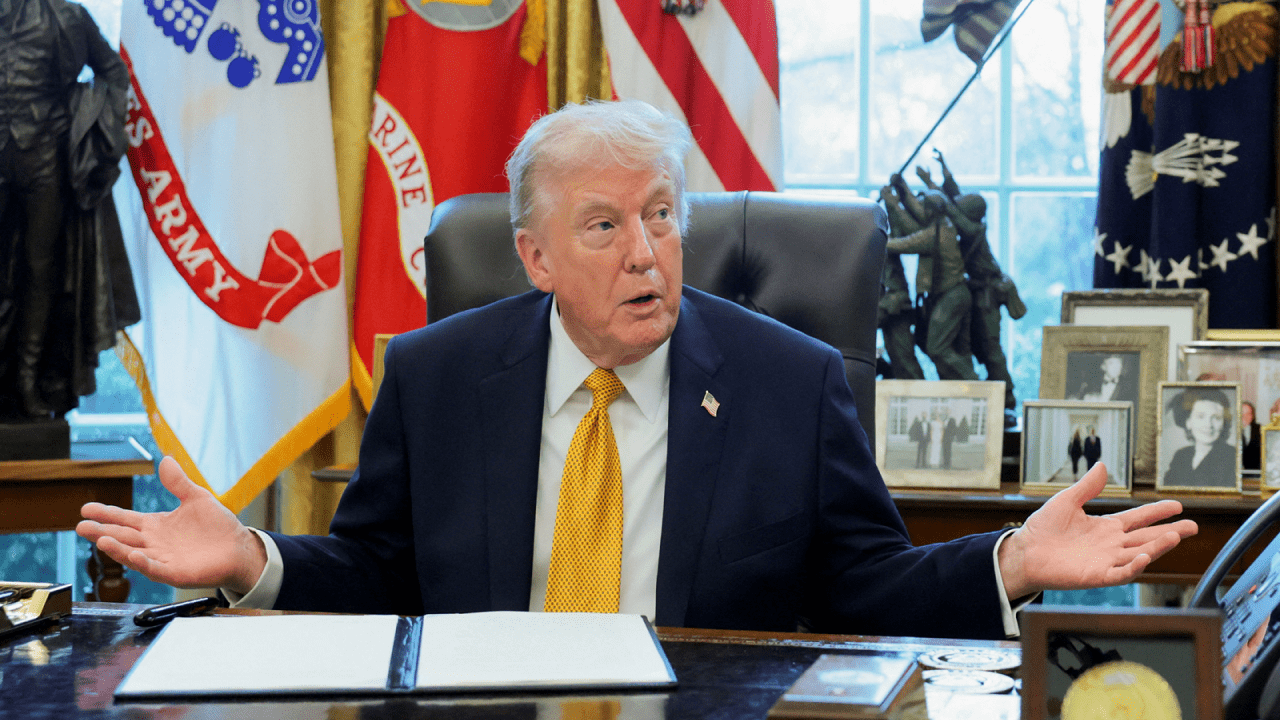
Trump, speaking from the White House, expressed frustration at what he described as a lack of “enthusiasm” from countries the U.S. has historically defended. While insisting the United States could act independently, he suggested the outreach was also a test of allied reliability in times of crisis.
Also read: Mojtaba Khamenei Survives Deadly Tehran Strike That Killed Iran’s Supreme Leader
Allies Cite Legal Limits and Strategic Risks
European leaders have been careful to distance themselves from direct military involvement, emphasizing the absence of formal authorization and the risks of further escalation.
German Chancellor Friedrich Merz stated that Berlin lacks the necessary mandate under frameworks such as the United Nations, European Union, or NATO, and noted that Germany was not consulted prior to the initial strikes on Iran. Similar sentiments have been echoed by other European governments.
The United Kingdom has stopped short of joining offensive operations, though it has allowed U.S. forces to use British bases. Prime Minister Keir Starmer indicated that London is working with partners on a “collective plan” to eventually reopen the strait but stressed that Britain would not be drawn into a wider war. Behind the scenes, the UK is reportedly exploring limited contributions such as deploying autonomous mine-hunting systems.
Spain has taken a more cautious stance, warning against any steps that could intensify the conflict. Italy, meanwhile, has resisted proposals to expand the European Union’s existing naval mission in the region, arguing that its current focus should remain on the Red Sea.
EU foreign policy chief Kaja Kallas has emerged as one of the few voices advocating for adapting the bloc’s maritime operations to address the Hormuz crisis, though doing so would require unanimous agreement among member states a significant political hurdle.
War Expands Beyond Initial Expectations
As diplomatic divisions widen, the conflict itself continues to escalate in scope and intensity.
Iran has launched fresh attacks targeting U.S. allies across the Gulf, including the United Arab Emirates, where strikes have disrupted airspace and hit key oil infrastructure. Missile and drone attacks have also targeted Israel, U.S. bases, and diplomatic facilities, including a major assault on the U.S. embassy in Baghdad.
The widening pattern of retaliation appears to contradict earlier expectations within the U.S. administration that Iran’s response would remain more limited. Officials have since acknowledged that intelligence assessments had warned of precisely such a regional escalation, including potential strikes on Gulf states and attempts to shut down the Strait of Hormuz.
Despite sustained U.S. and Israeli bombardment, Iran has demonstrated continued capability to carry out long-range attacks, underscoring the resilience of its military infrastructure.
Industry / Market Impact
The prolonged closure of the Strait of Hormuz has sent shockwaves through global energy markets, with oil prices rising sharply amid fears of supply disruption.
A surge of more than 5% in oil prices reflects mounting concern among investors over constrained exports from the Gulf. The Crisis has also triggered broader economic concerns, including the risk of inflation and slower global growth.
Central banks are already responding. Australia’s central bank, for instance, raised interest rates again, citing geopolitical instability as a key factor influencing inflationary pressures. Analysts warn that a sustained the Crisis could lead to “stagflation” a combination of rising prices and weakening economic activity.
Energy-importing nations, particularly in Asia and Europe, are especially vulnerable, as they rely heavily on shipments passing through the strait.
Why This Matters
The standoff over the Strait of Hormuz is not just a military challenge it is a test of alliance cohesion and global economic resilience.
For decades, the United States has relied on a network of allies to support maritime security operations. The current reluctance to participate highlights shifting political dynamics, including domestic constraints in Europe and growing unease about entering another Middle Eastern conflict without clear international backing.
At the same time, the crisis underscores the strategic importance of the Strait of Hormuz as a global energy chokepoint. Any prolonged disruption threatens to ripple across supply chains, financial markets, and consumer prices worldwide.
Trump’s public criticism of allies and his suggestion that U.S. requests are partly a test of loyalty may further strain transatlantic relations at a time when coordination is critical.
What Happens Next
With no unified coalition in place, the burden of reopening the Strait of Hormuz may fall largely on the United States, raising the likelihood of unilateral action.
Meanwhile, diplomatic efforts to expand existing European naval missions remain uncertain, given the need for consensus among EU member states. Limited, non-combat contributions such as surveillance or mine-clearing support may emerge as a compromise.
On the battlefield, both sides appear prepared for a prolonged confrontation. Israel has signaled plans for weeks of continued operations, while Iran continues to demonstrate its capacity for retaliation across the region.
As the crisis enters a critical phase, the interplay between military developments, diplomatic negotiations, and market reactions will determine whether the situation stabilizes or spirals into a broader regional war with global consequences.