
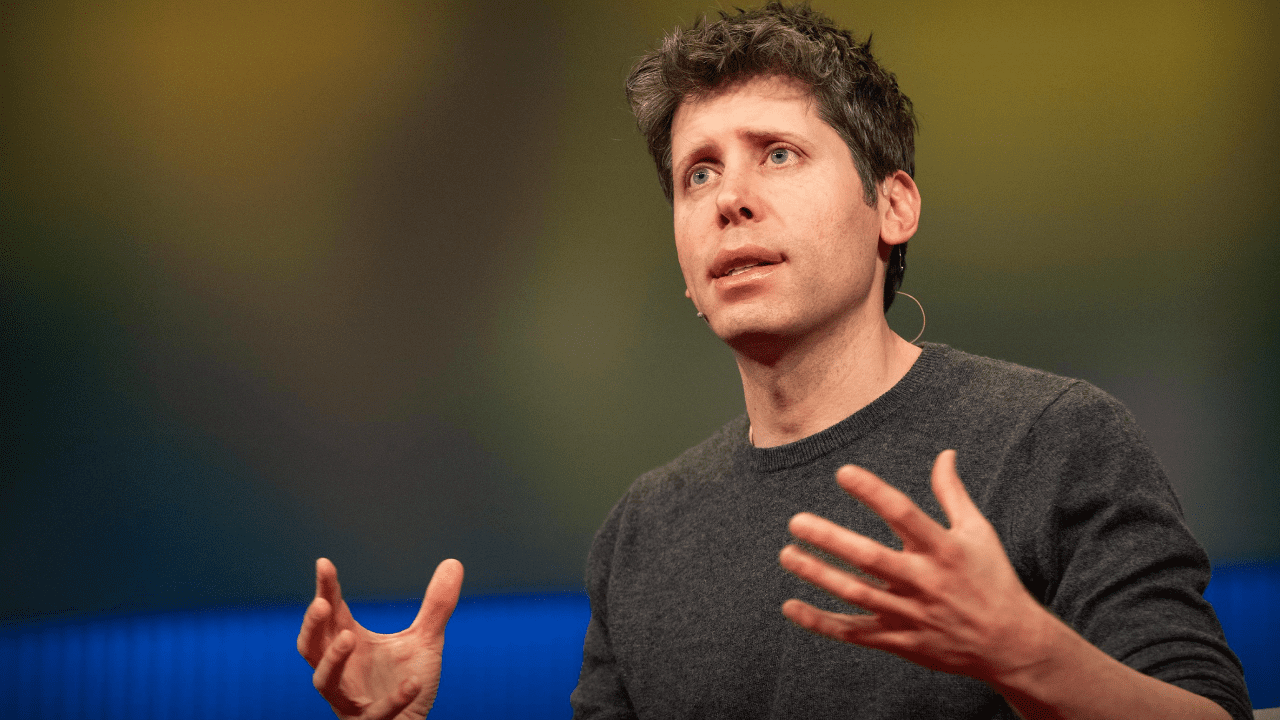
A recent message from Sam Altman has reignited a global debate about the future of software engineering, as rapid advances in artificial intelligence begin to transform how code is written, tested, and deployed. In a post shared on X, the OpenAI chief expressed gratitude to programmers who built complex systems “character-by-character,” acknowledging the immense effort behind the digital infrastructure powering today’s AI revolution.
The remarks arrive at a pivotal moment for the tech industry, where AI tools are increasingly capable of generating code in seconds, automating repetitive tasks, and improving productivity across engineering teams. While Altman did not explicitly suggest that AI will replace developers, his comments have been widely interpreted as recognition of a structural shift already underway one that could redefine the role of human coders.
Online reactions were swift and divided. Some users praised the acknowledgment, while others criticized the perceived irony of thanking developers while leading a company building tools that may reduce demand for their skills. The exchange highlights growing anxiety among engineers about job security and the long-term implications of automation in white-collar professions.
Industry / Market Impact
The concerns raised by Altman’s post are not theoretical they are already reflected in corporate decision-making across the tech sector. Companies are increasingly restructuring their workforces to integrate AI-driven efficiencies.
Financial technology firm Block Inc. recently announced plans to significantly reduce its workforce as automation expands its role in operations. Meanwhile, collaboration software provider Atlassian has cut roughly 10% of its staff while simultaneously ramping up investments in AI capabilities.
Other industry leaders have echoed similar strategies. Alex Karp has spoken about boosting revenue while trimming headcount, and Andy Jassy has indicated that AI adoption is likely to shrink corporate workforces over time.
Analysts say these moves reflect a broader trend, companies are leveraging AI to increase output with fewer employees, particularly in roles involving routine or repetitive tasks. Software development, marketing, customer support, and data processing are among the fields experiencing the earliest impact.
Why This Matters
At the center of the debate is a fundamental question, is AI replacing developers, or redefining what it means to be one?
Evidence so far suggests the latter. AI tools are dramatically accelerating workflows allowing developers to complete tasks two to three times faster in some cases but they are not eliminating the need for human expertise. Complex responsibilities such as system architecture, debugging large-scale applications, ethical decision-making, and integrating technologies across platforms still require human judgment.
Even AI systems themselves reinforce this perspective. Grok, an AI chatbot developed by Elon Musk’s company, noted in response to the discussion that software engineering is “evolving fast” rather than disappearing. The technology is best understood as an augmentation tool handling repetitive coding while enabling developers to focus on higher-level problem-solving.
However, the shift presents a real challenge for newcomers. Entry-level programming roles have traditionally relied on simple, repetitive tasks to build foundational skills. As AI increasingly automates these tasks, early-career developers may find fewer opportunities to gain hands-on experience, potentially reshaping how talent enters the industry.
Key Figures and Data
Research from Anthropic provides additional insight into how AI is being used in real-world work environments. A recent study analyzing its Claude AI model found that, while AI could theoretically assist with up to 94% of tasks in computer and mathematics-related jobs, actual usage remains far lower around 33%.
This gap suggests that businesses are still in the early stages of integrating AI into workflows. Many organizations are experimenting cautiously, identifying where automation adds value without disrupting critical processes.
The study also highlights an important distinction, not all work is equally susceptible to automation. Roles requiring physical presence, interpersonal interaction, or nuanced judgment such as those in agriculture, construction, legal advocacy, and personal care remain largely dependent on human labor.
Even within software development, AI is primarily acting as an assistant rather than a replacement. Programmers, customer service agents, and data entry professionals are among those seeing increased AI support, but full automation remains limited.
What Happens Next
The trajectory of AI in software engineering will likely depend on how companies balance efficiency with human expertise. In the near term, the most visible changes may include leaner teams, higher productivity expectations, and evolving skill requirements.
For developers, adaptability will be key. Skills in system design, critical thinking, and interdisciplinary problem-solving are expected to become more valuable as routine coding becomes automated. Educational pathways may also shift, placing greater emphasis on working alongside AI tools rather than competing with them.
For businesses, the challenge lies in deploying AI responsibly ensuring that productivity gains do not come at the expense of innovation, workforce stability, or ethical considerations.
Altman’s message, when viewed in this broader context, reads less like a farewell to human coders and more like a milestone in an ongoing transformation. The software engineers who once built systems line by line have enabled the creation of AI tools that now reshape their own profession. Yet, as the technology continues to evolve, it remains clear that human insight, creativity, and oversight are still central to the future of coding.