
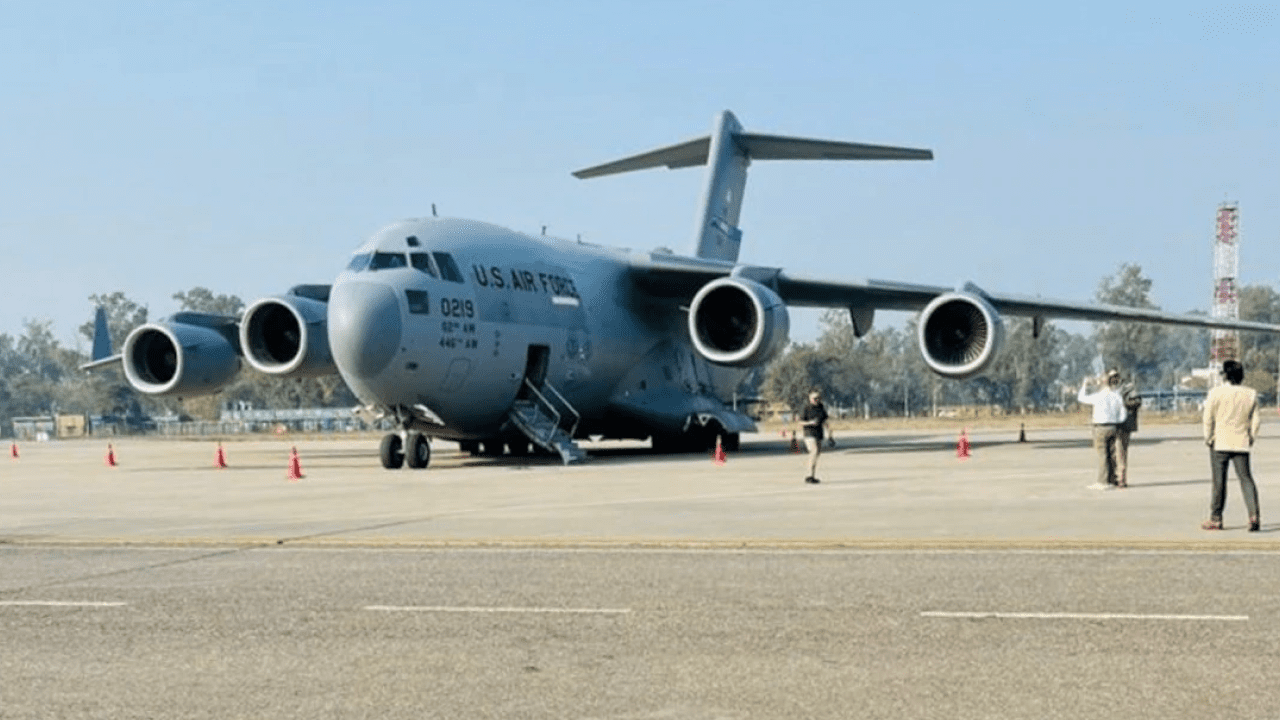
Amid intensifying tensions in the Middle East, India has firmly denied viral claims suggesting that the United States is using Indian territory or ports to launch military strikes against Iran. The Indian Ministry of External Affairs (MEA) issued a strong rebuttal, labeling such assertions as “fake and baseless,” even as the ongoing conflict between Washington and Tehran edges closer to the Indian Ocean region.
The controversy erupted after a series of claims circulated on social media and international media platforms, alleging that the US had sought India’s permission to operate military assets from western India or was already using Indian naval bases. These reports emerged alongside a rapidly escalating conflict involving the US, Iran, and Israel, raising concerns about regional spillover effects.
In an official clarification posted on X, the MEA categorically rejected the allegations, urging the public to remain vigilant against misinformation. The government emphasized that no such requests or operations have taken place, dismissing both speculative social media posts and televised commentary as unfounded.
The claims originated from multiple sources, including a journalist who suggested that the US might deploy military assets near India’s Konkan coast under existing bilateral agreements, as well as remarks by former US Army Colonel Douglas Macgregor, who alleged that American naval operations against Iran were being supported through Indian ports. Indian authorities have rejected both narratives without ambiguity.
Also read: Modi Rallies Global Leaders as West Asia Crisis Threatens Energy Flows and Trade Routes
Background Context
The controversy unfolds against the backdrop of a rapidly deteriorating security situation in the Middle East. The latest escalation reportedly began with coordinated US and Israeli airstrikes targeting Iran, triggering a wave of retaliatory missile attacks by Tehran on Israeli territory and US military installations in the Gulf region.
The conflict has since intensified, with significant casualties reported across multiple countries. In a major naval incident, a US submarine torpedoed an Iranian warship in the Indian Ocean near Sri Lanka, marking a rare and significant escalation at sea. The attack resulted in dozens of fatalities and underscored the expanding geographic scope of the conflict.
India, while geographically removed from the core conflict zone, finds itself strategically close to emerging maritime flashpoints. The sinking of an Iranian vessel near regional waters has heightened concerns about the proximity of hostilities to the Indian subcontinent.
What Is LEMOA and Why It Matters
Central to the misinformation is the Logistics Exchange Memorandum of Agreement (LEMOA), a bilateral pact signed between India and the United States in 2016. The agreement facilitates logistical cooperation between the two militaries, allowing access to each other’s facilities for refueling, repairs, and supplies on a reimbursable basis.
However, officials and experts stress that LEMOA does not permit either country to launch military operations from the other’s territory without explicit, case-by-case approval. Nor does it allow permanent basing of foreign troops or assets. The agreement is designed to streamline logistical support during joint exercises, humanitarian missions, and port visits not to enable offensive military campaigns.
Misinterpretations of LEMOA appear to have fueled speculation that the US could use Indian infrastructure for operations against Iran. The MEA’s clarification aims to dispel these misconceptions and reaffirm the limited scope of the agreement.
Why This Matters
The spread of such claims carries significant geopolitical implications. India maintains a delicate diplomatic balance in the Middle East, with strong ties to countries across the region, including Iran, Israel, and Gulf nations. Any perception of India enabling military action against Iran could strain these relationships and complicate its foreign policy objectives.
Moreover, misinformation during times of conflict can amplify tensions and create unnecessary alarm among the public. By issuing a prompt rebuttal, the Indian government seeks to maintain clarity, prevent diplomatic misunderstandings, and reinforce its position as a responsible global actor advocating restraint.
India has also expressed “deep concern” over the escalating violence, calling on all parties to de-escalate and prioritize civilian safety. This stance aligns with its broader policy of promoting stability and dialogue in international conflicts.
What Happens Next
As the Middle East crisis continues with no immediate signs of de-escalation, the likelihood of further misinformation remains high. Analysts expect governments, including India’s, to increase vigilance against false narratives that could influence public perception or diplomatic relations.
On the ground, the conflict shows little sign of abating. Continued military engagements, including naval operations in nearby waters, may keep the region on edge and sustain global attention. For India, the priority will remain safeguarding its strategic interests, ensuring maritime security, and maintaining balanced diplomatic ties.
The MEA’s swift response highlights the growing importance of real-time fact-checking in an era where social media can rapidly amplify unverified claims. As geopolitical tensions rise, accurate communication from official channels will be critical in preventing confusion and maintaining stability.