
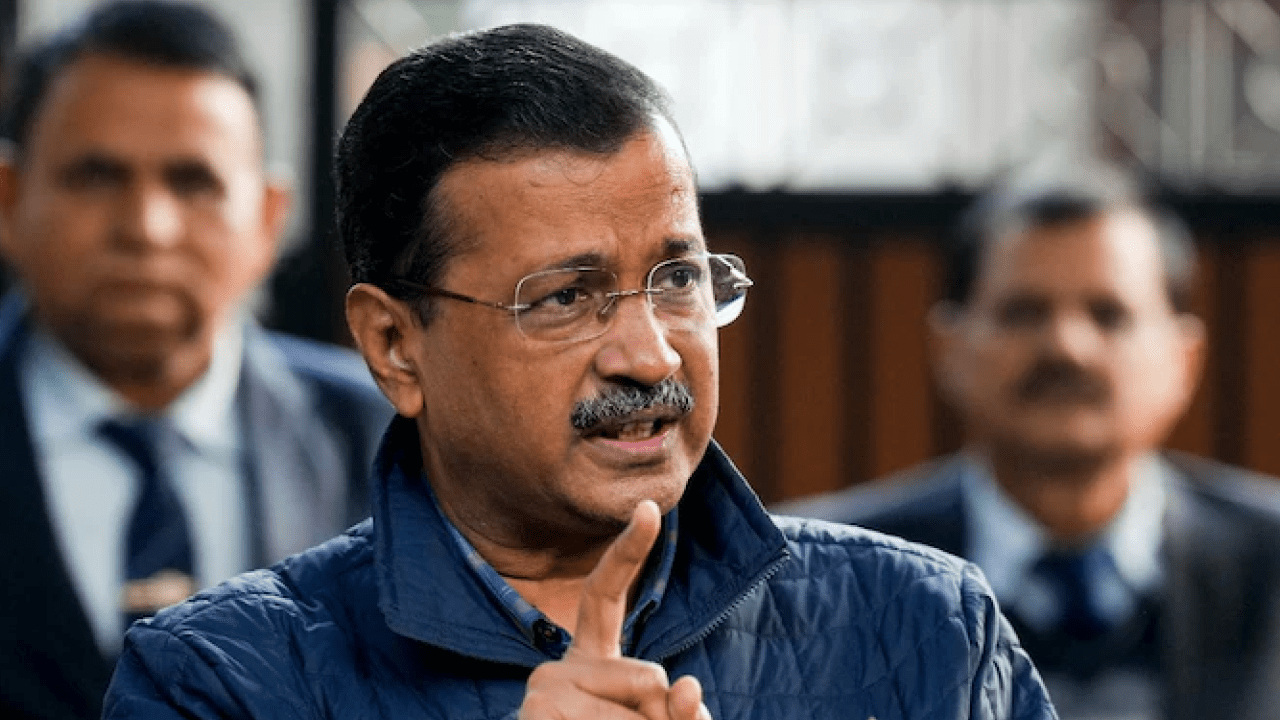
Delhi’s high-profile excise policy case took a dramatic turn on Monday as Aam Aadmi Party (AAP) chief Arvind Kejriwal moved a recusal plea in the Delhi High Court, seeking the withdrawal of Justice Swarna Kanta Sharma from hearing the Central Bureau of Investigation’s (CBI) appeal against his discharge. In an unusual move underscoring the political and legal stakes, Kejriwal is set to personally argue his case in court on April 6, marking a rare instance of a senior political leader representing himself in a matter of such significance.
The development comes amid an ongoing legal battle over the now-scrapped Delhi excise policy, with the CBI challenging a trial court order that had cleared Kejriwal, former deputy chief minister Manish Sisodia, and 21 others of corruption charges. The High Court is hearing the agency’s appeal against that decision, while parallel proceedings linked to the Enforcement Directorate (ED) remain in the background.
Kejriwal’s recusal request follows earlier unsuccessful attempts to have the case transferred to a different bench, raising fresh questions about judicial impartiality, legal strategy, and political messaging in one of India’s most closely watched investigations.
Also read: Raghav Chadha Breaks Silence After AAP Ouster, Raises Questions Over ‘Silencing’ in Rajya Sabha
Background Context
The controversy stems from the Delhi government’s 2021 excise policy, which was introduced as a reform measure aimed at modernising the liquor trade. However, allegations of irregularities and corruption soon surfaced, prompting investigations by both the CBI and the ED.
On February 27, 2026, a special court at Rouse Avenue delivered a sweeping verdict, discharging Kejriwal, Sisodia, and others. The court concluded that the evidence presented by the CBI did not establish even a prima facie case. In a strongly worded order running over 600 pages, the judge also directed a departmental inquiry against the investigating officer, citing misuse of authority and lack of credible material.
The CBI swiftly challenged this decision in the Delhi High Court, arguing that the trial court had overlooked substantial evidence, including documents, witness testimonies, and digital communications such as emails and WhatsApp messages.
During an initial hearing on March 9, Justice Sharma issued notice in the appeal and made preliminary observations suggesting that the trial court’s conclusions appeared “prima facie erroneous.” She also stayed certain directions issued against the investigating officer and asked the trial court to defer related proceedings in the ED’s money laundering case until the appeal is decided.
From Transfer Plea to Recusal Request
Kejriwal’s latest move is rooted in his earlier attempt to shift the case away from Justice Sharma’s bench. On March 11, he and other discharged accused approached the Delhi High Court Chief Justice, expressing concerns about potential bias and seeking reassignment of the case.
They argued that the judge’s initial observations made before hearing the discharged accused created a reasonable apprehension that the proceedings might not be impartial. The Chief Justice, however, declined the request on March 13.
Following that rejection, Kejriwal escalated the matter by filing a petition in the Supreme Court on similar grounds. Simultaneously, he has now formally sought Justice Sharma’s recusal, maintaining that fairness and neutrality are at stake.
The High Court had earlier granted additional time to Kejriwal and others to respond to the CBI’s appeal, scheduling the hearing for April 6 when the recusal plea is also expected to be taken up.
Political Reactions and Legal Strategy
The Bharatiya Janata Party (BJP) has sharply criticised Kejriwal’s move, framing it as an attempt to undermine judicial processes. A Delhi BJP spokesperson accused the AAP leader of showing a lack of respect for the judiciary, especially after failing to secure a transfer of the case.
AAP, on the other hand, has defended the decision, portraying it as a legitimate legal step to ensure a fair hearing in a politically sensitive case.
Kejriwal’s choice to argue the matter himself adds another layer of significance. While self-representation is legally permissible, it remains uncommon in complex criminal appeals, particularly involving senior political figures. The move signals both confidence and a desire to directly shape the narrative in court.
Why This Matters
The excise policy case has become a focal point of political contestation in Delhi, with implications extending beyond the courtroom. At its core, the dispute touches on issues of governance, accountability, and the limits of investigative authority.
The trial court’s earlier decision to discharge the accused and to question the conduct of the investigating officer was seen as a significant setback for central agencies. The High Court’s eventual ruling on the CBI’s appeal could either reinforce that position or revive the case against the accused.
Equally important are the concerns raised about judicial impartiality. Recusal pleas are sensitive matters, as they balance a litigant’s right to a fair hearing against the integrity and independence of the judiciary. How the court handles this request could set important precedents for similar cases in the future.
What Happens Next
The Delhi High Court is expected to first consider Kejriwal’s recusal plea before proceeding with substantive arguments in the CBI’s appeal. If the plea is accepted, the case would be reassigned to a different bench, if rejected, Justice Sharma will continue to hear the matter.
Meanwhile, proceedings linked to the ED’s money laundering case remain effectively paused, pending clarity on the CBI appeal. The Supreme Court is also seized of a related petition concerning the transfer of the case, adding another layer of judicial scrutiny.
The coming hearings are likely to shape not only the trajectory of the excise policy case but also broader debates around legal accountability and political power. With Kejriwal stepping into the courtroom as his own advocate, the case has entered a new and closely watched phase.