
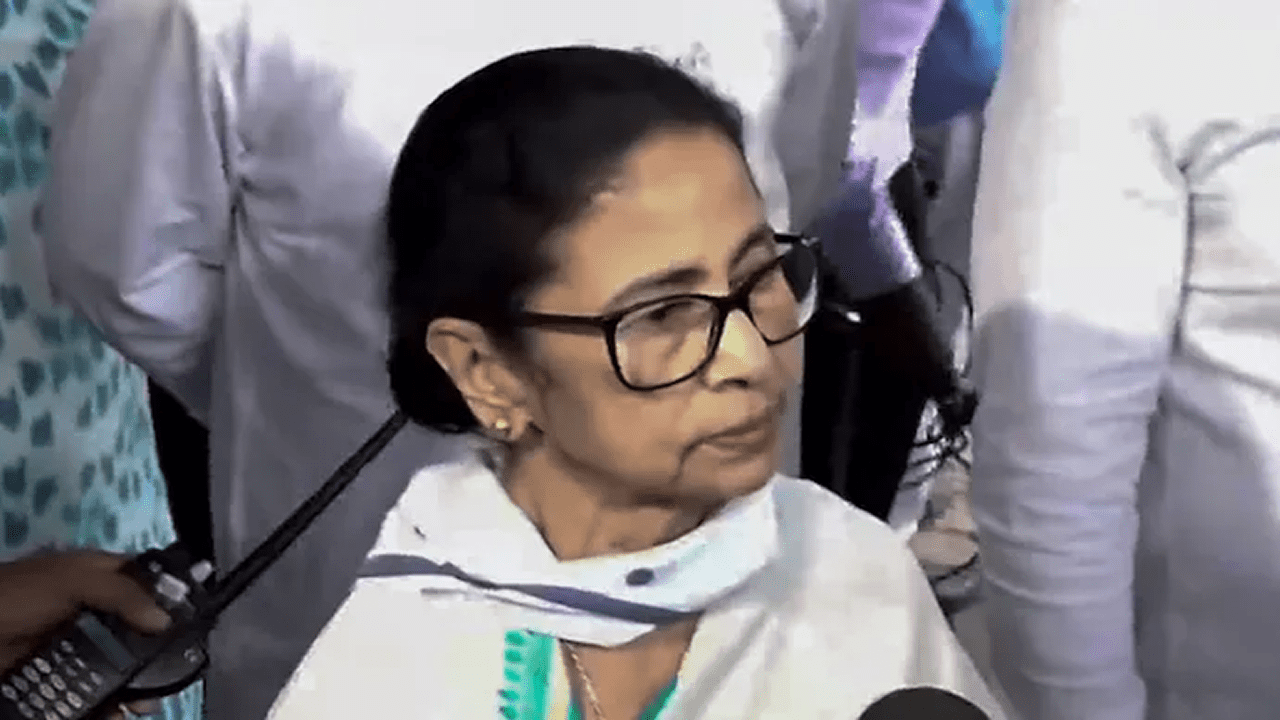
A late-night visit by West Bengal Chief Minister Mamata Banerjee to an Electronic Voting Machine (EVM) strongroom in Kolkata has ignited a fresh political flashpoint just days before the state’s crucial Assembly election results. The incident, centered around allegations of EVM tampering, unfolded in Bhabanipur Banerjee’s own constituency and has intensified an already charged atmosphere following a fiercely contested poll.
Banerjee spent nearly four hours inside the strongroom facility at Sakhawat Memorial School on Thursday night, emerging shortly after midnight. Her visit came in response to complaints from her party, the Trinamool Congress (TMC), which alleged irregularities in the handling of voting materials and demanded greater transparency in the counting process scheduled for May 4.
The Chief Minister, who entered the premises in her capacity as a candidate, claimed she was initially denied access by central forces before being allowed entry under election rules. She asserted that safeguarding the integrity of votes was paramount and warned that any attempt to manipulate the counting process would be met with strong resistance.
Escalating Allegations and Political Confrontation
The overnight drama followed a day of mounting tensions across Kolkata, where TMC leaders staged protests outside multiple counting centres. At the Khudiram Anushilan Kendra, senior leaders Kunal Ghosh and Shashi Panja led a sit-in demonstration, alleging that strongrooms had been reopened without proper notification to opposition representatives.
The controversy deepened after the TMC circulated CCTV footage purportedly showing activity inside strongroom premises, which they claimed indicated unauthorized access or mishandling of ballot materials. Party leaders questioned why their representatives were denied entry while others were allegedly allowed inside, raising suspicions of procedural violations.
Banerjee amplified these concerns earlier in the day, urging party workers to maintain round-the-clock vigilance at all EVM storage facilities. She alleged the possibility of machines being swapped or data manipulated, calling for constant monitoring to prevent any malpractice.
The protests led to clashes between TMC supporters, BJP workers, and police, prompting heightened security deployment, including personnel in anti-riot gear. The situation remained tense through the evening as political leaders from both sides converged at key locations.
BJP Pushback and Counterclaims
The Bharatiya Janata Party (BJP) strongly rejected the allegations, dismissing them as baseless and politically motivated. Senior leader Suvendu Adhikari, Banerjee’s rival in Bhabanipur, stated that his party maintained strict oversight during her presence at the strongroom to prevent any undue advantage.
BJP leaders argued that the TMC’s claims were an attempt to create a narrative ahead of a possible electoral setback. State party chief Samik Bhattacharya said the ruling party was “preparing the ground for defeat,” citing exit poll trends that suggest a competitive or potentially unfavorable outcome for the TMC.
The BJP also criticized the gathering of TMC supporters near sensitive counting centres, calling it inappropriate and potentially disruptive to the electoral process.
Also read: BJP Sweeps Gujarat Local Body Elections, Wins All 15 Municipal Corporations in Historic Mandate
Election Commission Rejects Tampering Claims
Amid the escalating allegations, the Election Commission (EC) issued a firm clarification, rejecting allegations of EVM tampering. Officials stated that all strongrooms were sealed in the presence of candidates, their agents, and observers immediately after polling concluded.
According to the EC, the activity seen in the circulated CCTV footage was part of an authorized process involving the segregation of postal ballots in a separate facility within the same premises. The commission emphasized that all political parties had been informed in advance about these procedures.
The EC further noted that EVM storage areas remained locked and untouched, and reiterated that strict protocols were followed to ensure the integrity and security of the voting process.
Background Context
West Bengal’s Assembly elections were conducted in two phases on April 23 and April 29, with voter turnout exceeding 90 percent in several constituencies. The high participation reflects the intensity of the political contest, with the TMC seeking a fourth consecutive term while the BJP aims to make significant inroads in the state.
The election process has been marked by a large number of complaints over 2,000 according to officials ranging from procedural violations to allegations of intimidation and irregularities. Some complaints, including those related to ballot symbol visibility, are still under review, with the possibility of repolling in select areas if violations are confirmed.
Expert Analysis / What This Means
The EVM tampering controversy underscores the fragile trust between political stakeholders and electoral institutions in high-stakes elections. For voters, such allegations whether substantiated or not can erode confidence in the democratic process, particularly when amplified at critical moments before counting.
From an institutional perspective, the Election Commission faces renewed scrutiny over transparency and communication, especially in managing perceptions around sensitive procedures like postal ballot handling. The incident also highlights how technological systems like EVMs, while designed to enhance efficiency, remain politically contentious.
For political parties, this episode reflects a broader strategy of narrative-building ahead of results, where claims of irregularities can shape public perception and post-election legitimacy. Comparatively, similar tensions have surfaced in past Indian elections, but the scale and immediacy of digital amplification through CCTV clips and social media have intensified their impact.
Looking ahead, the fallout from this episode could influence not just the acceptance of results in West Bengal, but also the conduct and oversight mechanisms in future elections across India.
What Happens Next
With counting day approaching, authorities are expected to maintain heightened security at all counting centres across the state. Political parties are likely to deploy their agents extensively to monitor proceedings closely.
The Election Commission may also increase transparency measures, including clearer communication and possibly enhanced surveillance visibility, to counter allegations and reassure stakeholders.
The final outcome on May 4 will not only determine the political future of West Bengal but also test the resilience of electoral institutions amid heightened scrutiny and partisan conflict.
Reactions / Official Statements
Mamata Banerjee reiterated her stance after exiting the strongroom, emphasizing that “people’s votes must be protected” and calling for additional safeguards such as CCTV monitoring accessible to the media.
On the other hand, BJP leaders maintained that the allegations were unfounded, asserting that all procedures were conducted lawfully and under strict supervision.
The Election Commission, in its official response, maintained that all protocols were followed and dismissed claims of tampering, urging political parties to rely on verified information rather than speculation.