
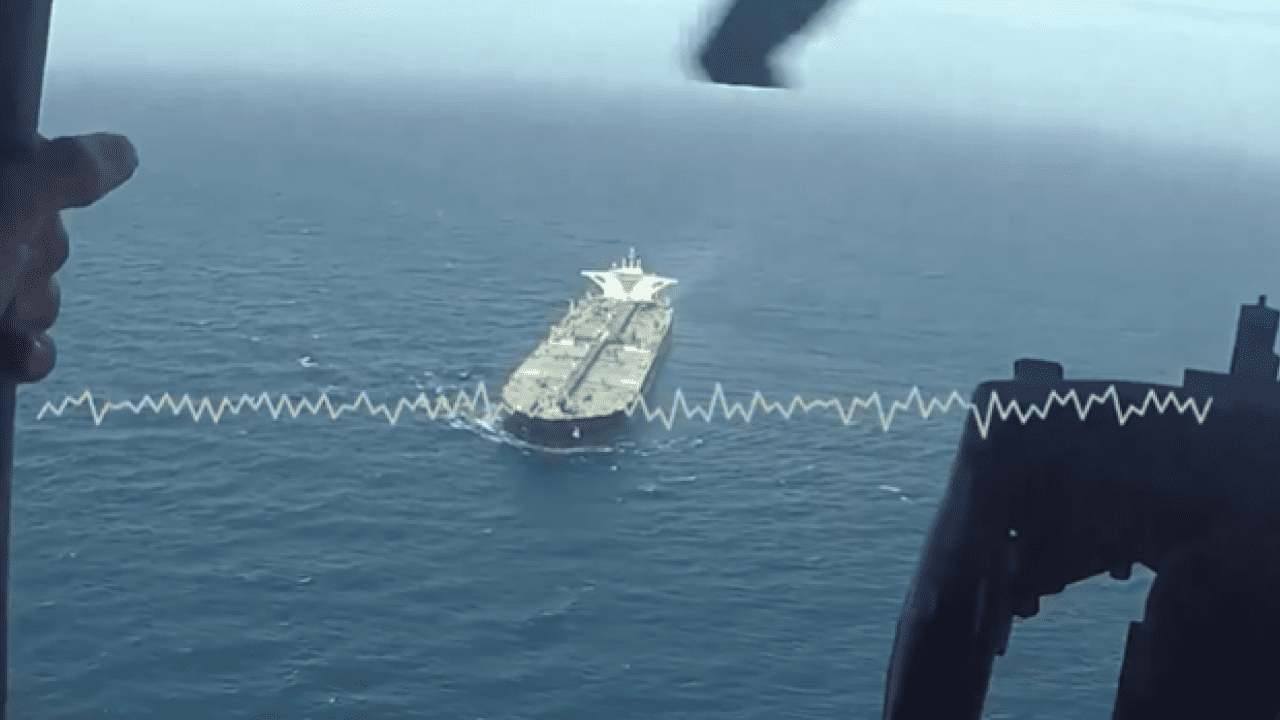
The United States has intensified its naval blockade of Iranian ports, with fresh evidence showing American warships actively intercepting and redirecting vessels in waters surrounding the Strait of Hormuz a critical artery for global oil shipments. The operation, confirmed by US Central Command (CENTCOM), underscores mounting pressure on Iran as diplomatic negotiations remain fragile despite an ongoing ceasefire.
Newly released footage and audio from CENTCOM reveal US Navy personnel warning ships to comply with the blockade or face potential boarding and seizure. In one instance, a US destroyer intercepted and turned back an Iranian-linked cargo vessel attempting to navigate along Iran’s coastline after exiting the strait, signaling Washington’s resolve to enforce restrictions across key maritime routes.
The blockade, launched earlier this week following failed talks between the US and Iran, is aimed at restricting Iran’s maritime trade and increasing leverage in negotiations. While Washington maintains the move is targeted at Iranian ports and coastal access, the scale and intensity of enforcement highlight the growing stakes in the region.
Also read: Iran Mocks US Over Strait of Hormuz Blockade as Online Meme War Escalates Amid Rising Tensions
Escalating Enforcement at Sea
US naval forces have stepped up patrols across the Gulf of Oman and nearby waters, issuing direct warnings to vessels attempting to approach Iranian ports. Audio messages broadcast in the region make clear the seriousness of the operation, cautioning that non-compliant ships risk interception and possible use of force.
CENTCOM reports that at least ten vessels have already been redirected since the blockade took effect, with no successful breaches recorded so far. In one notable case, a US-guided missile destroyer intercepted a ship departing from Bandar Abbas that appeared to be attempting to bypass restrictions by hugging the Iranian coastline. The vessel was compelled to reverse course and return toward Iranian waters.
Separate footage shows US Navy personnel communicating with a merchant vessel and escorting it away from restricted areas, reinforcing the systematic nature of the enforcement effort.
The military presence supporting the blockade is substantial. According to CENTCOM, more than 10,000 US personnel, over a dozen naval ships, and upwards of 100 aircraft are currently involved in operations across the region. Aircraft carriers and guided-missile destroyers continue to patrol strategic waterways, ensuring compliance with the blockade order.
Strategic Importance of the Strait of Hormuz
The Strait of Hormuz remains central to the unfolding crisis. Roughly one-fifth of the world’s oil supply typically passes through this narrow waterway, making any disruption a matter of global economic concern.
Despite the blockade, early shipping data indicates that some vessels including several linked to Iran have continued to transit the strait, suggesting that traffic has not been completely halted. US officials have emphasized that the blockade is not a full closure of the strait itself but is instead focused on restricting access to Iranian ports and coastal routes.
This distinction is crucial, as a full shutdown of the strait could trigger immediate and severe disruptions in global energy markets. Nevertheless, the current enforcement measures have already raised alarms among major oil-importing nations, particularly in Asia, where dependence on Gulf crude remains high.
Why This Matters
The blockade represents one of the most significant escalations in US-Iran tensions in recent years. By targeting Iran’s maritime trade, Washington is effectively attempting to isolate the country economically without resorting to direct large-scale military confrontation.
However, the risks of miscalculation are considerable. Iran has condemned the blockade as a threat to international shipping and regional stability, and has warned that it could retaliate by disrupting trade across the Gulf. Any such move could rapidly escalate into a broader conflict involving multiple regional actors.
At the same time, the use of force warnings issued by US naval forces raises the possibility of direct confrontation at sea. Even a minor incident such as a vessel refusing orders or a misinterpreted maneuver could trigger a chain reaction with far-reaching consequences.
What Happens Next
For now, the situation remains in a delicate balance. The US and Iran are observing a temporary ceasefire that began last week, and there are indications that both sides may extend it to allow more time for negotiations.
US President Donald Trump has expressed confidence in the effectiveness of the blockade, suggesting that it is already deterring vessels from attempting to access Iranian ports. Meanwhile, diplomatic channels remain open, with the possibility of renewed talks aimed at reaching a broader agreement.
The coming days will be critical in determining whether the blockade serves as a negotiating tool or becomes a flashpoint for further escalation. Continued enforcement actions, combined with Iran’s response, will shape the trajectory of the crisis and its impact on global energy markets and regional security.
Timeline of Events
- Early Week: The US announces a maritime blockade targeting Iranian ports following failed diplomatic talks.
- Monday: Blockade officially takes effect, backed by a large-scale deployment of naval and air assets.
- Midweek: US warships begin intercepting vessels; at least ten ships are redirected.
- Latest Developments: CENTCOM releases footage and audio of enforcement actions, including warnings of potential use of force.
- Ongoing: Ceasefire between the US and Iran holds, with discussions underway about a possible extension.