
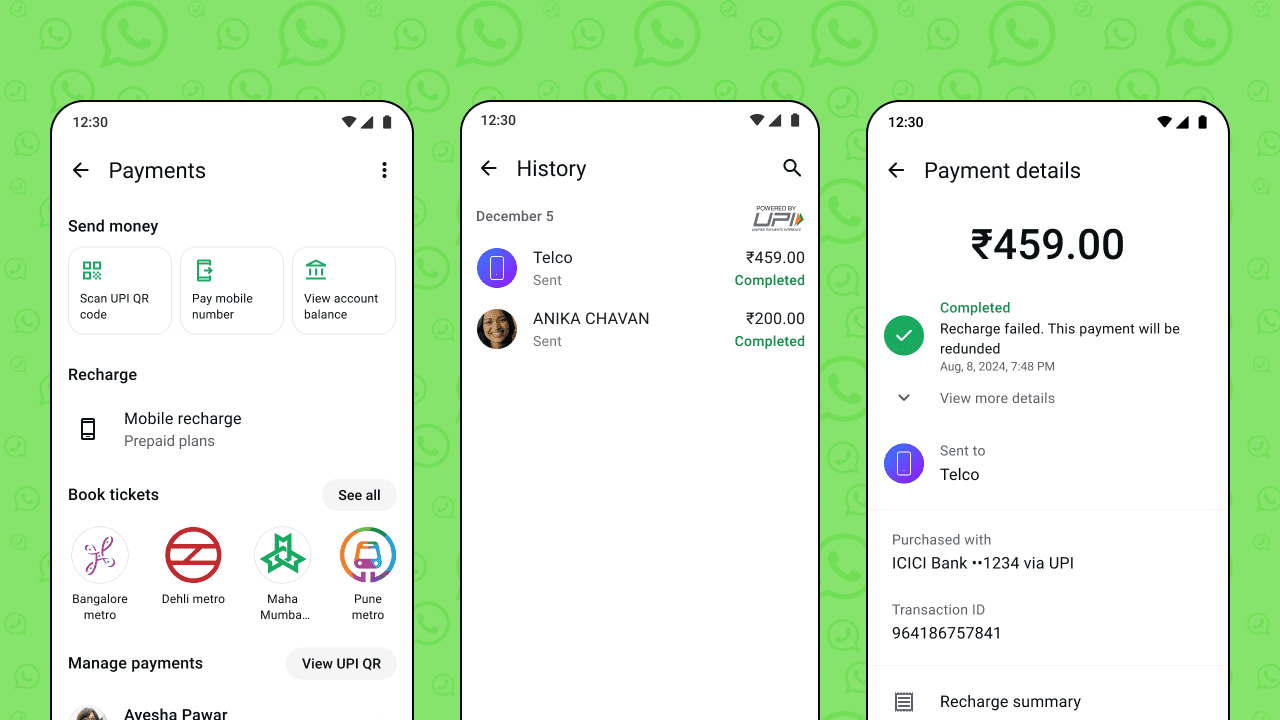
WhatsApp mobile recharge feature has begun rolling out in India, allowing users to top up prepaid mobile numbers directly within the messaging app marking a significant step in the platform’s evolution from a communication tool to a full-service digital utility. Announced on April 23 and powered by fintech firm PayU, the feature enables users to recharge connections from major telecom operators without leaving the app, streamlining a process that traditionally required multiple apps or websites.
The feature is currently limited to prepaid users and is being introduced in phases across Android and iOS devices. Once fully available, it will allow users to recharge their own numbers or those of friends and family in just a few taps, further embedding financial services into everyday conversations on WhatsApp.
This move reflects Meta’s broader ambition to strengthen WhatsApp’s role in India’s fast-growing digital payments ecosystem, where it competes with established players like Google Pay and PhonePe.
Also read: WhatsApp Spyware Alert: Meta Flags Fake App Targeting iPhone Users in Italy
How the Feature Works
The new functionality is integrated into WhatsApp’s interface through a dedicated ₹ icon, positioned prominently within the app. This icon acts as a gateway to the platform’s payments ecosystem, which now includes mobile recharges alongside existing services like UPI transfers and metro ticket bookings.
Users can initiate a recharge either from the home screen or within a chat window, making it possible to complete transactions while actively messaging someone. The process is designed to be intuitive:
- Tap the ₹ icon in the app
- Select “Mobile Prepaid Recharge”
- Enter or choose a contact’s mobile number
- Confirm the telecom operator (Jio, Airtel, or Vodafone Idea)
- Browse and select a recharge plan
- Choose a payment method (UPI, debit card, or credit card)
- Complete the payment
The integration eliminates the need to switch between telecom apps or third-party payment platforms, reducing friction in a routine task performed by millions of users daily.
Industry / Market Impact
India represents one of WhatsApp’s largest markets, with hundreds of millions of active users already relying on the platform for messaging, business communication, and increasingly, financial transactions. The introduction of the WhatsApp mobile recharge feature signals a deeper push into the country’s highly competitive digital payments space.
By embedding recharge services directly into chats, WhatsApp is leveraging its core strength high user engagement to drive adoption of its payments service, WhatsApp Pay. This strategy could challenge dominant Unified Payments Interface (UPI) apps such as Google Pay and PhonePe, which have built their user base around convenience and transaction speed.
The partnership with PayU also highlights the growing role of fintech collaborations in enabling seamless in-app financial services. As digital payments continue to expand in India, integrating everyday utilities like mobile recharges could help WhatsApp increase transaction frequency and user retention within its ecosystem.
Also read: Supreme Court Bars Meta From Using WhatsApp User Data for Advertising, Seeks Written Assurance
Why This Matters
The addition of mobile recharges underscores a broader shift in how digital platforms are evolving in India from single-purpose apps to multifunctional ecosystems. WhatsApp is positioning itself as a “super app” where users can chat, pay, book tickets, and now recharge mobile numbers without interruption.
Ravi Garg, Director of Business Messaging at Meta India, emphasized this vision, noting that WhatsApp is increasingly becoming a space where users not only communicate but also complete essential daily tasks. By reducing the need to switch between apps, the company aims to create a more unified and efficient user experience.
For users, the convenience factor is significant. Mobile recharges are a frequent necessity in India’s prepaid-dominated telecom market. Integrating this function into a widely used messaging platform simplifies the process, especially for less tech-savvy users who may prefer fewer steps and familiar interfaces.
Background Context
WhatsApp has steadily expanded its utility offerings in India over the past few years. Beyond messaging, the platform already supports UPI-based payments, bill payments, metro ticket bookings in cities like Delhi, Mumbai, and Bengaluru, and access to government services through chatbots.
The introduction of mobile recharges builds on this foundation, further consolidating essential services within a single interface. The ₹ icon now serves as a central hub for these features, reinforcing WhatsApp’s role as a multifunctional digital tool.
However, the current limitation to prepaid users highlights a phased approach. Postpaid users will still need to rely on telecom operator apps or websites for bill payments, at least for now.
What Happens Next
The rollout of the WhatsApp mobile recharge feature is expected to expand to all users across India in the coming weeks. If adoption is strong, it could pave the way for additional financial services and deeper integrations within the app.
Future updates may include support for postpaid bill payments, expanded partnerships with service providers, or enhanced customization in plan selection. As WhatsApp continues to refine its payments ecosystem, its success will likely depend on user trust, transaction reliability, and competitive incentives compared to existing payment platforms.
For now, the feature marks another step toward transforming WhatsApp into an all-in-one digital platform one where everyday tasks, from chatting to recharging a phone, can be completed seamlessly in a single place.