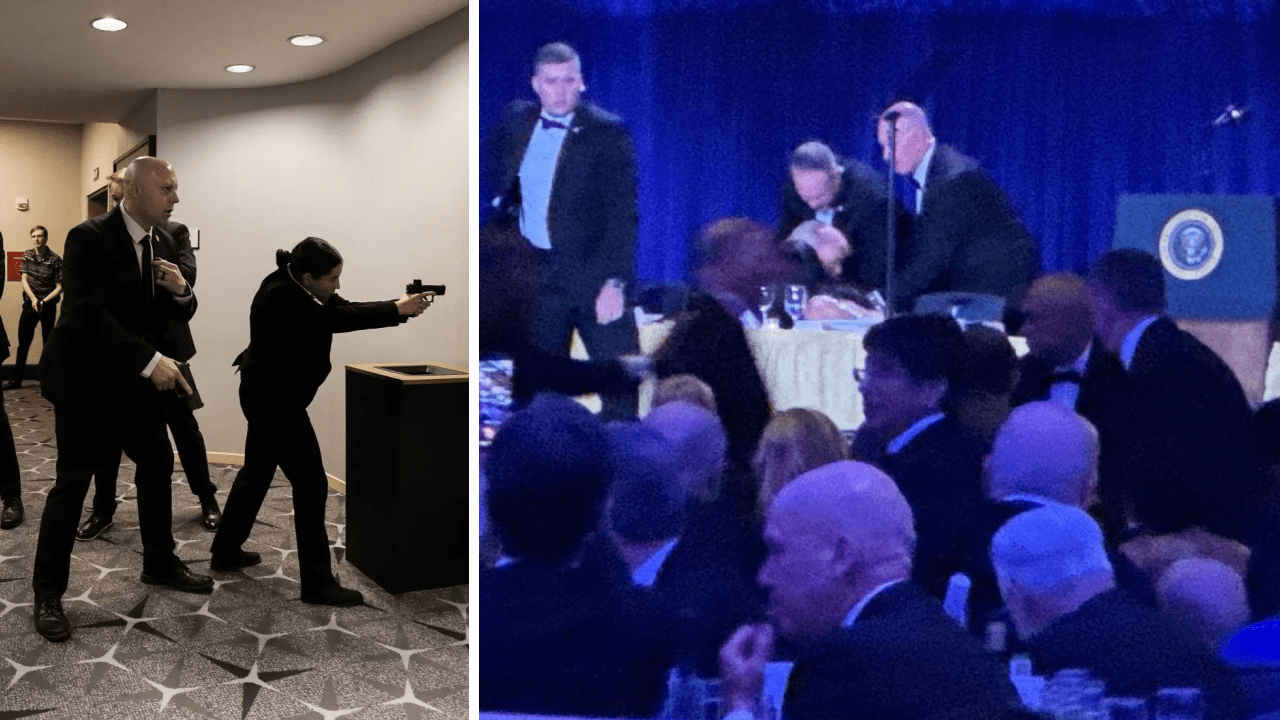
A White House Correspondents’ Dinner shooting scare sent shockwaves through Washington on Saturday night after an armed man attempted to breach security at the Washington Hilton, prompting panic among hundreds of attendees and a rapid response from the Secret Service. The suspect, later identified as 31-year-old Cole Tomas Allen from Torrance, California, is now in custody, according to federal authorities.
The incident unfolded just outside the ballroom where US President Donald Trump, First Lady Melania Trump, senior officials, and media figures had gathered for the high-profile annual event. While no injuries were reported among attendees, the disruption forced an immediate evacuation and raised fresh concerns about security at major political gatherings.
President Trump later shared the first images and video of the apprehended suspect, showing him subdued by armed officers, shirtless, and restrained on the ground near a security checkpoint. Authorities confirmed that the suspect was carrying multiple weapons when he approached the venue.
Also read: US Navy Intercepts Iranian Oil Tankers in Asian Waters as Maritime Tensions Escalate
Chaos at the Venue as Gunshots Ring Out
Witnesses described a scene of confusion and fear as gunfire broke the evening’s formal atmosphere. Guests reportedly dove under tables while Secret Service agents rushed into the hall, shouting instructions for people to take cover.
According to officials, the suspect fired at least one shot toward a Secret Service officer. The agent was struck but protected by body armor and did not sustain serious injuries. The confrontation occurred near a main screening area at the entrance to the event, preventing the attacker from reaching the ballroom.
President Trump and the First Lady were quickly escorted to safety. Trump later recounted that he initially mistook the sound of gunfire for something less alarming before realizing the seriousness of the situation.
Despite the scare, Trump emphasized that the suspect never came close to breaching the main event space.
Suspect Identified, Motive Remains Unclear
Law enforcement agencies, including the FBI’s Washington field office, have taken the lead in investigating the incident. Officials confirmed the suspect’s identity and stated that he acted alone, though the motive behind the attack remains unknown.
Trump described the attacker as a “lone-wolf” individual and indicated that the suspect had multiple weapons at the time of the attempted breach. Images shared publicly show the suspect restrained with his hands tied behind his back after being subdued by security personnel.
Authorities are continuing to examine how the individual approached the checkpoint and whether there were any prior warning signs.
Event Cancelled, Security Under Review
The White House Correspondents’ Dinner, one of Washington’s most prominent annual gatherings, was abruptly cancelled following the incident. The event is expected to be rescheduled within the next month, with officials promising enhanced security measures.
Trump praised the response of law enforcement and the Secret Service, crediting them with preventing a potentially far more serious outcome.
Why This Matters
The incident underscores ongoing concerns about the security of high-profile political events in the United States. Even with multiple layers of protection, the ability of an armed individual to approach a secured checkpoint highlights vulnerabilities that authorities will likely scrutinize in the coming weeks.
It also reflects a broader trend of threats targeting political figures and public gatherings, an issue that has intensified in recent years amid heightened political tensions.
The fact that the suspect was stopped before entering the main venue may be seen as a success for existing protocols but it also raises questions about how close is too close when it comes to potential threats.
Also read: Ceasefire Nears Expiry as US-Iran Tensions Escalate, Raising Risk of Prolonged “Frozen Conflict”
What Happens Next
Federal investigators are expected to conduct a thorough review of the suspect’s background, including any potential affiliations, online activity, and prior criminal history. Determining motive will be central to assessing whether the incident was ideologically driven or the act of an individual acting alone without clear political intent.
Security agencies are also likely to reassess screening procedures for major events involving top government officials. This could include expanded perimeter checks, enhanced surveillance, and revised emergency response protocols.
Meanwhile, organizers of the White House Correspondents’ Dinner face the challenge of restoring confidence in the event’s safety. When it is eventually rescheduled, it will likely take place under significantly tighter security conditions.