
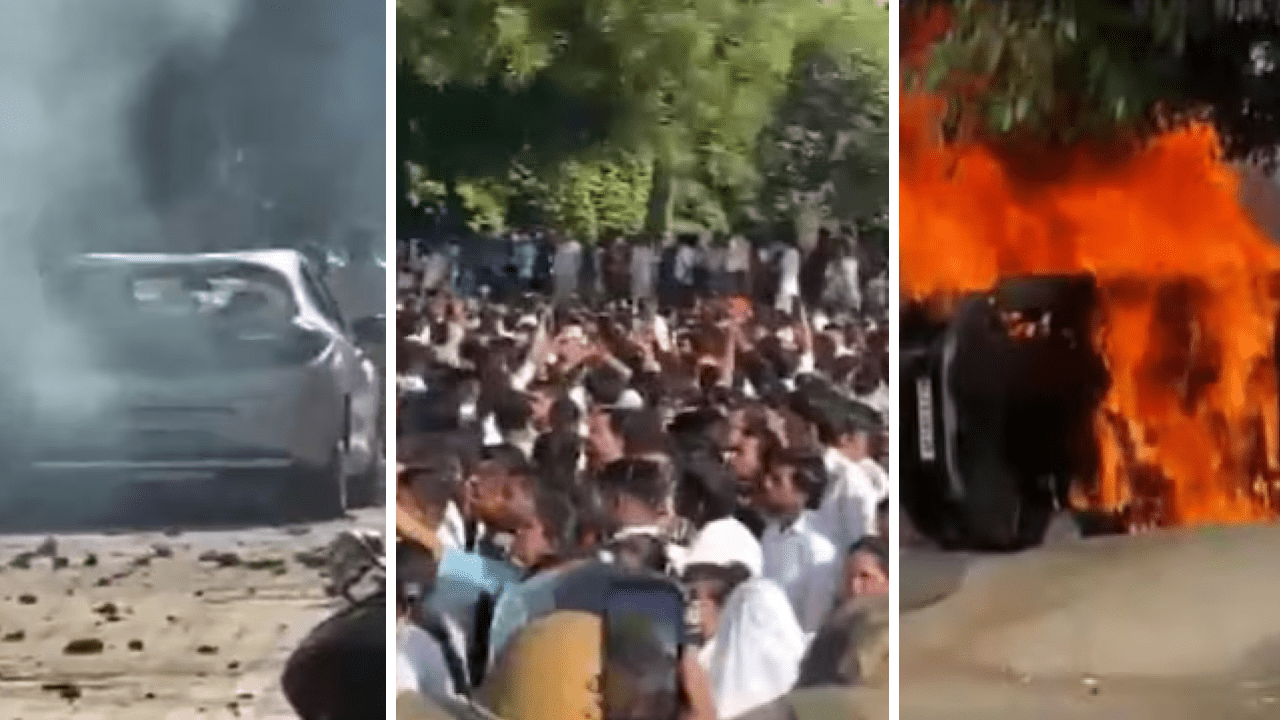
A Noida workers protest demanding higher wages escalated into violence on Monday in the city’s industrial hub, with incidents of arson, stone-pelting, and vandalism reported from Phase-2 areas including Sectors 60 and 62. The unrest, which has been building over several days, disrupted traffic, triggered heavy police deployment, and prompted heightened security measures along the Delhi border, underscoring growing tensions over labour issues in one of northern India’s key manufacturing clusters.
According to officials, thousands of factory workers from multiple industrial units gathered to press for long-pending wage revisions. While the demonstrations initially involved sloganeering and peaceful assembly, the situation deteriorated as clashes broke out between protestors and law enforcement personnel.
Reports indicate that some protestors vandalised public property, damaged police vehicles, and set government vehicles on fire. Stone-pelting further intensified the confrontation, leading to injuries and a breakdown of order in parts of the industrial zone.
The protests reportedly turned volatile after a female worker was struck during a police lathi charge, which fueled anger among demonstrators and accelerated the escalation. Workers alleged that their demands for a significant salary increase reportedly promised earlier had not been met, prompting sustained agitation over the past four to five days.
Authorities confirmed that senior police and administrative officials were deployed on the ground to manage the situation. In an official statement, police said the unrest was “under control” and being closely monitored, adding that efforts were underway to counsel workers and restore normalcy while using minimal force.
The disruption also spilled over into daily life, with major traffic congestion reported along the Delhi-Noida border. Commuters faced long delays as key routes were affected by both the protests and increased security presence.
Meanwhile, the Delhi Police has been placed on high alert to prevent the unrest from spreading into the national capital. Security has been tightened at strategic entry points, with additional personnel stationed along key border crossings.
Also read: India Enforces Four-Bin Waste Segregation Rule Nationwide to Tackle Rising Pollution
Why This Matters
The violence highlights deeper structural tensions within India’s industrial workforce, particularly in rapidly growing manufacturing hubs like Noida. Wage disputes have long been a flashpoint, often reflecting broader concerns around inflation, cost of living, and enforcement of labour laws.
For many workers, industrial employment has not kept pace with rising expenses, leading to repeated calls for wage revisions. The current unrest suggests that unresolved grievances can quickly escalate into law-and-order challenges when communication between employers, workers, and authorities breaks down.
The situation also raises concerns about worker safety and policing methods. Allegations of excessive force, especially involving female workers, could further strain trust and complicate efforts to negotiate a resolution.
Industry / Market Impact
Noida’s Phase-2 industrial area is home to a dense concentration of manufacturing units, including electronics, garments, and export-oriented businesses. Prolonged disruptions in this region can have ripple effects across supply chains.
Short-term impacts include halted production, delayed shipments, and logistical bottlenecks due to traffic congestion and restricted movement. For businesses operating on tight delivery schedules, even a few days of unrest can lead to financial losses and strained client relationships.
If the protests persist or spread, companies may face increased pressure to renegotiate wage structures, potentially raising operating costs. This could influence future investment decisions in the region, especially as firms weigh labour stability alongside cost advantages.
Timeline of Events
- April 10: Thousands of workers stage protests in Noida’s Phase-2, with initial incidents of stone-pelting reported. Police deploy additional forces to contain unrest.
- April 11–13: Demonstrations continue across industrial sectors, with workers reiterating demands for wage hikes and alleging lack of response from authorities.
- April 13 (Monday): Protests intensify and turn violent. Vehicles are set on fire, property is vandalised, and clashes with police escalate following a reported lathi charge incident.
- Same day: Heavy police deployment is enforced across Gautam Buddh Nagar industrial zones. Delhi Police goes on high alert to secure border entry points.
What Happens Next
Authorities have indicated that efforts are underway to de-escalate tensions through dialogue and counselling. However, the path forward will likely depend on whether meaningful negotiations take place between workers, employers, and government representatives.
Key questions remain unresolved, whether wage demands will be addressed, how accountability for the violence will be determined, and whether additional safeguards will be introduced to prevent similar flare-ups.
In the immediate term, restoring order and ensuring worker safety will be critical. Over the longer term, the episode may prompt renewed scrutiny of labour policies and enforcement mechanisms in industrial regions like Noida.