
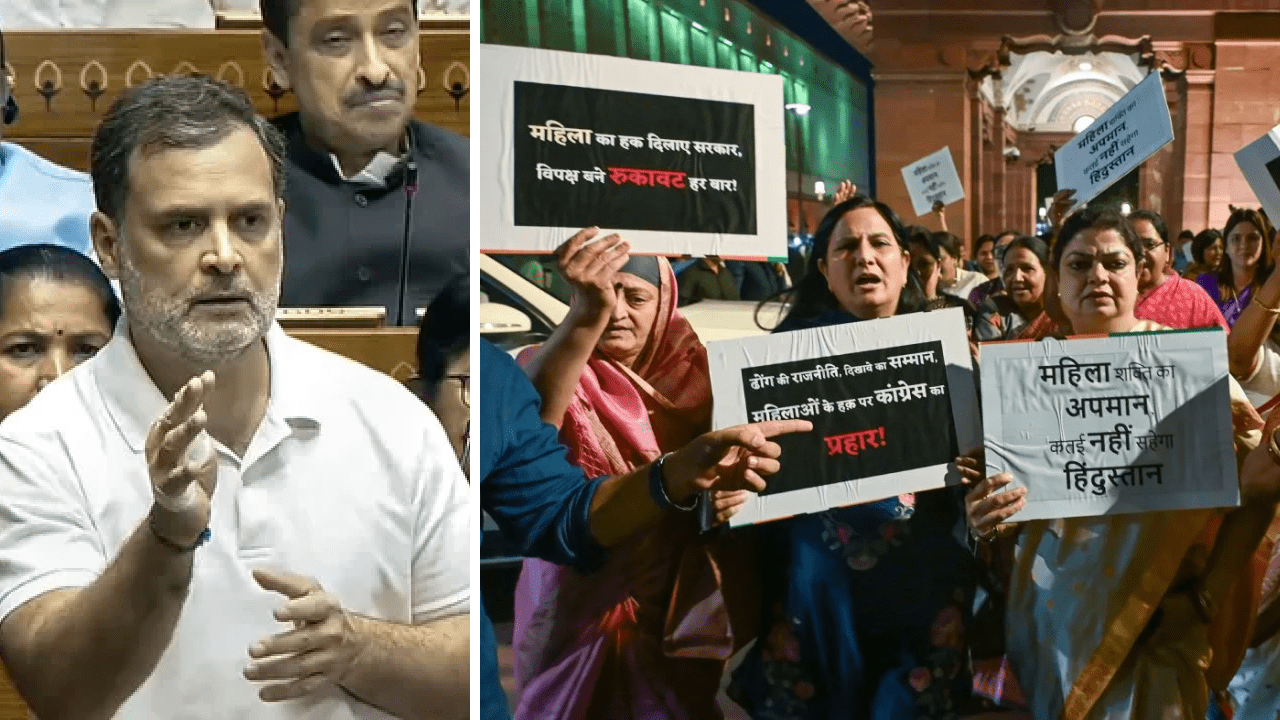
In a significant political development, the Constitution (131st Amendment) Bill, 2026 aimed at accelerating the implementation of women’s reservation in Parliament failed to secure the required two-thirds majority in the Lok Sabha on Friday, marking the first legislative defeat for the Narendra Modi-led government since it came to power in 2014. The setback stalls efforts to operationalize the women’s quota ahead of the 2029 general elections and has intensified a sharp political confrontation between the government and the Opposition.
The bill received 298 votes in favour and 230 against, falling well short of the 352 votes needed for passage. The proposed amendment sought to modify the framework of the 2023 Nari Shakti Vandan Adhiniyam, which guarantees 33% reservation for women in the Lok Sabha and state assemblies but ties its implementation to a future census and subsequent delimitation exercise.
By attempting to delink the quota rollout from the next census and instead base it on the 2011 census data, the government aimed to fast-track implementation before 2029. However, concerns over electoral fairness, regional representation, and caste data proved decisive in the bill’s defeat.
Following the outcome, the Centre withdrew two related bills the Delimitation Bill, 2026, and the Union Territories Laws (Amendment) Bill, 2026 stating they were “intrinsically interrelated” with the constitutional amendment.
Also read: ED Raids Target AAP MP Ashok Mittal’s Lovely Group Days After Rajya Sabha Role Change
What the Bill Proposed
The amendment bill sought sweeping structural changes to India’s electoral framework. It proposed increasing the maximum strength of the Lok Sabha from 550 to as many as 850 seats, enabling the allocation of reserved constituencies for women without reducing existing representation.
Crucially, it aimed to implement women’s reservation based on a delimitation exercise using 2011 census data, bypassing the timeline set in the 2023 law. Under the existing framework, the quota can only be enforced after the completion of the next census and a fresh delimitation processes that could delay implementation until at least 2034.
Government leaders, including Prime Minister Narendra Modi and Home Minister Amit Shah, assured Parliament that southern states would not lose representation despite the proposed expansion. A last-minute offer to revise the bill to guarantee proportional seat increases for all states failed to win Opposition support.
Opposition’s Core Objections
Opposition parties consistently maintained that they supported women’s reservation in principle but opposed linking it to delimitation based on outdated census data. They argued that such a move could distort electoral representation and sidestep the inclusion of updated caste data, particularly for Other Backward Classes (OBCs).
Leader of the Opposition Rahul Gandhi described the bill as an attempt to “redraw the electoral map” rather than empower women, alleging that it masked deeper political objectives. He reiterated that the Opposition would fully support immediate implementation of the 2023 law without altering its foundational conditions.
Priyanka Gandhi Vadra echoed these concerns, highlighting the absence of OBC data in the 2011 census and calling the bill’s structure fundamentally flawed. Several Opposition leaders framed the bill’s defeat as a “victory for democracy,” emphasizing the need for a more inclusive and transparent approach.
Political Fallout and Reactions
The bill’s failure triggered strong reactions from the ruling National Democratic Alliance (NDA). Women MPs from the alliance staged protests within Parliament premises, accusing the Opposition of blocking a historic opportunity to enhance women’s political representation.
Home Minister Amit Shah sharply criticized Opposition parties, accusing them of denying women their rightful representation and warning of political repercussions in future elections. He characterized the rejection as an “insult to women power” and suggested it would resonate with voters nationwide.
On the other hand, Opposition leaders celebrated the outcome as a successful effort to block what they described as an unconstitutional move. Rahul Gandhi asserted that the unity of Opposition parties had prevented a structural change to India’s electoral system.
Why This Matters
The defeat of the amendment bill underscores the complexity of implementing electoral reforms in India, particularly when they intersect with sensitive issues like federal balance, caste representation, and regional equity.
While there is broad political consensus on the need for women’s reservation, the mechanism and timing of its implementation remain deeply contested. The government’s attempt to expedite the process by altering delimitation norms introduced new fault lines, turning a widely supported reform into a contentious political battle.
The episode also highlights the continued importance of constitutional thresholds in shaping legislative outcomes. Even with a parliamentary majority, the government must build wider consensus to pass amendments that fundamentally alter governance structures.
What Happens Next
Despite the setback, the original 2023 women’s reservation law remains in force, having been officially notified. However, its implementation is still contingent on the completion of the next census and delimitation exercise.
The government now faces a strategic choice, either wait for the existing timeline to unfold or return to Parliament with a revised proposal that can garner broader support. One potential option under discussion is introducing reservation within the current strength of 543 Lok Sabha seats as an interim measure.
A cabinet meeting scheduled shortly after the vote is expected to assess next steps and explore alternative pathways to implement the quota.
The outcome of this legislative battle is likely to influence political narratives in upcoming state elections, particularly in key states like West Bengal and Tamil Nadu, where questions of representation and federal balance carry significant electoral weight.