
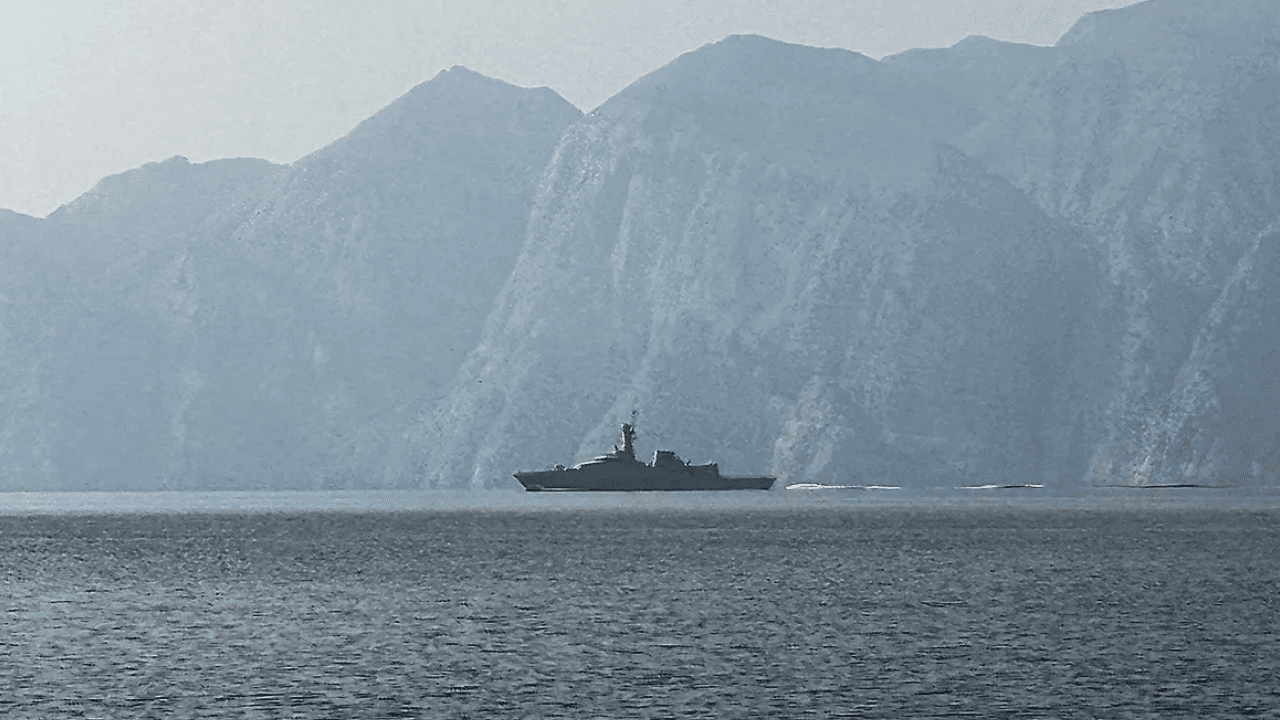
The Strait of Hormuz crisis escalated sharply over the weekend as conflicting signals from Iran and the United States, coupled with direct military confrontations, brought one of the world’s most vital maritime chokepoints to a near standstill. Despite a brief declaring that the waterway was open, renewed threats, gunfire incidents, and a continued US naval blockade have effectively shut down commercial transit, stranding millions of barrels of oil and liquefied natural gas in the Persian Gulf.
The turmoil began when Iranian Foreign Minister Abbas Araghchi declared the strait “completely open,” prompting several vessels to attempt passage. Within hours, however, ships encountered contradictory instructions, armed warnings, and eventually live fire, forcing many to retreat. By Sunday, ship movements had largely ceased, leaving the global energy supply chain in limbo and raising fears of further escalation in an already volatile region.
Also read: Iran Mocks US Over Strait of Hormuz Blockade as Online Meme War Escalates Amid Rising Tensions
A Brief Opening Followed by Rapid Escalation
Initial optimism spread quickly after Iran’s announcement, with more than 20 vessels attempting to navigate the narrow channel on Saturday the highest level of activity in weeks. Some ships successfully crossed, but most faced a confusing and rapidly deteriorating security environment.
Captains reported receiving mixed communications from Iranian authorities, their home governments, and maritime channels. In several cases, ships were first encouraged to proceed, only to be warned off moments later. One tanker nearing the Iranian coast was ordered to turn back by naval forces despite earlier assurances of safe passage.
The situation escalated dramatically when armed boats approached vessels near Iranian waters. Witnesses described gunfire directed at ships, including Indian tankers, forcing emergency U-turns. Radio communications captured distressed captains pleading for clarity as they reversed course under threat.
Soon after, Iranian military authorities issued a broadcast declaring the strait closed once again. The Islamic Revolutionary Guard Corps warned that any vessel attempting to approach would be considered hostile and could be targeted.
Shipping Paralysis and Energy Bottlenecks
The immediate result has been a near-total halt in maritime traffic through the strait. By Sunday, no successful crossings were recorded, and multiple oil tankers and container ships had abandoned transit attempts.
An estimated 135 million barrels of crude oil and refined products are now stranded aboard tankers in the Persian Gulf. Additionally, several liquefied natural gas (LNG) carriers that had loaded in Qatar reversed course or slowed their journeys, unable to safely exit the region.
The disruption extends beyond oil. The blockage has effectively cut off a significant portion of global LNG flows, particularly impacting Asian markets that rely heavily on Gulf exports. Some shipments have been delayed for weeks, compounding supply shortages and driving up prices.
Shipping companies, facing mounting risks to crew and vessels, have opted to suspend operations rather than navigate the unpredictable and dangerous conditions.
Industry / Market Impact
The Strait of Hormuz typically handles roughly 20% of the world’s oil and LNG trade, making its disruption one of the most serious threats to global energy stability in recent years.
Oil producers in the Gulf region are now holding back additional output, unwilling to increase production while existing shipments remain stuck. Storage facilities are nearing capacity, and without the ability to clear outbound cargo, supply chains are becoming increasingly constrained.
Energy markets have already begun reacting to the uncertainty. Oil and gas prices have shown upward pressure as traders factor in prolonged disruption. Emerging economies, particularly in Asia, are expected to feel the impact most acutely due to their dependence on Gulf energy imports.
Major producers, including those in the UAE, have reportedly reconsidered sending additional tankers into the Gulf, fearing they may become trapped in the same bottleneck.
Why This Matters
The Strait of Hormuz is not just another shipping route it is a strategic artery of the global economy. Any sustained disruption has cascading effects on energy prices, inflation, and geopolitical stability.
For the United States, maintaining the naval blockade is part of a broader strategy to pressure Iran over its nuclear program and regional activities. For Iran, restricting access to the strait serves as a powerful countermeasure, leveraging its geographic position to exert global economic pressure.
The current standoff illustrates how quickly regional tensions can translate into worldwide economic consequences. Even without a formally declared closure, the strait has become functionally unusable highlighting the fragility of critical global infrastructure.
What Happens Next
Diplomatic efforts remain uncertain. US officials are expected to pursue talks aimed at de-escalation, but early signals suggest significant gaps between the two sides. Iran has indicated reluctance to engage under current conditions, while Washington continues to demand concessions on nuclear activities.
Meanwhile, military tensions remain high. Additional incidents at sea or further escalation involving regional actors could push the situation toward a broader conflict.
In the near term, shipping companies are likely to remain cautious, meaning the strait could stay effectively closed even without an official declaration. Any meaningful reopening will depend on clear security guarantees and a reduction in hostilities neither of which appears imminent.
For now, the Strait of Hormuz remains in a state of dangerous ambiguity, not formally closed, but too volatile for the world’s shipping industry to trust.