
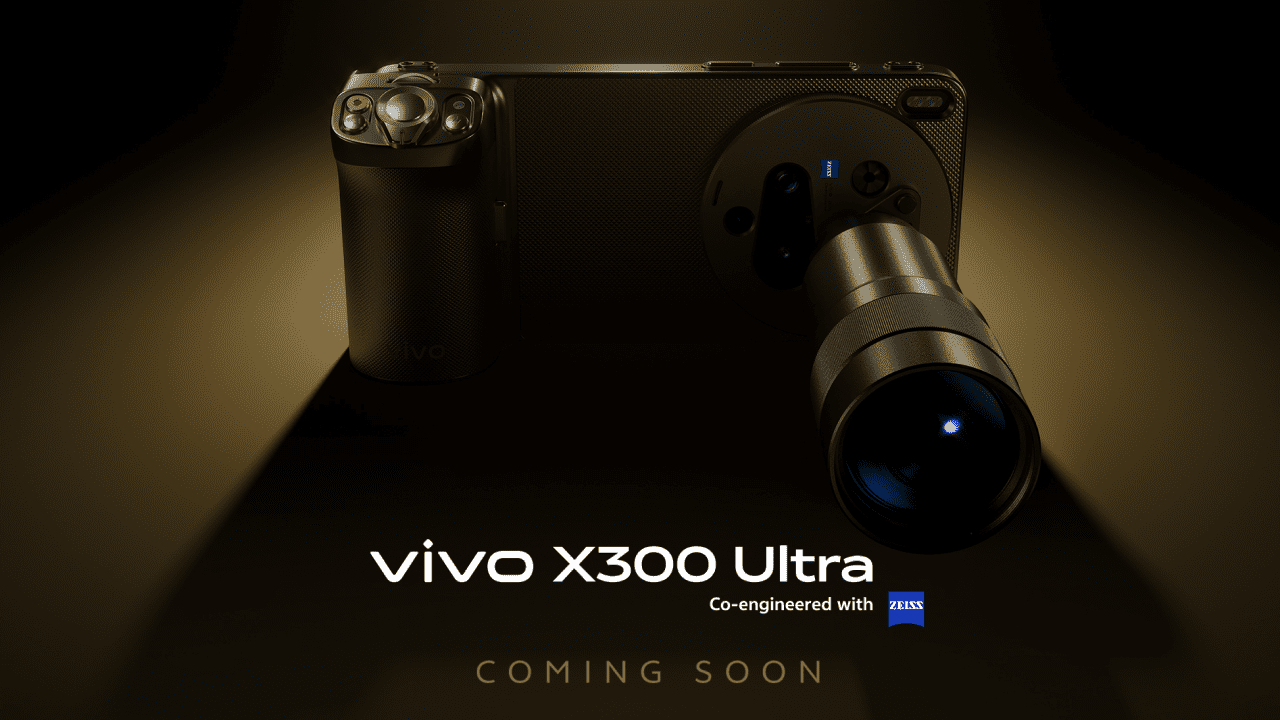
Vivo is preparing to bring its most advanced flagship lineup yet to India, with the Vivo X300 Ultra India launch officially confirmed following global showcases earlier this year. The company has begun teasing both the X300 Ultra and the more compact X300 FE on its India website and Flipkart, signaling an imminent entry into the country’s highly competitive premium smartphone segment. The move comes as smartphone brands increasingly compete on advanced imaging capabilities, with Vivo doubling down on its partnership with ZEISS to position the X300 series as a photography-first ecosystem rather than just another flagship release.
Reports suggest the launch could take place on May 7, with sales of the Ultra variant expected to begin around May 14, although Vivo has yet to formally confirm the exact dates.
The India debut follows the devices’ earlier introductions in China and other global markets, including a high-profile showcase at Mobile World Congress 2026. With the X300 Ultra priced at around €2,000 in Europe rising to nearly €2,500 with optional camera accessories the Indian pricing is expected to place it firmly in ultra-premium territory.
Also read: Oppo Find X9 Ultra and Find X9s Pro Set New Benchmark With Dual 200MP Cameras Ahead of Global Launch
A Camera System Designed to Replace DSLRs?
At the core of the X300 Ultra’s positioning is its ambitious camera hardware. The device is expected to feature a 200MP primary sensor alongside a 200MP periscope telephoto lens, supported by ZEISS-tuned optics. Vivo is also introducing modular camera accessories, including teleconverter lenses capable of extending focal length up to 400mm, as well as add-ons like a camera grip and tripod collar.
This modular approach reflects a broader shift in smartphone imaging, where manufacturers are attempting to replicate professional photography workflows. Vivo’s strategy appears to target users who want DSLR-like flexibility without carrying dedicated camera gear.
The emphasis on high-resolution telephoto photography mirrors trends seen across the X300 lineup. The X300 Pro, for example, has already drawn attention for its 200MP telephoto sensor, which delivers strong zoom capabilities and doubles as a macro tool for detailed close-up photography. While high megapixel counts do not automatically guarantee superior image quality, larger sensors and improved optics particularly through ZEISS collaboration are helping bridge that gap.
Flagship Performance Meets Massive Batteries
Beyond imaging, the X300 Ultra is expected to feature top-tier hardware specifications. Leaks and early disclosures point to a 6.82-inch LTPO AMOLED display with a 144Hz refresh rate, powered by the Snapdragon 8 Elite Gen 5 chipset. The device could offer up to 16GB of RAM and as much as 1TB of internal storage.
Battery performance is another standout area. The Ultra variant is rumored to include a 7,000mAh semi-solid-state battery, paired with 100W wired and 50W wireless charging. If confirmed, this would make it one of the largest batteries in a flagship smartphone, addressing a key demand among power users.
The X300 FE, positioned as a more compact alternative, is expected to feature a 6.31-inch AMOLED display, Snapdragon 8 Gen 5 processor, and a 6,500mAh battery with 90W fast charging. Despite its smaller size, it retains premium features, including a ZEISS-tuned triple camera system.
Industry / Market Impact
Vivo’s push with the X300 series highlights an intensifying battle in India’s premium smartphone segment, where differentiation is increasingly driven by camera innovation rather than raw performance alone.
The introduction of modular camera accessories could set a new benchmark, particularly if consumers respond positively to the idea of expandable smartphone photography systems. This approach may also pressure competitors like Samsung and Apple to rethink their imaging strategies, especially in markets where photography is a key purchase driver.
Additionally, the Ultra’s pricing already positioned at the higher end globally suggests Vivo is aiming to elevate its brand perception in India, moving beyond value-driven offerings into the luxury flagship space.
Why This Matters
India has become one of the fastest-growing premium smartphone markets, with consumers increasingly willing to spend over ₹1 lakh on flagship devices. The X300 Ultra’s arrival signals Vivo’s intent to capture a larger share of this segment by offering features that go beyond incremental upgrades.
The focus on camera hardware, particularly the 200MP telephoto system and ZEISS enhancements, taps into a growing demand for content creation tools. As social media and video platforms continue to expand, smartphones that can deliver professional-grade output are gaining traction among creators and enthusiasts alike.
At the same time, the inclusion of massive batteries and high refresh rate displays ensures that these devices are not just niche photography tools but well-rounded flagship smartphones.
What Happens Next
With teasers already live and retail partnerships in place, Vivo is expected to reveal full details including pricing and availability at its upcoming launch event. Market response will likely depend on how aggressively the devices are priced in India relative to competitors.
If the X300 Ultra’s camera ecosystem resonates with buyers, it could mark a turning point in how smartphones are marketed not just as communication devices, but as modular creative tools.
As the premium segment continues to evolve, Vivo’s latest flagship lineup may serve as a test case for whether consumers are ready to embrace smartphones as true camera replacements.