
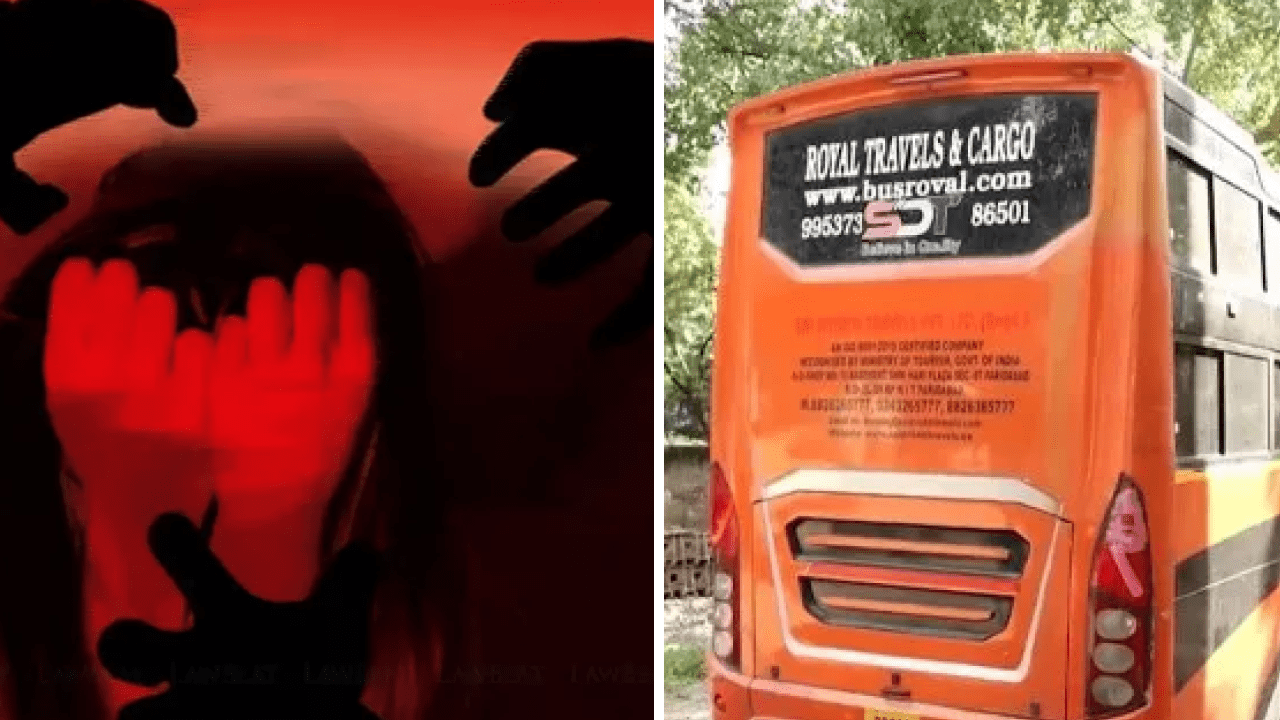
A 30-year-old factory worker was allegedly gang-raped inside a moving sleeper bus in northwest Delhi late Monday night, triggering widespread outrage and renewed concerns over women’s safety in the national capital. Delhi Police have arrested the driver and conductor of the bus, seized the vehicle for forensic examination, and launched a multi-angle investigation into the incident that has drawn comparisons to the 2012 Nirbhaya case.
According to investigators, the survivor, a resident of a slum cluster in Pitampura and a mother of three, was returning home after completing her shift at a factory in Mangolpuri. The alleged assault began near the B-Block bus stand in the Saraswati Vihar area when she approached a man standing near a sleeper bus to ask for the time.
Police said the accused allegedly lured the woman closer before forcibly pulling her into the vehicle. Once inside, the doors were reportedly shut and the bus began moving toward the Nangloi area. The woman told investigators that she was sexually assaulted inside the moving bus for nearly two hours while the vehicle travelled several kilometres across parts of northwest Delhi.
Authorities said the bus was fitted with curtains that concealed activity inside the vehicle from public view, making it difficult for passersby or motorists to detect what was happening.
The survivor alleged that she was eventually thrown out of the bus near Nangloi Metro station in an injured condition around 2 am. She later contacted police, following which officers reached the spot and initiated legal proceedings.
Delhi Police confirmed that an FIR under gangrape charges and relevant provisions of the Bharatiya Nyaya Sanhita (BNS), 2023, has been registered at Rani Bagh police station. The two accused, identified as bus driver Umesh and conductor Rajendra alias Ramendra, were arrested shortly after the complaint was filed and have since been sent to judicial custody.
Investigators also seized the Bihar-registered sleeper bus involved in the crime. Forensic teams inspected the vehicle while police began reviewing CCTV footage from areas along the suspected route taken by the bus on the night of the incident.
Officials said the survivor underwent a medical examination at Dr Baba Saheb Ambedkar Hospital. Police sources indicated that doctors advised hospitalization considering her condition, but she reportedly chose home-based treatment due to family responsibilities, including caring for children and a husband suffering from tuberculosis.
The bus has also reportedly been linked to a private transport operator headquartered in Faridabad, though police have not yet disclosed whether the company could face scrutiny over operational oversight or staff verification procedures.
Also read: Mumbai Family Death Mystery Deepens as Forensic Report Finds Rat Poison in Watermelon
Expert Analysis / What This Means
The Delhi moving bus gangrape case has once again exposed persistent vulnerabilities in urban public transport safety, particularly for women travelling late at night. More than a decade after the Nirbhaya case transformed national conversations around sexual violence, the similarities in this incident have reignited questions about whether systemic reforms have translated into meaningful ground-level protection.
The use of a sleeper bus with curtained interiors highlights a major enforcement blind spot involving privately operated interstate transport vehicles that often move through the city during late-night hours with limited monitoring. The case is also likely to intensify scrutiny over background verification of drivers and conductors employed by private transport operators.
For Delhi Police, the incident creates renewed pressure to strengthen surveillance around isolated bus stops, industrial routes, and nighttime transit corridors frequently used by low-income workers. The alleged assault of a woman returning from factory work also underlines the disproportionate safety risks faced by working-class women dependent on public and informal transport systems.
Politically, the case may deepen tensions between Delhi’s elected government and the Lieutenant Governor’s office over law-and-order accountability in the capital. Socially, the incident risks reinforcing public fears around women’s mobility after dark despite years of policy promises, stricter laws, and expanded CCTV infrastructure following the 2012 reforms.
Also read: Chandranath Rath Killing Sparks Political Shockwaves in Bengal After Poll Verdict
Why This Matters
The alleged gangrape has resonated strongly because of its disturbing resemblance to previous high-profile crimes involving moving vehicles in Delhi. Public memory of the 2012 Nirbhaya case remains deeply embedded in the city’s social and political consciousness, making any similar crime especially sensitive.
Women’s rights advocates have repeatedly warned that while laws governing sexual violence have become stricter over the past decade, implementation gaps remain significant. Concerns over inadequate night patrolling, weak transport oversight, and insufficient emergency response mechanisms continue to surface after major incidents.
The case also draws attention to the precarious conditions under which many industrial workers commute. Thousands of women employed in factories and informal sectors rely on late-night transportation, often travelling alone across poorly monitored stretches of the city.
Also read: Powai Hit-and-Run: Teen Driver Arrested After Speeding Car Injures Four on JVLR
Timeline of Events
Monday Night
- The woman completed her work shift at a factory in Mangolpuri.
- She travelled part of the route in an e-rickshaw before continuing on foot toward Pitampura.
- Near the Saraswati Vihar bus stand, she approached a parked sleeper bus to ask for the time.
- She was allegedly pulled into the bus and assaulted while the vehicle moved toward Nangloi.
Early Tuesday Morning
- The woman was allegedly abandoned near Nangloi Metro station around 2 am.
- She contacted police and provided her statement.
- A medical examination was conducted and an FIR was registered.
Tuesday
- Delhi Police arrested the bus driver and conductor.
- The sleeper bus was seized for forensic analysis.
- CCTV footage from the route was collected for investigation.
Reactions and Political Response
The incident has sparked sharp political reactions across Delhi. Aam Aadmi Party leader Saurabh Bhardwaj publicly compared the case to the Nirbhaya incident, accusing authorities of failing to ensure women’s safety in the capital.
The comments have intensified the ongoing political blame game between the Delhi government and the Lieutenant Governor’s administration, with opposition leaders demanding stricter monitoring of private buses operating at night.
Meanwhile, police officials stated that the investigation is being conducted “from every possible angle,” including examination of possible financial disputes and the movement history of the vehicle involved.
What Happens Next
Investigators are expected to rely heavily on forensic evidence collected from the bus, CCTV footage analysis, mobile phone data, and route mapping to establish the sequence of events. Police may also examine whether additional individuals were involved, based on the survivor’s statements.
The case could potentially trigger broader regulatory reviews of sleeper buses and interstate transport operators entering Delhi, especially those operating overnight services with minimal passenger oversight.
Women’s safety organizations are also likely to renew demands for stronger late-night transit protections, including panic systems, GPS tracking enforcement, mandatory camera surveillance inside buses, and stricter driver verification standards.