
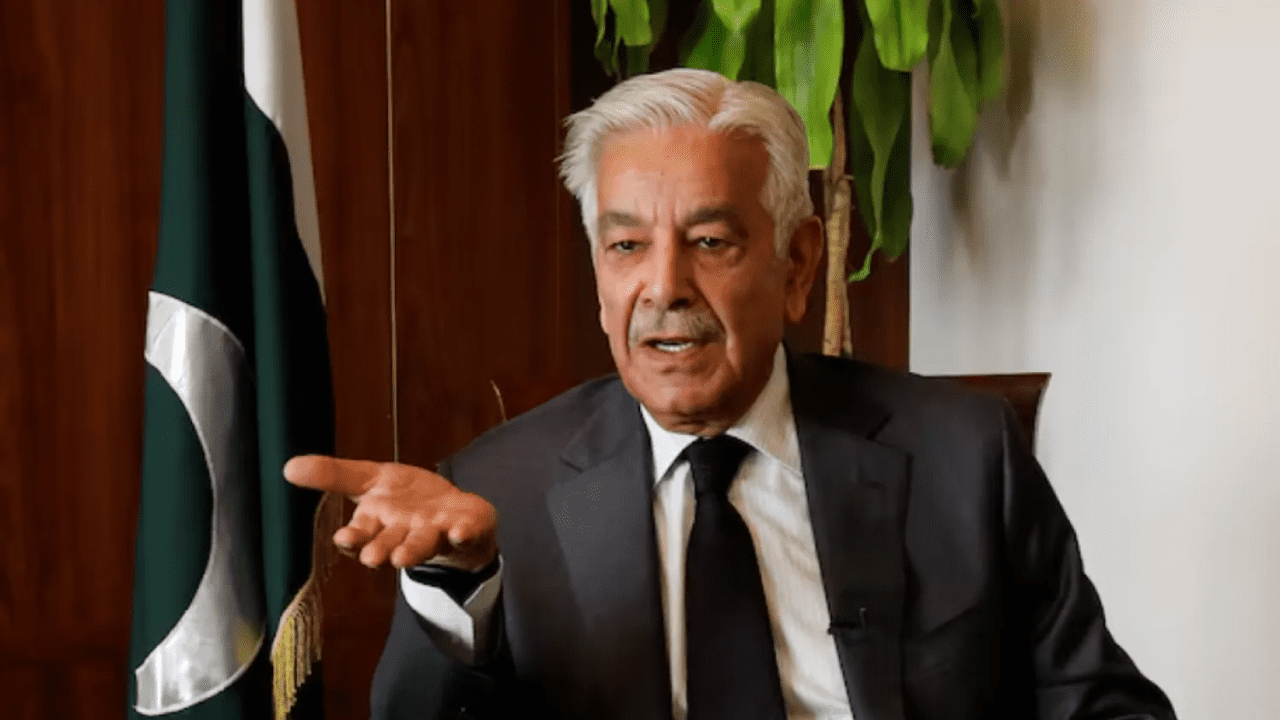
A diplomatic controversy has erupted just as sensitive backchannel negotiations between the United States and Iran are set to unfold in Islamabad, after Pakistan’s Defence Minister Khawaja Asif posted and later deleted inflammatory remarks targeting Israel and Jewish people. The episode has intensified scrutiny over Pakistan’s role as a potential mediator in a fragile regional ceasefire, while exposing deeper geopolitical fault lines across the Middle East.
The now-deleted post, published on X, saw Asif describe Israel as “evil” and “a curse for humanity” while condemning its ongoing military operations in Lebanon. He further used highly offensive language referring to the creation of Israel, triggering widespread backlash and accusations of antisemitism. The remarks came amid continued Israeli strikes in Lebanon despite a recently announced ceasefire between the United States and Iran.
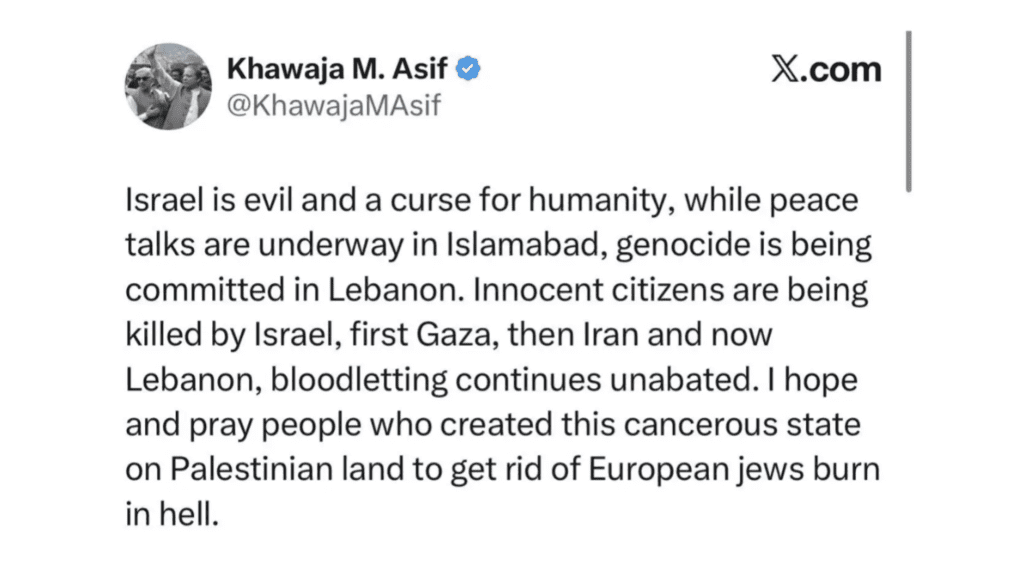
Israel responded swiftly and forcefully. A statement from the office of Prime Minister Benjamin Netanyahu condemned the comments as “outrageous,” warning that such rhetoric was unacceptable, particularly from a country positioning itself as a neutral mediator. Israeli Foreign Minister Gideon Sa’ar also denounced the remarks, describing them as antisemitic and questioning Pakistan’s credibility in facilitating peace talks.
Within hours of the backlash, Asif deleted the post without issuing a detailed public clarification.
The controversy comes at a particularly sensitive moment. Islamabad is preparing to host high-stakes discussions involving US and Iranian officials, with Vice President JD Vance expected to lead the American delegation alongside senior envoys. The talks are aimed at stabilizing a tenuous ceasefire reached after weeks of escalating conflict involving US, Israeli, and Iranian forces.
However, the ceasefire itself remains under strain. Israel has continued its military campaign in Lebanon, targeting Iran-backed Hezbollah, while Iran has insisted that any meaningful de-escalation must include a halt to operations in Lebanese territory. Washington, however, maintains that Lebanon was not part of the ceasefire agreement an interpretation that contradicts statements from Pakistan’s leadership.
Also read: Trump Warns of Massive Escalation as Fragile US-Iran Ceasefire Faces Mounting Strain
Background Context
The current crisis is rooted in a broader regional conflict that intensified following joint US-Israeli strikes on Iranian targets earlier this year. In response, Iran and its allied groups, including Hezbollah in Lebanon, escalated attacks against Israeli positions, drawing Lebanon deeper into the conflict.
Pakistan emerged as an unlikely diplomatic intermediary after facilitating communication between Washington and Tehran, with Prime Minister Shehbaz Sharif publicly positioning Islamabad as a venue for peace talks. Both the US and Iran acknowledged Pakistan’s role in helping broker a temporary ceasefire agreement.
However, longstanding tensions complicate the situation. Pakistan and Israel do not maintain formal diplomatic relations, and Islamabad has historically aligned itself with the Palestinian cause. Asif himself has previously referred to Israel as one of Pakistan’s principal adversaries.
Why This Matters
The timing of the controversy raises serious questions about Pakistan’s ability to act as a neutral broker in one of the most volatile geopolitical crises in recent years.
Diplomatic mediation relies heavily on perceived impartiality. Israel’s sharp response signals a lack of trust in Pakistan’s role, which could undermine the legitimacy of any negotiations hosted in Islamabad. Public rhetoric from senior officials especially when it crosses into inflammatory or discriminatory language can significantly complicate backchannel diplomacy.
Moreover, the incident risks derailing already fragile talks. Iranian officials have reportedly warned that they may reconsider participation in the Islamabad dialogue if Israeli operations in Lebanon continue, adding another layer of uncertainty.
What Happens Next
Despite the controversy, preparations for the Islamabad talks are continuing, with heightened security measures in place across the Pakistani capital. The outcome of these discussions could prove decisive in determining whether the current ceasefire evolves into a longer-term de-escalation framework.
At the same time, parallel diplomatic efforts are underway elsewhere. Israel is reportedly exploring direct talks with Lebanon focused on curbing Hezbollah’s military capabilities, while the United States continues to engage both sides in an attempt to prevent further regional spillover.
Much will depend on whether key stakeholders can contain the fallout from Asif’s remarks and refocus attention on diplomatic objectives. If tensions escalate further either through continued military action or inflammatory rhetoric the already narrow window for peace could close rapidly.
Reactions and Diplomatic Fallout
Israel’s unusually direct public criticism of Pakistan marks a rare moment of open confrontation between the two countries. Historically, Israel has avoided engaging Islamabad publicly due to the absence of formal ties.
Israeli officials have framed Asif’s comments as not just offensive but indicative of a broader ideological stance that undermines peace efforts. Meanwhile, Pakistan has yet to issue a comprehensive official response beyond the deletion of the post.
The episode also underscores the broader challenge facing international diplomacy in the age of social media, where statements by senior officials can instantly reshape geopolitical narratives and complicate sensitive negotiations.